Best US AI Conferences for CTOs in 2026: Build vs. Buy, Vendor Evaluation, and Peer Intelligence
The best US AI conferences for CTOs in 2026 are WeAreDevelopers World Congress North America (San José, September), Databricks Data + AI Summit (San Francisco, June), KubeCon + CloudNativeCon NA (Salt Lake City, November), QCon SF (November), AWS re:Invent (Las Vegas, November/December), GitHub Universe (San Francisco, October), and Nvidia GTC (planning for March 2027).
Most “best AI conference” lists are written for individual contributors choosing where to learn, or for executives looking for thought-leadership stages. Neither audience matches the CTO at a 50 to 500 engineer company who needs to return with architectural validation, procurement-ready vendor shortlists, and a team that has personally seen the systems they will evaluate.
This article does three things differently. It evaluates each conference through a build-vs-buy lens based on observable audience composition, not PR attendance figures. It treats attendance as a team decision — not a solo executive trip — because the CTOs producing real ROI from these events send engineers alongside themselves. And it tells you, per event, what coverage a three-person team buys versus a solo visit.
The Build-vs-Buy Framework for Conference Selection
For a CTO evaluating AI infrastructure, conferences sort into three categories.
BUILD conferences carry the highest concentration of open source contributors, production engineers, and architectural practitioners. They are the venues where Kubernetes maintainers, Ray contributors, vLLM committers, and platform engineers running multi-cluster production environments are present in numbers. These are the events to attend when you need to validate a build decision, find senior platform or ML engineers to hire, and separate what is actually production-ready from what is vendor-marketed.
BUY conferences carry the highest concentration of vendors, product teams, and managed service providers. The expo floor is the main asset, not the keynote stage. These are the events to attend when you are negotiating a Databricks or AWS contract renewal, evaluating an observability platform, or assembling a shortlist of inference providers before committing budget.
BOTH conferences are rare. They are events where practitioner density and vendor presence coexist at the scale a CTO needs. They allow you to interview engineers from companies twelve to twenty-four months ahead of you in scale, then walk the expo floor to evaluate the vendors those engineers are buying from — within a single trip.
A CTO with a $10K annual conference budget should prioritize at least one BUILD and one BOTH event, and should plan team attendance — not solo attendance — at the BOTH event. An 18-track event consumed by one person is a 1-track event; the same event consumed by a CTO plus three engineers becomes the equivalent of four parallel conferences with a shared debrief. Each conference below is tagged by category and annotated with how a team should split coverage.
Conference Recommendations
1. WeAreDevelopers World Congress North America 2026 — BOTH
September 23–25, 2026, McEnery Convention Center, San José, CA. Congress Pass: $679.
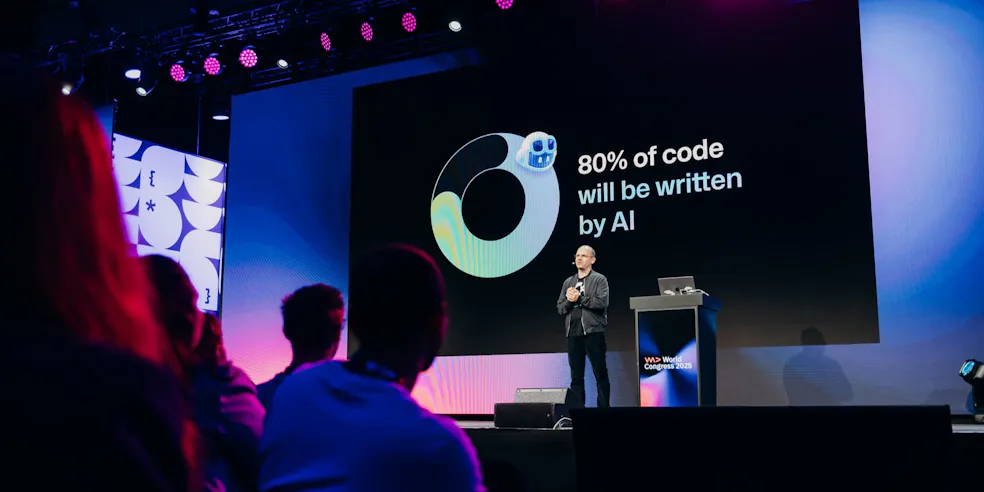
This event is the lead recommendation because in 2026 it is the most structurally complete event for a CTO who needs both peer validation and vendor evaluation in a single trip.
The numbers: 10,000+ developers, 4,000+ companies, 2,000 decision-makers, 500+ speakers, 18 content tracks. The presenting partner is Docker. Seven of the eighteen tracks map directly to the build-vs-buy decisions a CTO is running this year — Artificial Intelligence, Cloud & Infrastructure, Software Architecture, DevOps & Automation, Data Engineering, Security, and DevEx & Productivity.
The speaker roster is the reason a CTO buys the ticket. Kelsey Hightower is the authoritative voice on cloud-native infrastructure and Kubernetes; his read on AI infrastructure direction carries weight that vendor keynotes cannot match. Christine Yen, CEO and co-founder of Honeycomb, sits at the intersection of observability and distributed AI systems — the exact problem CTOs are hitting as they instrument LLM pipelines in production. Olivier Pomel, CEO and co-founder of Datadog, brings the buy-side perspective on monitoring AI infrastructure at scale. Lin Qiao, CEO and co-founder of Fireworks AI, is directly relevant for any CTO evaluating whether to run inference in-house or buy a managed serving layer. Angie Jones, VP of Engineering for AI Tools & Enablement at Block, brings the practitioner perspective on rolling AI tooling out across a large engineering organization. Thomas Dohmke, former CEO of GitHub and now CEO of Entire, speaks to AI-assisted development workflow. Daksh Gupta, CEO and co-founder of Greptile, covers AI code intelligence.
An 18-track event consumed by one person is a 1-track event. At $679 per Congress Pass, a CTO plus three engineers covers four tracks in parallel for under $2,600, with the CTO free to work the expo floor between sessions. More info is here; map the split before booking.
2. Databricks Data + AI Summit — BUY (with strong practitioner layer)
June 15–18, 2026, Moscone Center, San Francisco.
20,000+ data engineers, ML practitioners, and data scientists. This is the event for evaluating the managed lakehouse and AI platform market — Databricks itself, but also the surrounding set of vendors who integrate with it.
The buy-side intelligence here is unusual: because so many data leaders attend, you can validate reference customers in person. If you are negotiating a Databricks contract, the hallway track will tell you what other companies at your scale are paying, where the support is good or bad, and which features are deprecating without announcement. The architectural sessions on Delta Lake, Unity Catalog, and the new AI/ML tooling double as competitive intelligence on Snowflake.
Honest limitation: it is heavily Databricks-centric. A CTO evaluating between Databricks and Snowflake should not assume the comparative coverage at Data + AI Summit is neutral. Pair this with Snowflake Summit (June, San Francisco) for triangulation if a platform decision is imminent.
Team coverage: send a data engineering lead and a senior data scientist — they walk the floor and book vendor demos, while the CTO attends the customer panels where pricing and ops conversations actually surface. Bringing the team also accelerates internal alignment: a data platform decision is easier to push through after the engineers who will operate the system have seen the alternatives in person. databricks.com/dataaisummit.
3. KubeCon + CloudNativeCon NA — BUILD
November 2026, Salt Lake City.
9,000+ platform engineers, SREs, and Kubernetes contributors. This is the event where production AI infrastructure patterns emerge before vendors productize them. The CNCF community is here in depth — maintainers of the projects that will be in your stack in eighteen months are on the hallway track now.
For a CTO running AI workloads on Kubernetes — which is most CTOs at this scale — KubeCon is where the operational patterns for GPU scheduling, multi-tenant inference, and observability for distributed training are being worked out in public. The talks from companies running large-scale internal AI platforms — Bloomberg, Spotify, the major banks — are the highest-signal architectural validation a CTO can get for free.
Honest limitation: managed-service vendor presence is limited by design. KubeCon is a project-first conference. A CTO who needs to evaluate three observability vendors side-by-side will get less here than at a BUY event.
Team coverage: this is the BUILD event where a platform engineer learns more than a CTO does, so the team-first version is to send the platform lead with a junior platform engineer and have them present a structured debrief to the engineering org on return. Treat KubeCon as a paid training program for the platform team — at roughly $1,200 per ticket, it is one of the more cost-effective ways to upskill engineers on production cloud-native AI patterns. events.linuxfoundation.org/kubecon-cloudnativecon-north-america.
4. QCon San Francisco — BUILD
November 16–20, 2026, San Francisco.
Approximately 1,500 senior practitioners — software architects, engineering directors, principal engineers from Netflix, Google, LinkedIn, Stripe-tier companies. The format excludes vendor keynotes from main tracks; talks are practitioner-submitted and curated.
The value proposition is precise: this is where you find out what companies two to ten times your scale are shipping in AI infrastructure right now. The talks are not pitches. The hallway is dense with engineering leaders, which is the audience a CTO actually wants to compare notes with. If you are wrestling with whether to centralize your ML platform or let teams self-serve, the QCon hallway track has fifty people who have made that decision in the past year.
Honest limitation: small. ~1,500 attendees means limited expo presence and no real vendor evaluation use case. This is a pure architectural-validation event.
Team coverage: send one senior architect or staff engineer alongside the CTO. The two-person debrief from QCon, structured around three specific architectural questions decided in advance, is one of the highest-ROI conference outcomes available to a scaling engineering org. The architect carries home the technical detail; the CTO carries home the strategic context; the combination is what makes the post-conference architectural review productive. qconsf.com.
5. AWS re:Invent — BUY
November 30–December 4, 2026, Las Vegas.
50,000+ engineers, architects, and enterprise buyers. This is the single most complete view of the managed cloud AI services market in the calendar year. Every AWS AI service — Bedrock, SageMaker, the inference offerings, the agent stack — is announced or updated here first.
For a CTO running on AWS, re:Invent is non-negotiable for a specific reason: pricing and feature decisions made at re:Invent will define your AWS bill for the next year. The breakout sessions on Bedrock cost optimization, the workshops on multi-region inference, and the architectural reviews from large customers are where intelligence on what AWS will actually deliver — versus what it has announced — gets clarified by AWS engineers in person.
Honest limitation: enormous and noisy. For a CTO at a 50 to 500 engineer company, re:Invent without aggressive pre-scheduling is mostly a marketing experience. The value compresses into the 1:1 sessions a CTO books with AWS account team specialists, the customer reference meetings booked through the AWS team, and the analyst meetings at the side events.
Team coverage: send an AWS-native staff engineer alongside the CTO, and book vendor and AWS team meetings four weeks out. The expo floor and the workshops are for the engineer; the executive briefings and customer references are for the CTO. The team approach is the only way to convert a re:Invent ticket into actionable intelligence rather than swag and free coffee. reinvent.awsevents.com.
6. GitHub Universe — BUY (developer tooling layer)
October 2026, San Francisco.
Approximately 4,000 developers and engineering leaders. This is the venue where AI-assisted development tooling — GitHub Copilot, Copilot Workspace, and the competitive set including Cursor, Cody, and the wave of coding agents — is evaluated by practitioners.
For a CTO making decisions about developer productivity tooling, GitHub Universe is the highest-density event for hearing how Copilot rollouts have actually worked at scale, what the measured productivity impact has been, and what the AI security and IP review process looks like at companies that have already deployed it. Decisions about AI dev tooling are now infrastructure decisions — they shape branch hygiene, code review pipelines, and security posture — and Universe is where those decisions are negotiated in public.
Honest limitation: GitHub-centric. The competitive set is discussed in the hallways more than on the stage.
Team coverage: send a senior engineer alongside the CTO who already uses Copilot or a competitor daily. The practitioner read on the new feature announcements is more reliable than the stage version, and the team-level evaluation needs at least one engineer who can stress-test the demos in real time at the booth. githubuniverse.com.
7. Nvidia GTC — BUILD + BUY
March 2026 has passed. Plan for March 2027, San José, CA.
15,000+ AI researchers, ML engineers, and CUDA developers. GTC is essential for CTOs making GPU infrastructure decisions across on-premise, cloud, and hybrid deployments.
The build-vs-buy intersection at GTC is unusually clean. The hardware roadmap is announced first-party by Nvidia — Blackwell, Rubin, and successor architectures are detailed with the specificity needed to plan twelve to twenty-four month GPU procurement. The software side — CUDA, TensorRT, NIM microservices, the Nvidia inference stack — is the buy-side decision a CTO is making against open source alternatives such as vLLM and SGLang. Walking GTC with both questions in mind is how CTOs get the most out of it.
Honest limitation: Nvidia-centric. Independent benchmarks against AMD MI300 and emerging accelerators are not the focus.
Team coverage: send an ML systems engineer alongside the CTO. The technical track depth at GTC is where the engineer adds the most value; the supply, pricing, and roadmap intelligence is what the CTO is there for. The two roles need different conversations at different booths at different times — solo attendance forces a choice. nvidia.com/gtc.
The AI Infrastructure CTO’s Conference Calendar
| Conference | Type | Date | Location | Best for | Est. ticket | Limitation |
|---|---|---|---|---|---|---|
| ★ WeAreDevelopers World Congress NA | BOTH | Sep 23–25, 2026 | San José, CA | Full-stack AI infra decisions; team coverage of 18 tracks | $679 | Not AI-only; covers full engineering lifecycle |
| Databricks Data + AI Summit | BUY | Jun 15–18, 2026 | San Francisco | Lakehouse + AI platform evaluation | ~$1,895 | Databricks-centric |
| KubeCon + CloudNativeCon NA | BUILD | Nov 2026 | Salt Lake City | Production AI infra patterns on Kubernetes | ~$1,200 | Limited managed-vendor presence |
| QCon San Francisco | BUILD | Nov 16–20, 2026 | San Francisco | Architectural validation from peer-scale companies | ~$2,500 | Small; no real vendor floor |
| AWS re:Invent | BUY | Nov 30–Dec 4, 2026 | Las Vegas | Managed AWS AI services intelligence | ~$2,099 | Enormous; needs pre-scheduling |
| GitHub Universe | BUY | Oct 2026 | San Francisco | AI dev tooling evaluation | ~$1,100 | GitHub-centric |
| Nvidia GTC | BOTH | Mar 2027 (plan) | San José, CA | GPU infra + Nvidia software stack | ~$1,000 | Nvidia-centric |
Ticket estimates reflect typical full-conference pass ranges and vary by registration tier and timing.
How to Extract Build-vs-Buy Intelligence at Any Conference
Before the event, identify which engineers from companies twelve to twenty-four months ahead of you in scale are speaking. Request 1:1s, not coffee chats — the framing matters; a specific question booked in a 25-minute slot gets a useful answer, a coffee chat does not.
At BUILD events, seek out the “what we stopped using” talks. The failure and deprecation stories contain the highest-signal intelligence about which projects, frameworks, and architectural patterns did not survive contact with production. These are the inverse of vendor case studies and where the most experienced engineers concentrate.
At BUY events, the expo floor demo is the beginning, not the end. Ask every vendor for two reference customers at your exact scale before leaving the booth. A vendor who cannot produce names within forty-eight hours is a vendor who does not have customers at your scale. Treat that as data.
Across all events, the hallway track outperforms the session track for CTOs. Block at least 40% of your schedule as unscheduled. The most useful conversation of the trip is almost never the one you planned.
The team strategy is the part most CTOs underuse. Conferences are an education investment for the engineering organization, not an executive perk. Send a senior platform engineer and an ML engineer to the BUILD tracks while you attend BUY tracks and customer panels. Debrief together around three pre-agreed questions set before traveling. An engineer who has personally seen the system you are evaluating brings back instincts a CTO summary cannot transfer. Internal alignment also moves faster after a team has spent three days seeing the same vendors, speakers, and peer companies — the post-conference architectural review becomes a confirmation step rather than a debate. Team bundles of three or more tickets are how cost-per-coverage-track at multi-track events collapses to a number finance signs off on without negotiation.
WeAreDevelopers World Congress NA 2026: The One Event That Covers Both Sides
Most events force a CTO to choose between peer learning and vendor evaluation. WWC26 NA is the exception in 2026. The speaker roster covers both sides of the build-vs-buy decision in the same venue: Kelsey Hightower on the build side; Christine Yen and Olivier Pomel on the observability and managed-services side; Lin Qiao on inference infrastructure; Angie Jones on practitioner adoption at scale; Thomas Dohmke on AI-assisted development. The 10,000+ developer audience, drawn heavily from the San Francisco, Santa Clara, and Menlo Park engineering campuses, delivers peer density that pure vendor events cannot match.
The structural argument for team attendance is sharpest here. 18 parallel tracks consumed by one person is a 1-track conference. The same event consumed by a CTO plus three engineers is the practical equivalent of four conferences with a shared debrief — and at $649 per pass with team-bundle pricing available, the cost-per-coverage-hour is the best on the calendar. For a CTO whose primary job in 2026 is leveling up the team’s AI infrastructure capability, sending the team is the decision that converts a conference ticket into engineering org capability.
Congress Pass: $649. September 23–25, 2026. McEnery Convention Center, San José, CA. Register and review the team-bundle options at wearedevelopers.com/world-congress/north-america. Newsletter subscribers receive an additional 10% off.
FAQ
What is the best US conference for CTOs evaluating AI infrastructure in 2026?
WeAreDevelopers World Congress North America 2026 (September 23–25, San José) is the most structurally complete event for a CTO running build-vs-buy decisions across AI infrastructure. It combines a practitioner-heavy speaker roster (Kelsey Hightower, Angie Jones, Lin Qiao) with managed-services leadership (Christine Yen of Honeycomb, Olivier Pomel of Datadog) and 18 content tracks that map to the full software development lifecycle.
Which US tech conferences are best for build-vs-buy decisions on AI tooling?
BUILD-side decisions (open source, in-house): KubeCon + CloudNativeCon NA, QCon SF. BUY-side decisions (managed services, vendor contracts): Databricks Data + AI Summit, AWS re:Invent, GitHub Universe. Events that cover both at meaningful scale: WeAreDevelopers World Congress NA and Nvidia GTC. A CTO making infrastructure decisions in 2026 should attend at least one event in each category and should send team members to cover the tracks the CTO cannot.
How much does it cost for a CTO to attend major US AI conferences in 2026?
Single-pass costs range from $649 (WeAreDevelopers World Congress NA) to roughly $2,500 (QCon SF). Mid-range events — Databricks Data + AI Summit, AWS re:Invent — typically run $1,800 to $2,100. A realistic annual budget for a CTO attending three events solo is $5,000 to $7,000 before travel. Budget doubles or triples when sending engineers alongside — recommended for multi-track events, where the team return is materially higher than four separate solo trips.
Is WeAreDevelopers World Congress worth attending for CTOs at scaling companies?
Yes, particularly for CTOs at 50 to 500 engineer companies running AI infrastructure decisions in 2026. The speaker roster covers both sides of the build-vs-buy decision in a single venue; the 18-track structure rewards team attendance; and the San José location draws drive-in audience from across Silicon Valley, producing peer density not available at vendor-specific events. Details: wearedevelopers.com/world-congress/north-america.
Where do engineering leaders at 50–500 person companies meet peers working on AI infrastructure?
Three venues stand out. QCon SF (November) concentrates senior architects and engineering directors from Netflix-, Stripe-, LinkedIn-tier companies. WeAreDevelopers World Congress NA (September, San José) carries 2,000+ decision-makers and 500+ speakers from the Silicon Valley engineering community. KubeCon NA (November, Salt Lake City) is where platform engineering leaders concentrate. CTOs running an annual rotation should plan one of these per year minimum, ideally with at least one engineer attending alongside.