Florian Margaine

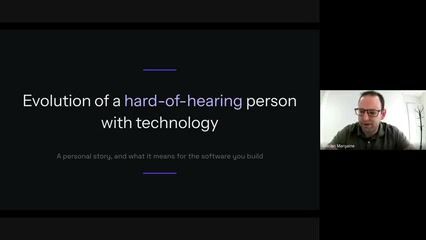
Evolution of a hard-of-hearing person with technology

Meetings were once exhausting for a hard-of-hearing CTO. He shares the tech journey that transformed his career, from live captions to smart glasses.

Evolution of a hard-of-hearing person with technology
#1about 6 minutes

A personal story of profound hearing loss in tech

The speaker shares his experience with congenital hearing loss and the daily challenges it created in meetings and social settings before modern technology.

#2about 2 minutes

An overview of key assistive technologies for hearing

A summary of the six key technologies that have significantly improved communication, including hearing aids, subtitles, and live captions.

#3about 3 minutes

Hearing aids are a necessary but insufficient foundation

Hearing aids provide a baseline for hearing but struggle in noisy environments and cannot amplify frequencies that are completely lost.

#4about 3 minutes

How default subtitles transformed media consumption

The widespread adoption of subtitles on streaming platforms and social media made entertainment and cultural references accessible for the first time.

#5about 4 minutes

The benefits of text-based communication for remote work

Tools like Slack and Teams create a more inclusive environment by removing auditory barriers and providing searchable, asynchronous communication.

#6about 2 minutes

Direct audio streaming with bluetooth-enabled hearing aids

The introduction of Bluetooth connectivity allowed audio from devices to be streamed directly to hearing aids, dramatically improving clarity in video calls.

#7about 3 minutes

Live captions as a game-changer for remote meetings

Real-time captions in video conferencing tools fill in comprehension gaps and provide secondary benefits like searchable transcripts and AI-generated summaries.

#8about 4 minutes

Using smart glasses for real-time in-person captions

Smart glasses with live captioning capabilities can overcome challenges in noisy, in-person environments like conferences and social events.

#9about 6 minutes

Why accessibility features should be enabled by default

Enabling features like captions by default removes the burden of asking and benefits a wide range of users, not just the 15% with hearing loss.

#10about 5 minutes

Three practical ways to foster inclusive communication

Actionable advice includes defaulting to written communication for decisions, turning on captions for all meetings, and providing live transcription at events.

Related jobs
Jobs that call for the skills explored in this talk.

Featured Partners

Related Articles

View all articles

From learning to earning

Jobs that call for the skills explored in this talk.