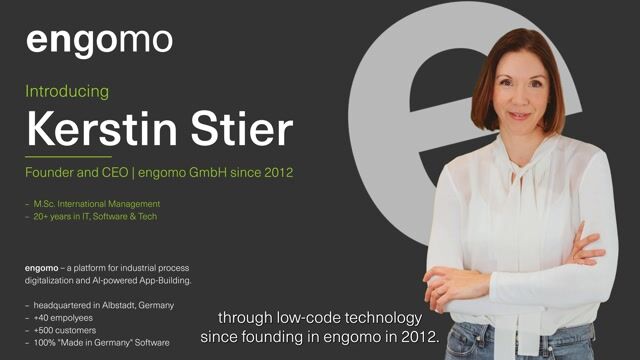
Kerstin Stier

What If Apps Built Themselves? AI-Powered Low-Code for the Industrial Enterprise

AI can build thousands of apps, but who governs them? Discover the low-code platform approach that brings speed, integration, and safety to industrial AI.

What If Apps Built Themselves? AI-Powered Low-Code for the Industrial Enterprise
#1about 3 minutes

The persistent failure of digital transformation in industry

Many digital transformation projects fail due to fragmented operational landscapes, inflexible ERP systems, and unmanaged complexity.

#2about 1 minute

Balancing speed, stability, and governance in operations

Industrial enterprises must scale digitization quickly while maintaining the stability and governance required for their complex, mission-critical workflows.

#3about 2 minutes

How AI changes development but not industrial reality

While AI coding tools dramatically increase developer productivity, they don't change the fundamental industrial need for deterministic execution and operational resilience.

#4about 3 minutes

Combining AI-powered speed with a low-code backbone

The solution for industrial apps is combining AI's rapid development speed with a low-code backbone that provides industrial integration and a deterministic execution layer.

#5about 2 minutes

Platform architecture for governed industrial application development

A robust platform for industrial apps includes reusable components, governed low-code plugins, a deterministic process engine, and Git-based version management.

#6about 1 minute

Demo of an AI builder creating a shop floor application

A demonstration shows how a natural language prompt is used to generate 80% of a functional shop floor application, including UI and data sources.

#7about 2 minutes

Case study of a paperless shop floor orchestration app

A German manufacturer created a single, unified worker app to orchestrate production by integrating ERP, quality management, and machine data.

#8about 3 minutes

Building the platform layers for future agentic processes

Future agentic systems require a platform with layers for system integration, execution logic combining agents with deterministic processes, and human collaboration.

#9about 2 minutes

Practical use cases for AI agents in manufacturing

AI agents are already being used safely and effectively in manufacturing for tasks like predictive maintenance, production planning, and automated document validation.

#10about 1 minute

The future of industrial apps is agentic and governed

Industrial companies will build thousands of AI-generated apps, requiring orchestration platforms that provide a scalable framework for integration and governance.

Related jobs
Jobs that call for the skills explored in this talk.

Featured Partners

Related Articles

View all articles

From learning to earning

Jobs that call for the skills explored in this talk.