

Operations Research / Systems Analyst (ORSA) - Optimization & Mathematical Programming

SMX, LLC
Albany, NY, United States
about 1 month ago

Role details

Contract type
Permanent contract
Employment type
Full-time (> 32 hours)
Experience level
Experienced
Experience required
3 years minimum
Compensation
$123,000.0 - $206,000.0
Working hours
Regular working hours
Job source

Tech stack

Algorithm Design IBM ILOG CPLEX Optimization Studio (CPLEX) Information Engineering Data Visualization Database Queries Decision Support Systems Game Theory Integer Programming Python (Programming Language) Linear Programming Mathematical Programming Operational Data Store
+7 more
Open Source Technology Power BI SQL Databases Tableau (Software) SC Clearance Optimization Algorithms Network Optimization

Job description

Mathematical Optimization & Resource Allocation

  • Formulate real-world resource allocation problems as mathematical optimization models (linear programming, integer programming, mixed-integer programming)
  • Develop and implement optimization algorithms for complex assignment problems including adjudicator workload distribution, facility inspection scheduling, and investigator allocation
  • Apply constraint programming and heuristic methods to solve large-scale, computationally challenging optimization problems
  • Build decision support tools that enable operational leaders to explore tradeoffs and make resource deployment decisions with mathematical rigor

Strategic Analysis & Decision Support

  • Conduct cost-benefit analyses and apply mathematical programming techniques to optimize the distribution of personnel, budgetary, and operational resources across competing requirements
  • Apply risk-based optimization to prioritize facility assessments, case assignments, and inspection schedules based on threat levels and resource constraints
  • Perform trade-space analysis and sensitivity studies to understand how optimal solutions change under different assumptions, constraints, or objectives
  • Develop multi-objective optimization approaches that balance competing goals (speed, quality, cost, risk mitigation)

Model Development & Implementation

  • Utilize optimization solvers (Gurobi, CPLEX, or open-source alternatives like Pyomo, PuLP, OR-Tools) to implement and solve mathematical models
  • Validate optimization model outputs against historical operational data and subject matter expert judgment
  • Develop prescriptive analytics that recommend specific actions based on optimization results
  • Create scenario planning tools that allow decision-makers to explore “what-if” questions regarding resource allocation strategies

Collaboration & Communication

  • Work closely with modeling/simulation specialists to incorporate predictive analytics into optimization formulations
  • Partner with data engineering specialists to obtain empirically-grounded parameters, constraints, and objective function coefficients
  • Translate mathematical optimization results into clear, actionable recommendations for non-technical decision-makers
  • Present optimization approaches, tradeoff analyses, and recommendations to senior leadership
  • Participate in cross-functional team activities to maintain technical standards and share knowledge

Requirements

  • 8+ years of progressive, hands-on operations research experience, including demonstrated application of mathematical optimization, resource allocation modeling, and prescriptive analytics to real-world operational problems
  • 3-5 years of that experience supporting DoD or Intelligence Community mission areas such as personnel vetting, industrial security (NISP), counterintelligence, or insider threat
  • Expert-level proficiency in mathematical optimization including linear programming, integer programming, and mixed-integer programming
  • Hands-on experience with optimization solvers (Gurobi, CPLEX, FICO Xpress, or open-source alternatives such as Pyomo, PuLP, OR-Tools, COIN-OR)
  • Demonstrated ability to formulate real-world problems as mathematical programs, including objective function design and constraint identification
  • Proven proficiency in an analytical programming language (Python or R), with emphasis on optimization modeling libraries
  • Experience with constraint programming and heuristic solution methods for large-scale or computationally difficult problems
  • Strong foundation in algorithm design, computational complexity, and solution methods
  • Ability to validate optimization models using operational data and communicate results to non-technical stakeholders
  • Experience working in secure (classified) government environments
  • Secret clearance required (active or ability to obtain)

Desired Skills & Experience

  • Advanced degree in Operations Research, Applied Mathematics, Industrial Engineering, Management Science, or a related quantitative discipline
  • Familiarity with NISP, clearance adjudication processes, and/or insider threat/counterintelligence analytic frameworks
  • Experience with nonlinear optimization and stochastic optimization techniques
  • Knowledge of multi-objective optimization and Pareto analysis
  • Network optimization and graph algorithms (shortest path, max flow, matching problems)
  • Experience with scheduling and routing problems (job shop scheduling, vehicle routing)
  • Familiarity with game theory and decision analysis under uncertainty
  • Knowledge of operations research software (AMPL, GAMS)
  • Data visualization tools (Tableau, Power BI) for communicating optimization results
  • SQL and database querying skills to support model parameterization
  • Knowledge of queueing theory and simulation to better integrate with modeling specialists
  • Experience with statistical modeling and risk analysis to inform optimization formulations

Benefits & conditions

The SMX salary determination process takes into account a number of factors, including but not limited to, geographic location, Federal Government contract labor categories, relevant prior work experience, specific skills, education and certifications. At SMX, one of our Core Values is to Invest in Our People so we offer a competitive mix of compensation, learning & development opportunities, and benefits. Some key components of our robust benefits include health insurance, paid leave, and retirement.

The proposed salary for this position is:

$123,000-$206,000 USD

At SMX®, we are a team of technical and domain experts dedicated to enabling your mission. From priority national security initiatives for the DoD to highly assured and compliant solutions for healthcare, we understand that digital transformation is key to your future success.

We share your vision for the future and strive to accelerate your impact on the world. We bring both cutting edge technology and an expansive view of what’s possible to every engagement. Our delivery model and unique approaches harness our deep technical and domain knowledge, providing forward-looking insights and practical solutions to power secure mission acceleration.

SMX is an Equal Opportunity employer including disabilities and veterans.

Selected applicant may be subject to a background investigation and/or education verification.

SMX does not sponsor a new applicant for employment authorization or immigration related support for this position (i.e. H1B, F-1 OPT, F-1 STEM OPT, F-1 CPT, J-1, TN, E-2, E-3, L-1 and O-1, or any EADs or other forms of work authorization that require immigration support from an employer).

Apply for this position

This job is hosted externally. Click below to view the full posting and apply.

Apply on dejobs.org

Good distractions

Talks and stories from around this role — technically off-topic, practically not.

3:09 min

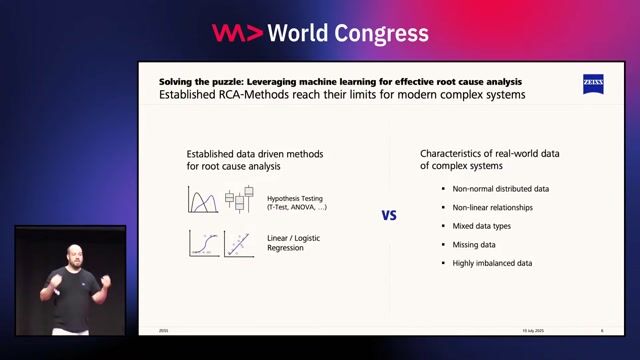
Balancing data science skillings alongside systems engineering rigor

Nico Schmidt · LIVE

1:45 min

Extracting transparent feature influence using SHAP and game theory

Bernhard Bernhard +1 · WWC 2025

1:24 min

Moving the semantic layer upstream to avoid vendor lock-in

Piotr Menclewicz Piotr Menclewicz · Europe 2026 Virtual

1:28 min

Self-assessing organizational readiness for functional algorithm scaling

Christopher May Christopher May · Europe 2026 Virtual

4:31 min

Applying formal explainability methods like lime and shap

Karol Przystalski · LIVE

3:48 min

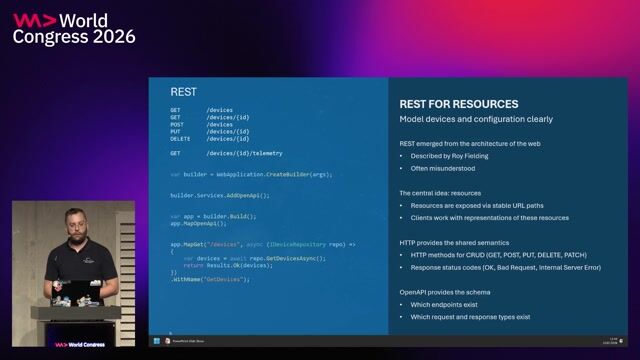
Standardizing data access schemas with OData

Florian Bader Florian Bader · WWC Europe 2026

Videos

See all

Related articles

See all