The Graph Data Scientist will support PRAC’s Advanced Analytic & Investigative Support Services program by designing, developing, and applying graph analytics solutions to detect fraud, waste, abuse, and mismanagement across large-scale federal benefit programs. This role will focus on identifying hidden relationships, non-obvious connections, suspicious networks, organized fraud rings, and cross-program fraud indicators using graph databases, graph algorithms, machine learning, and advanced analytic techniques.
The Graph Data Scientist will work closely with data scientists, data engineers, investigative analysts, forensic accountants, and Government stakeholders to develop graph-based fraud detection models, knowledge graphs, link analysis products, network visualizations, and analytic outputs that support oversight and investigative efforts.
The ideal candidate has hands-on experience with Neo4j or similar graph databases, Cypher or similar graph query languages, Python, graph machine learning, and fraud detection analytics., * Develop graph-based analytic solutions to identify fraud indicators, suspicious relationships, and complex entity networks.
- Apply graph techniques to detect potential fraud, waste, abuse, and mismanagement across federal benefit programs.
- Analyze relationships among individuals, businesses, addresses, bank accounts, phone numbers, emails, IP addresses, applications, transactions, and other relevant entities.
- Identify hidden links, shared attributes, high-risk clusters, and non-obvious connections across multiple datasets.
- Support fraud detection use cases involving identity fraud, synthetic identity fraud, eligibility fraud, organized fraud rings, cross-program fraud, and collusive networks.
Graph Database Development
- Design, build, query, and optimize graph databases using Neo4j or similar graph platforms.
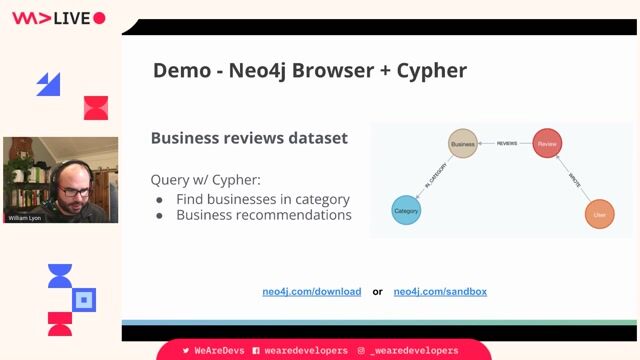
- Write and optimize Cypher queries or similar graph query language logic.
- Develop graph data models, schemas, nodes, relationships, properties, and metadata structures.
- Support ingestion, transformation, and integration of structured and unstructured data into graph environments.
- Design scalable graph architectures capable of supporting large, complex, high-volume datasets., + Centrality measures
- Community detection
- Shortest path analysis
- Network topology analysis
- Similarity scoring
- Link prediction
- Clustering
- Connected component analysis
- Develop analytic methods to identify influential nodes, suspicious communities, fraud clusters, and unusual relationship patterns.
- Translate graph algorithm results into actionable investigative insights., * Develop models using clustering, classifiers, anomaly detection, and graph-based risk scoring.
- Support development of knowledge graphs and graph-enhanced fraud detection models.
- Collaborate with the Technical Analytics Manager / Lead Data Scientist to integrate graph analytics into broader fraud detection models and analytic workflows.
- Use Python and standard machine learning libraries to build, test, and refine graph-based analytic methods., * Collaborate with Data Engineers to design, implement, and optimize graph data pipelines.
- Support ingestion of data from public, non-public, commercial, and Government data sources.
- Identify data gaps, data quality issues, entity resolution challenges, and relationship mapping opportunities.
- Ensure graph data pipelines are reliable, scalable, documented, and aligned with enterprise data management standards.
- Support development of reusable graph analytics workflows and technical documentation., * Support investigative analysis by developing graph outputs that help explain complex fraud networks.
- Create visualizations, relationship maps, link analysis products, and analytic summaries for Government stakeholders, OIG partners, and law enforcement users.
- Assist investigative analysts and forensic accountants in interpreting entity relationships, financial networks, and suspicious activity patterns.
- Translate technical graph analytics findings into clear, defensible, and easy-to-understand outputs.
Documentation & Quality Control
- Document graph methodologies, data sources, assumptions, query logic, algorithms, findings, and limitations.
- Conduct quality control reviews of graph outputs, models, and relationship mappings.
- Ensure graph analytics products are reliable, repeatable, defensible, and suitable for oversight and investigative use.
- Support project artifacts, technical documentation, code repositories, and analytic work products.


 Piotr Menclewicz · Europe 2026 Virtual
 Viktoria Semaan · WWC Europe 2026