
Data Science Officer

Manitoba Corporation
United States
29 days ago

Role details

Contract type
Permanent contract
Employment type
Full-time (> 32 hours)
Experience level
Experienced
Experience required
3 years minimum
Compensation
$98,218.0 - $135,595.0
Working hours
Regular working hours
Job source

Tech stack

IBM Watson JavaScript (Programming Language) Microsoft Excel Agile Methodology Artificial Intelligence Data Analysis Artificial Neural Networks Computer Vision Microsoft Azure Big Data C++ (Programming Language) Cloud Computing
+55 more
Cluster Analysis Code Review Encodings Cognitive Science Cyber Security Databases Information Engineering Data Mining Data Visualization Relational Databases DevOps Distributed Data Store Generalized Linear Model R (Programming Language) Apache Hadoop MapReduce Apache Hive SPSS (Software) Python (Programming Language) KNIME MATLAB Machine Learning Microsoft Software MongoDB Natural Language Processing NoSQL Scrum Methodology RStudio RapidMiner SAP (Applications) SAS (Software) Scala (Programming Language) PL-SQL SQL Databases Text Mining Enterprise Data Management Jupyter Notebook Google Cloud Cloud Platform System Random Forest Apache Spark Deep Learning Generative AI Kubernetes Information Technology Statistics Packages Cassandra Data Analytics Apache Kafka Machine Learning Operations Dataiku Docker Alteryx Databricks Programming Languages

Job description

Reporting to the Enterprise Data & Analytics Lead, the Data Science Officer is responsible for planning, executing, and delivering data science and advanced analytics solutions by modeling complex business problems through statistical, algorithmic, mining, and visualization techniques. The focus of this role will be in machine learning (ML), artificial intelligence (AI), modelling and associated data solution development, utilizing and enabling hypothesis-based problem analysis, data exploration and preparation, data collection and integration, and operationalization for both everyday AI (optimization) and future AI (innovation). Further, this role will support business leaders by creating business insights, reports, and analyses to aid in the decision-making process.

The Data Science Officer is expected to be visionary and strategic with an ability to turn innovative ideas for the utility industry into real business value through an open mindset. The Data Science Officer also provides technical leadership in the development of enterprise policies and strategies to leverage ML and AI to achieve business outcomes. There is a clear expectation that ML and AI solutions will be developed and deployed using explainable, responsible and ethical practices to ensure these technologies are used appropriately and to effectively manage associated risks and biases. Success also hinges on the ability to collaborate effectively with a diverse range of stakeholders including other Data Scientists, Data Engineers, Data Developers, Data Architects, Enterprise Architecture, Cyber Security, and Cloud Platform teams, to design and implement robust, secure, data science and advanced analytics solutions., * Designs and conducts data analyses with the highest standard of rigor and scientific accuracy, including study design, methodology, algorithms, and statistical modeling

  • Performs large-scale experimentation and builds data-driven models to identify hidden relationships between variables in large datasets and to answer business questions
  • Proactively mines data sources to identify trends and patterns and generates insights for business stakeholders and senior leadership
  • Leads projects that implement complex ML and AI solutions, leveraging complex and advanced tools and techniques
  • Anticipates internal customers’ short and long-term needs by proactively identifying Machine Learning (ML) and Artificial Intelligence (AI) opportunities; innovates for utility industry solutions and shares these opportunities with business stakeholders to validate relevance and value
  • Collaborates with business stakeholders, providing consultative advice and expertise to translate complex business needs into analytics requirements to support business decisions
  • Develops and maintains strong working relationships while growing utility industry knowledge to assess longer-term more strategic needs of internal customers across the organization
  • Grows knowledge through developing working relationships with industry and academic contacts to research classical and cutting-edge techniques and tools in machine learning, deep learning, artificial intelligence, statistical analysis, and visualization techniques and keep abreast of industry best practices
  • Documents and mentors team members in guidelines and standards, ensuring process alignment, shares technical expertise, provides training, performs code reviews, directs the execution of their tasks, and provides feedback on their technical performance
  • Partners with D&T and business stakeholders to develop ML and AI policies and strategies
  • Delivers formal presentations to internal business stakeholders at various levels including executives

Requirements

  • A four year degree in Computer Science, Data Science, Statistics, Artificial Intelligence, Applied Mathematics, or a related quantitative field from a university of recognized standing with a minimum of five years general IT experience, including three years of directly applicable Data & Analytics programming experience launching, planning, and executing data science projects, including statistical analysis, data engineering, and data visualization

Or

  • A two year diploma in Data Science, Statistics, Artificial Intelligence, or a related quantitative field with a minimum of seven years general IT experience, including three years of directly applicable Data & Analytics programming experience launching, planning, and executing data science projects, including statistical analysis, data engineering, and data visualization

Or

  • Alternate experience and education in equivalent areas such as economics, engineering, or physics is acceptable; experience in more than one area is strongly preferred
  • A specialization in ML, AI, cognitive science or data science is preferred
  • Microsoft and/or Databricks certifications in AI and ML preferred
  • Fluency in multiple programming languages and statistical analysis tools such as Python, Jupyter Notebook, C++, JavaScript, R, Scala, SAS, Excel, SQL, MATLAB, SPSS
  • Experience with relational database programming languages including SQL and PL/SQL as well as nonrelational databases such as NoSQL/Hadoop-oriented databases including MongoDB, Cassandra, etc.
  • Knowledge of distributed data/computing tools such as Spark, MapReduce, Hadoop, Hive, or Kafka
  • Experience working across multiple deployment environments including cloud, on-premises, and hybrid, and multiple operating systems and containerization techniques such as Docker, Kubernetes, Azure, etc.
  • Strong understanding of AI domains such as ML, Generative AI, Optimization, Graphs, and Simulation, and their potential roles in solving business problems such as prediction/forecasting, planning, computer vision, recommendation, natural language processing, content generation, and knowledge discovery.
  • Experience in one or more of the following commercial/open-source data discovery/analysis platforms: RStudio, Spark, KNIME, RapidMiner, Alteryx, Dataiku, H2O, SAS Enterprise Miner (SAS EM) and/or SAS Visual Data Mining and Machine Learning, Microsoft AzureML, Databricks, IBM Watson Studio or SPSS Modeler, Amazon SageMaker, Google Cloud ML, SAP Predictive Analytics
  • Experience in statistical and data mining techniques such as generalized linear model (GLM)/regression, random forest, boosting, trees, text mining, hierarchical clustering, deep learning, convolutional neural network (CNN), recurrent neural network (RNN), T-distributed Stochastic Neighbor Embedding (t-SNE), graph analysis, etc.
  • Experience in applying DevOps/MLOps methods to the construction of ML and data science pipelines
  • Knowledge of Responsible AI with demonstrated experience aligning to Responsible AI best practices
  • Understanding of Data Privacy regulations and best practices
  • Experience in DevOps and Agile (Scrum/Kanban), preferred
  • Willingness and ability to learn new technologies on the job
  • Ability to communicate complex projects, models, and results to a diverse audiences with a wide range of technical and non-technical understanding
  • Ability to work in diverse, cross-functional teams in a dynamic business environment
  • Good presentation skills, including storytelling and other techniques to guide and inspire
  • Ability to create relationships quickly and strengthen relationships confidently
  • Demonstrated ability to be the technical lead on multiple projects or activities with competing priorities

Benefits & conditions

  • Competitive salary and comprehensive benefits package.
  • Defined-benefit pension plan for long-term financial security.
  • Nine-day work cycle, typically resulting in every other Monday off to support a balanced approach to work, family life and community., Starting salary will be commensurate with qualifications and experience. The range for the classification is $47.22-$65.19 Hourly, $90,484.68-$124,925.58 Annually.

About the company

Manitoba Hydro is consistently recognized as one of Manitoba’s Top Employers! We are a leader among energy companies in North America, recognized for providing highly reliable service and exceptional customer satisfaction. Join our team of Manitoba’s best as we continue to build a company that champions safety, supports innovation, and delivers on our commitment to customer service - while actively fostering a diverse, equitable, and inclusive workplace reflective of the communities we serve.

Apply for this position

This job is hosted externally. Click below to view the full posting and apply.

Apply on arc.dev

Good distractions

Talks and stories from around this role — technically off-topic, practically not.

2:07 min

Inspecting default bridge architectures and custom Docker networks

Oliver Seitz Oliver Seitz · WWC 2025

2:37 min

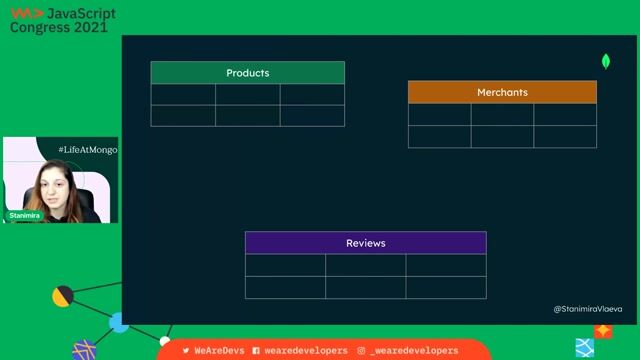
Comparing traditional SQL tables versus NoSQL non-tabular databases

Stanimira Vlaeva · JS Congress

3:03 min

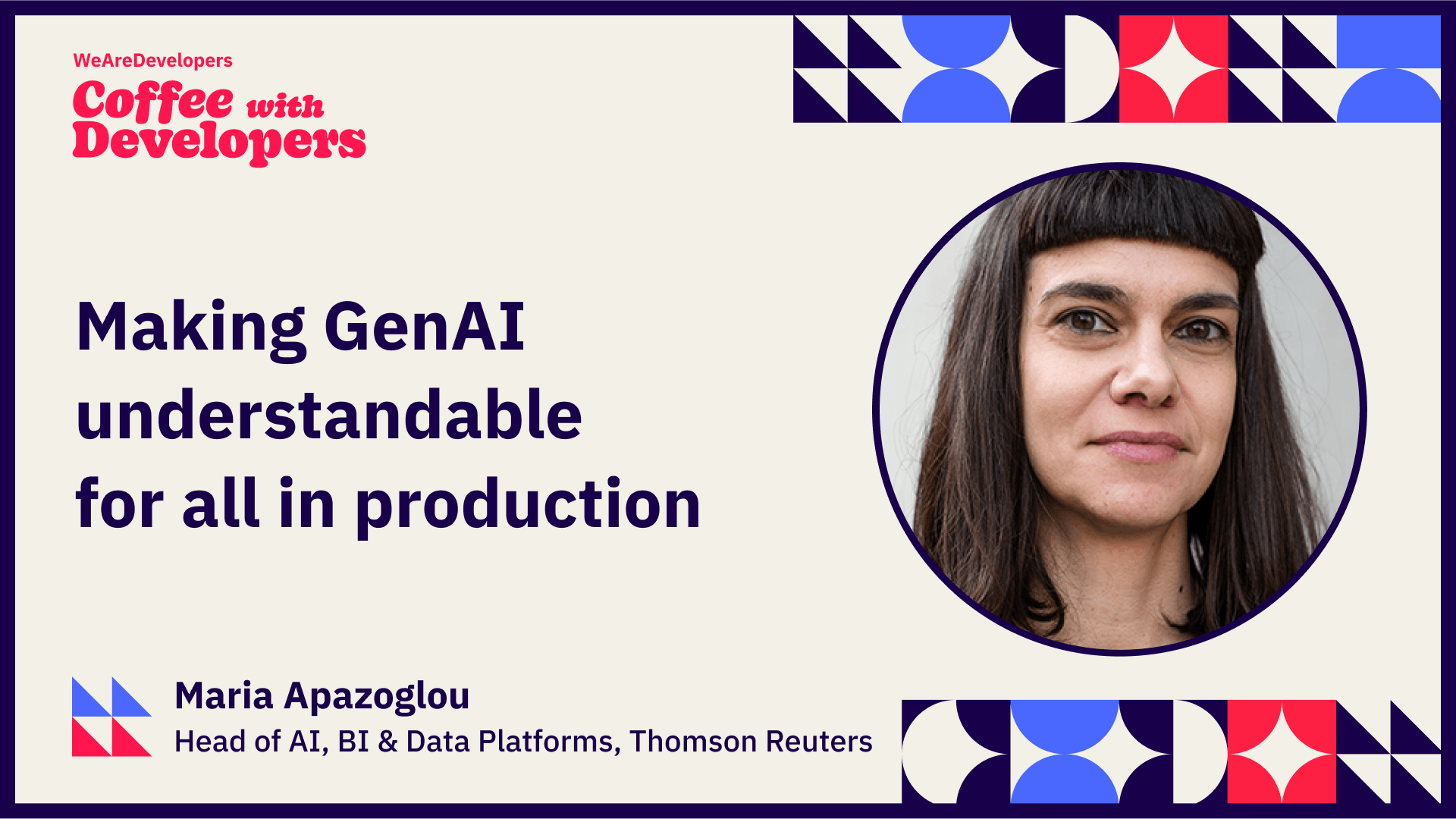
Career evolution in data engineering and AI platforms

Maria Apazoglou · Coffee With Developers

2:34 min

Docker sandbox architecture and microVM environment integration

Manuel de la Peña Manuel de la Peña · WWC Europe 2026

3:16 min

Terminology differences between relational and NoSQL databases

Tim Faulkes · LIVE

1:34 min

Bringing diverse skills to industrial data science roles

Katja Träumner

Videos

See all

Related articles

See all