
Senior Systems Software Engineer

Noda AI Inc.
Austin, TX, United States
18 days ago

Role details

Contract type
Permanent contract
Employment type
Full-time (> 32 hours)
Experience level
Expert
Experience required
5 years minimum
Working hours
Regular working hours
Job source

Tech stack

Systems Engineering BASIC (Programming Language) C++ (Programming Language) Command-Line Interface Continuous Integration Software Debugging Linux Linux on Embedded Systems Middleware Network Interface Controllers Python (Programming Language) Uptime
+19 more
Mesh Networking Message Queuing Telemetry Transport (MQTT) Multicasting Networking Basics Real-Time Operating Systems Requirements Traceability Software Engineering TCP/IP ZeroMQ (Concurrent Programming Libraries) Datadog Data Logging Real Time Systems Multi-Agent Systems Containerization Kubernetes Low Latency Bare Metal Grpc Docker

Job description

As a Systems Software Engineer, you will work across NODA’s cross-system infrastructure - the messaging fabric, gateway, and runtime built on real-time messaging frameworks (DDS, ROS/ROS2, and similar) that coordinate fleets of heterogeneous unmanned systems in real time - debugging and resolving issues that don’t respect team boundaries. You’ll pinpoint performance and integration issues end to end, write software stacks under a systems architect’s supervision where the work falls outside Core Engineering’s product ownership, and work directly with networking, RF, and hardware subject matter experts when an issue requires investigation below the software layer. You’ll also support the System Health function - characterizing performance baselines, analyzing crashes to root cause, and producing the verification evidence the organization relies on for release decisions., * Debug and resolve cross-system issues spanning software, real-time messaging, networking, RF, and hardware - owning the investigation even when the root cause sits outside your primary depth

  • Pinpoint performance and latency issues in cross-system infrastructure (messaging fabric, gateway, runtime) supporting multi-agent coordination, and drive them to resolution
  • Write and maintain software stacks under a systems architect’s supervision, for work outside Core Engineering sub-teams’ product ownership
  • Investigate and characterize system behavior under degraded, intermittent, or contested link conditions
  • Perform hands-on hardware diagnostics using basic bench tools (multimeter, oscilloscope) to isolate issues at the hardware/software boundary
  • Hold credible technical conversations with networking, RF, and hardware SMEs - translate their findings into system-level constraints and software fixes
  • Contribute to System Health: performance baselining, system-level verification, crash analysis to root cause, and KPI/dashboard evidence used for release go/no-go decisions, with a focus on driving measurable improvements in latency, reliability, and uptime
  • Identify and mitigate cross-system risks impacting mission effectiveness, including in live exercises or deployments
  • Support integration tooling, CI/CD for cross-system components, and automated regression in SIL/HIL environments
  • Maintain Interface Control Documents and integration contracts between major platform components, and translate field/operational requirements into system constraints Core Engineering and architects can build against
  • Build observability into cross-system components (logging, tracing, metrics) to make the next debugging pass faster, * L5 - Systems Software Engineer: Owns individual debugging and integration tasks within cross-system infrastructure; writes software under architect supervision; builds working fluency in networking, RF, and hardware-level debugging.
  • L6 - Senior Systems Software Engineer: Owns end-to-end resolution of cross-system performance, latency, and integration issues with minimal supervision; contributes independently to System Health baselining and crash analysis; represents Systems Engineering in cross-team design sessions.
  • L7 - Staff Systems Software Engineer: Drives systems-level technical conduit work independently - translates field and customer requirements into system constraints, owns ICDs for assigned subsystems, and is a primary escalation point for integration risk, release-readiness, and mission assurance evidence.

Requirements

  • 5+ years of professional software engineering experience, including significant time debugging distributed, real-time, or multi-service systems in production
  • Strong proficiency in C++ and/or Python, with the ability to write production-quality software with architect-level supervision on system design
  • Experience with real-time or low-latency messaging/middleware (e.g., DDS, ROS/ROS2, ZeroMQ, MQTT, gRPC) in distributed or multi-agent contexts
  • Solid working knowledge of networking fundamentals (TCP/IP, multicast, basic routing) sufficient to debug connectivity/performance issues and converse credibly with networking engineers
  • Working familiarity - conversational depth plus basic debugging, not specialist design work - with RF/wireless concepts (link quality, interference, basic link budget reasoning)
  • Comfortable using basic hardware bench tools (multimeter, oscilloscope) to debug at the hardware/software boundary
  • Demonstrated ability to debug across layers - application, network, RF, and hardware-adjacent - and to know when to pull in a specialist versus solve it directly
  • Experience with Linux systems and command-line debugging tooling
  • U.S. Citizenship with the ability to obtain a security clearance, * Experience operating or debugging systems in contested/denied conditions (jamming, intermittent links, degraded bandwidth)
  • Experience with Linux-based or real-time systems in resource-constrained, embedded, or edge environments (embedded Linux, bare-metal, RTOS)
  • Familiarity with containerization for edge deployment (Docker/K8s) and observability tooling (OpenTelemetry, Jaeger, or similar)
  • Experience with simulation, HIL/SIL pipelines, or sim-to-field validation workflows
  • Familiarity with security considerations in tactical comms or cross-domain solutions
  • Prior work in defense, aerospace, or other mission-critical/regulated environments
  • Experience authoring ICDs, requirements traceability, or MBSE artifacts
  • Exposure to tactical radios, MANET, or mesh networking in a support/integration capacity, * Comfortable being the generalist in the room - credible across software, network, RF, and hardware conversations without needing to be the deepest expert in any one
  • Strong ownership instinct; debugs to root cause rather than handing off at the first sign of unfamiliar territory
  • Results-oriented - thinks in terms of measurable system KPIs (latency, reliability, uptime), not just task completion
  • Clear written communicator - translates field/debugging findings into structured specs, crash reports, and feedback Core Engineering can act on
  • Operates well under a systems architect’s supervision on unfamiliar scope, without needing constant direction

Benefits & conditions

Pulled from the full job description

  • 401(k)
  • Health insurance
  • Paid time off
  • Vision insurance
  • Dental insurance, * Competitive compensation
  • Flexible PTO + federal holidays
  • 401(k)
  • Comprehensive medical, dental, and vision benefits
  • Free One Medical membership

About the company

NODA is a veteran-owned, venture-backed technology company transforming how unmanned systems collaborate in complex, mission-critical environments. As NODA scales across products, partners, and deployment environments, keeping the system coherent in practice - not just on paper - is what separates a platform that works in the field from one that only works in a demo.

Our Systems Software Engineers are the people who can stand at the seam between subsystems - software, networking, RF, and hardware - and make sense of what’s actually happening when something breaks in degraded, contested, or denied conditions. You won’t be the deepest RF, networking, or hardware specialist in the room, but you’ll be able to hold your own in that conversation, pinpoint where in the stack a problem actually lives, and write the software - or pick up a multimeter - needed to prove it.

Apply for this position

This job is hosted externally. Click below to view the full posting and apply.

Apply on www.indeed.com

Good distractions

Talks and stories from around this role — technically off-topic, practically not.

4:18 min

Prioritizing communication and structural awareness over strict tool mastery

Liam Hurrel +1 · WWC 2021

2:00 min

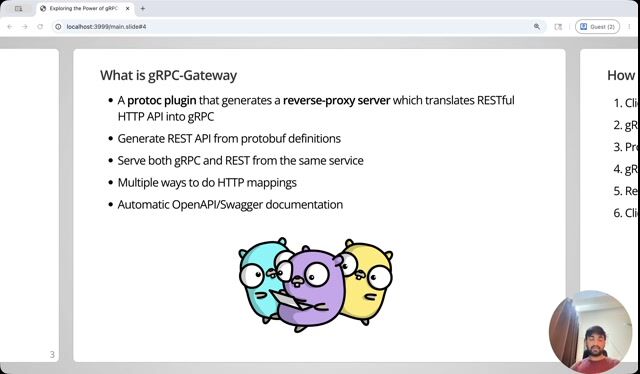
Overview of gRPC and language-agnostic environments

Max Hausner Max Hausner +1 · WWC 2025

52 sec

Running persistent Linux environments directly on Windows

Ben Breard Ben Breard · WWC 2025

2:07 min

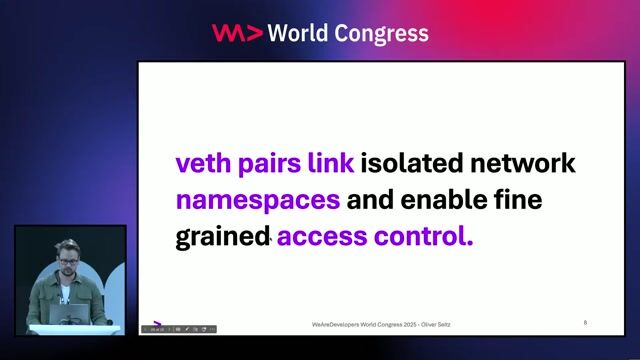
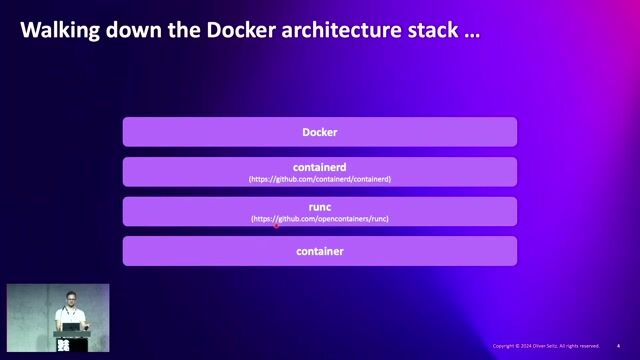
Inspecting default bridge architectures and custom Docker networks

Oliver Seitz Oliver Seitz · WWC 2025

1:20 min

Identifying multi-disciplinary talent for developer experience engineering roles

Hazal Mestci +1 · Coffee With Developers

1:11 min

Evaluating architectural trade-offs between REST and gRPC

Sakshi Nasha Sakshi Nasha · Europe 2026 Virtual

Videos

See all

Related articles

See all