

.png)
LM
Luis Minvielle
How to Become an AI Engineer
over 2 years ago
We are looking for an engineer with experience in low-level systems programming and optimization to join our growing ML team.
Machine learning is a critical pillar of Jane Street’s global business. Our ever-evolving trading environment serves as a unique, rapid-feedback platform for ML experimentation, allowing us to incorporate new ideas with relatively little friction.
Your part here is optimizing the performance of our models - both training and inference. We care about efficient large-scale training, low-latency inference in real-time systems, and high-throughput inference in research. Part of this is improving straightforward CUDA, but the interesting part needs a whole-systems approach, including storage systems, networking, and host- and GPU-level considerations. Zooming in, we also want to ensure our platform makes sense even at the lowest level - is all that throughput actually goodput? Does loading that vector from the L2 cache really take that long?
If you’ve never thought about a career in finance, you’re in good company. Many of us were in the same position before working here. If you have a curious mind and a passion for solving interesting problems, we have a feeling you’ll fit right in.
There’s no fixed set of skills, but here are some of the things we’re looking for:
If you’re a recruiting agency and want to partner with us, please reach out to agency-partnerships@janestreet.com.
This job is hosted externally. Click below to view the full posting and apply.
Apply on jobs.diversity.comTalks and stories from around this role — technically off-topic, practically not.
2:36 min
1:57 min
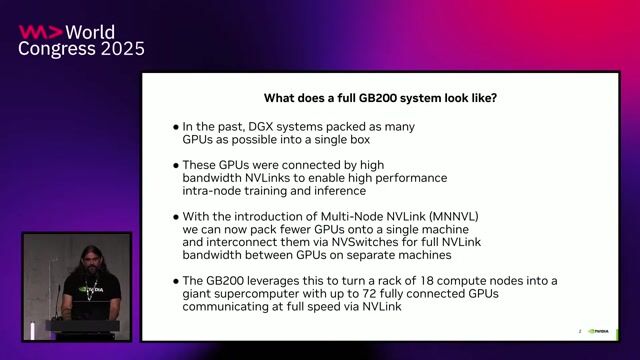
 Kevin Klues · WWC 2025
6:21 min
3:14 min
1:37 min
 Julia Koch +1 · WWC Europe 2026
7:10 min

.webp)
.gif)
.png)