EarnIn’s products must deliver speed, reliability, resilience, and trust to community members who depend on them. As EarnIn grows, we cannot rely on heroics, tribal knowledge, manual investigation, or isolated SRE expertise. We must embed reliability practices that scale across product engineering teams, enhance customer experience, and enable rapid shipping without increasing operational risk. This role exists to lead EarnIn’s next stage of reliability maturity: an AI-first operating model that uses AI to actively detect, investigate, respond to, learn from, and prevent production issues. As a Staff Site Reliability Engineer, you will guide technical direction for reliability across critical services, relying on AI-assisted workflows as key tools to reduce toil, speed incident response, improve production readiness, and enhance the operational quality of the engineering organization., * Act as a Staff-level technical leader: define standards, architect solutions, mentor engineers, influence cross-team efforts, and construct reusable systems and practices that multiply your impact.
- You will embed AI-first thinking into reliability practices, leveraging AI to streamline alert triage, accelerate incident investigation, automate runbooks, retrieve operational knowledge, enhance postmortem quality, track corrective actions, quantify reliability with scorecards, detect capacity risks, and analyze architectural risks.
- You will maintain human ownership and engineering judgment at the center of operations. AI aids engineers by speeding context gathering, clarifying reasoning, and reducing repetition, but it does not replace accountability.
- Collaborate with SRE, product engineering, infrastructure, security, and leadership teams to embed reliability, making it easy to adopt and impossible to ignore.
WHAT you will own
Reliability strategy and standards
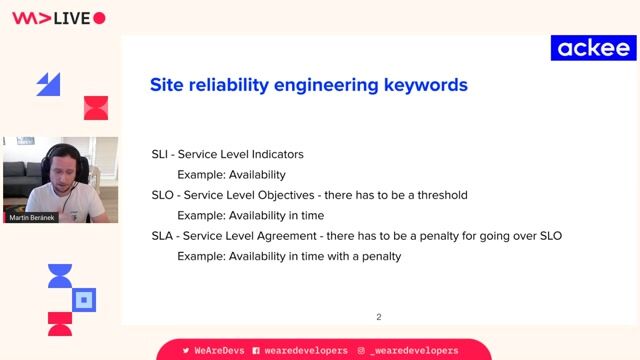
- Define and evolve reliability standards across critical services, including SLIs, SLOs, error budgets, production readiness, observability, incident response, and resilience patterns.
- Establish a reliability operating model that clarifies service ownership, operational expectations, and decision-making around reliability tradeoffs for product engineering teams.
- Use AI-assisted analysis to interpret reliability trends, detect weak operational signals, highlight capacity risks using pattern recognition, and generate actionable reliability scorecards for teams, clearly delineating where AI automates data gathering and insight generation.
AI-first incident response and operational workflows
- Overhaul key stages of the incident lifecycle to achieve faster detection, sharper triage, richer context retrieval, clearer communication, and stronger follow-through.
- Command high-severity incidents as Incident Commander and reinforce the systems, tools, and practices that simplify incident management.
- Design and implement workflows in which AI assists with alert correlation, signal enrichment, root-cause exploration, runbook retrieval, postmortem drafting, and corrective-action tracking.
- Ensure AI-assisted incident workflows remain reviewable, auditable, and safe by requiring human verification at all critical steps and maintaining clear operational ownership with humans accountable for final decisions.
On-call quality and toil reduction
- Elevate on-call quality by silencing noisy alerts, automating repetitive investigations, and enabling responders to rapidly digest service context.
- Build tools that gather context from systems like Datadog, CloudWatch, incident.io, Slack, runbooks, deployment history, and service metadata.
- Transition teams from reactive paging to proactive reliability enhancement.
Architecture and resilience
- Steer service designs for graceful degradation, failure isolation, robust capacity planning, and operational safety throughout EarnIn’s AWS environment.
- Apply production data, incident learnings, and AI analysis to spot architectural risks before they recur.
- Instruct engineering teams to embed reliability expectations into design reviews, launch protocols, and service evolution.
Mentorship and cross-org influence
- Coach engineers in reliability practices, incident response, SLOs, observability, production debugging, and AI-assisted operational workflows.
- Direct design reviews, incident reviews, and operational maturity discussions to improve engineering judgment across teams.
- Produce documentation, tooling, and reusable patterns that unlock reliability knowledge and enable action.
WHAT you’ll do
- Set a reliability strategy with AI at the center. Define SLIs, SLOs, and error budgets across critical services. Use AI to surface trends, predict capacity risks, and auto-generate reliability scorecards so teams act on data.
- Redesign the incident lifecycle around AI-assisted speed. Lead high-severity incident response as IC. Build AI-driven alert correlation and triage that reduces noise and accelerates root-cause identification. Drive adoption of AI-generated postmortems that surface systemic patterns and automatically track corrective actions through to completion.
- Improve on-call fundamentally better through automation. Build AI agents that draft runbook responses, pull relevant context from Datadog, incident.io, and Slack during pages, and recommend remediation steps, so on-call engineers spend less time deciding and searching.
- Push AI-first operations into product engineering teams. Partner with product engineering to embed AI-assisted investigation, alerting, and production readiness into their workflows. Make AI tooling the default path for every team that owns a service, not an SRE-only capability.
- Architect for resilience at scale Guide service designs for graceful degradation, failure isolation, and capacity planning across EarnIn’s AWS footprint (EKS, Kafka, DynamoDB, RDS, SQS). Use AI-driven analysis to identify architectural weak points before they become incidents.
- Raise the bar through mentorship and standards. Coach engineers on reliability practices, run design and incident reviews, and build documentation and tooling that makes reliability knowledge accessible. Set the expectation that AI-assisted workflows are how EarnIn operates, not an experiment.


 lgonta +1 · WWC 2024
 Nishil Patel · WWC 2025

.webp)
.webp)