


IK
Igor Khokhriakov
How We Built a Worry-Free System That Runs for 10+ Years – And What We’d Do Again
25 days ago
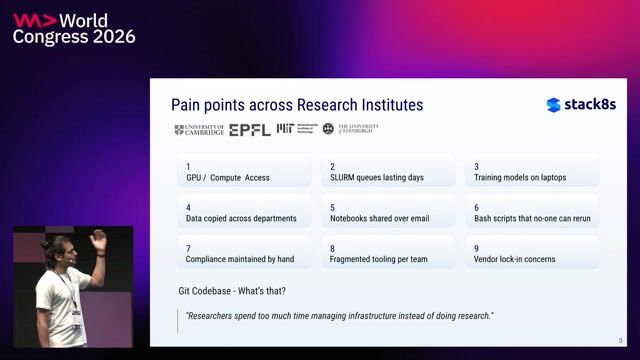
The Rafik B. Hariri Institute for Computing and Computational Science and Engineering (Hariri Institute) is a university-wide research center reporting to the VP for Research, which serves as the university’s premiere interdisciplinary hub for education, research, scholarship, innovation, and technology development associated with computational and data science research. Located in the University’s Duan Family Center for Computing and Data Sciences, the Hariri Institute community consists of over 400 faculty affiliates, 50+ administrative and research staff, 200 graduate students, and over $26 million in annual research expenditure. The Software & Application Innovation Lab (SAIL) at the Hariri Institute is a professional research, software engineering, and consulting lab that acts as both a driver and a collaborative partner for computational and data-oriented research efforts across Boston University. The Software Engineer position bridges the gap between scientific hypothesis and robust software execution. Reporting to the Director, you will work directly with postdocs, graduate students, and the Principal Investigator(s) to design, build, and maintain data pipelines, custom software tools, and computational workflows. This role ensures the lab’s research code is stable, scalable, reproducible, and ready for peer-reviewed publication. Core Responsibilities: Software Development & Engineering
Develop and maintain data processing pipelines, user interfaces, or visualization dashboards for lab datasets. Data & Infrastructure Management
Manage large-scale research datasets, ensuring secure storage, version control, and compliance with institutional data management policies. Research Collaboration & Support
Optimize existing code for performance, speed, and memory usage to handle growing dataset sizes. Sustainability & Open Science
Bachelor’s degree in Computer Science, Data Science, Bioinformatics, or a related scientific/quantitative discipline. Experience: 3-5 years of professional software engineering experience, or an equivalent mix of graduate-level research and development. Core Technical Skills: Proficiency in languages common to research (e.g., Python, R, C++, or Julia). Strong expertise with Git, GitHub/GitLab workflows, and writing automated tests. Experience working in Linux/Unix environments and writing shell scripts. Familiarity with containerization tools like Docker or Singularity. Additional Skills: Strong communication skills and the ability to explain technical software concepts to non-engineer scientists. Preferred Qualifications: Experience running jobs on High-Performance Computing (HPC) clusters using schedulers like Slurm. Experience with cloud platforms (AWS, GCP, or Azure) for scientific computing. Prior experience contributing to open-source software libraries or co-authoring scientific papers.
This job is hosted externally. Click below to view the full posting and apply.
Talks and stories from around this role — technically off-topic, practically not.
1:39 min
2:07 min
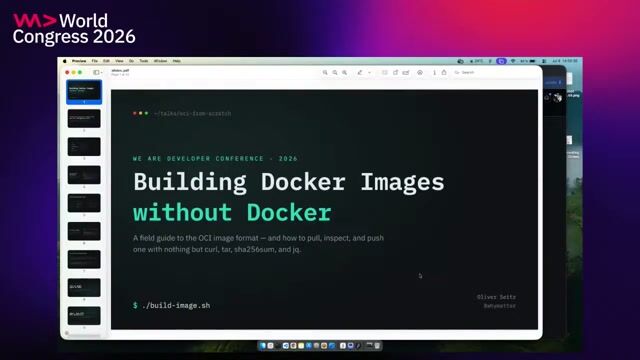
 Oliver Seitz · World Congress 2025
2:22 min
 Jeremy Murray · World Congress 2026 Europe
6:21 min
2:34 min
 Manuel de la Peña · World Congress 2026 Europe
1:51 min
Jeremy Murray · World Congress 2026 Europe



.webp)