We’re building a Customer Data Platform: one unified player profile across our group of brands. The platform should help the business:
- Improve acquisition. Understand who actually converts, and why others don’
- Increase conversion. Replace generic flows with journeys built for the specific player in front of us.
- Segment players properly. Who’s a high-value player? Who’s at risk of leaving? Who’s a VIP?
- Reactivate before churn. Spot players who are about to leave and bring them back with offers that match what they actually want.
Tech stack:
- Snowflake (with Snowpipe and Cortex Analyst LLM agent).
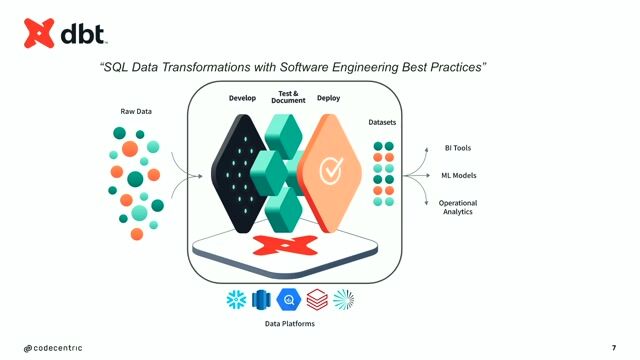
- dbt, Python.
- Airflow (Astronomer), AWS (S3, Lambda), Terraform, GitHub Actions.
- Omni BI on top. Reverse ETL into marketing platforms.
- Medallion architecture: bronze, silver, gold., You sit between the business (Product Owner, stakeholders) and the engineering team.
About 30% of your time is practical data work: validating that CDP capabilities behave as specified, exploring data before specs are written, testing hypotheses for new capabilities, building shared gold layer models that consumer teams use, and helping those teams understand what data is available. It is not business reporting or analytics built for individual brands.
The other 70% is Systems Analysis: turning what you find into specs engineers can build from, owning data quality from symptom to root cause, raising what isn’t right before it ships, and shaping the semantic layer so other business lines can find and trust the data.
Four things define the systems analysis side:
- Turn business intent into specs that engineers can build from. Talk to stakeholders, figure out what they actually need, and write it down. Each spec covers source schema, target model, transformation logic, business glossary, schedule, data quality checks, consumer, and use case. Stay reachable through development. Engineers will have questions.
- Find and fix data quality problems at the root, alongside the engineering function. Trace lineage, identify the cause, work with the data source owner on the fix, check downstream impact, and close the loop.
- Confirm what’s delivered does what we said it would. Validate against the spec you wrote. When the data isn’t right, you raise it before it ships.
- Make data usable beyond the team that asked for it. Contribute to the semantic layer, data descriptions, and shared definitions so other business lines can find what they need, understand what it means, and trust it without going through you each time., CDP build, identity resolution, data quality, semantic definitions, and governance. Business analytics on top of the platform, such as dashboards and performance reports for specific brands, is produced by analyst teams aligned to those brands. Your job is to make sure those teams can do theirs: trustworthy data, clear definitions, fast issue resolution., * The Data Engineering function. Your manager (Data Engineering Lead) and the engineers building the platform.
- Embedded QA function. Owns automated validation.
- Shared DevOps across the wider organisation.





 Sandhya Menon · WWC Europe 2026
 Dominik Krichbaum · WWC Europe 2026
 Joy · WWC 2024

.gif)
.webp)