
Rust
32 moments from 20 videos · 1:44:01 total
These selected presentation moments focus on memory safety, concurrency models, and systems engineering practices for developers building production-grade software in Rust.

Exploring Rust for cloud and web services
Cloud infrastructure teams are increasingly adopting Rust for platform services beyond traditional systems programming.
Collaborating through the new Rust commercial network
A free industry forum now connects commercial enterprises with core language maintainers to share resources and advance overall ecosystem maturity.
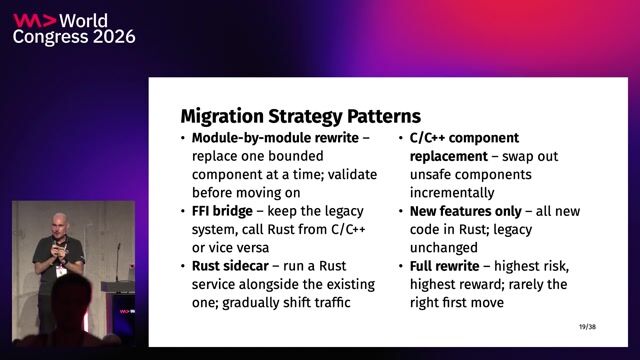
Common architectural patterns for migrating to Rust
Organizations incrementally migrate existing backend systems into Rust using bridged modules, proxy sidecars, and targeted component rewrites.

Understanding the demographics of global Rust developers
Survey data reveals the geography, primary programming languages, and backend infrastructure focus of the growing developer base.
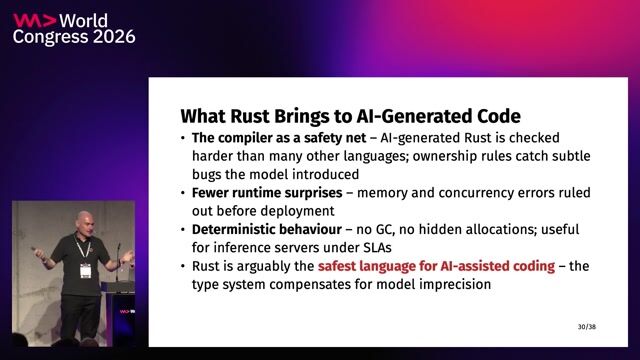
Leveraging Rust as a target for AI code generation
Strict compiler constraints effectively limit AI hallucination, making the language exceptionally stable for automated code generation workflows.
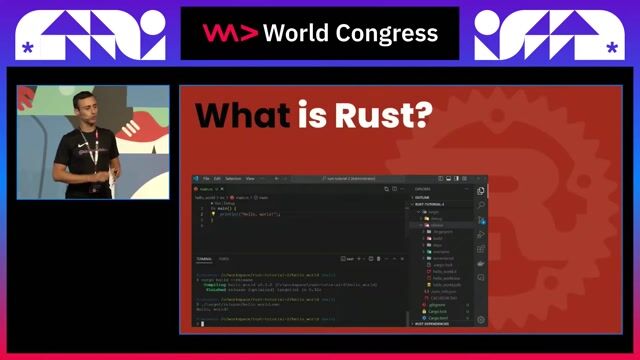
Key features and benefits of the Rust programming language
Solving system memory flaws without relying on garbage collectors is achieved using Rust's unique ownership traits and exceptionally strict compilation validation.
Building a backend web API with Rust and Actix
Validating complex nested HTTP transaction requests securely is managed by parsing rigid data structures over native Rust asynchronous logic loops.
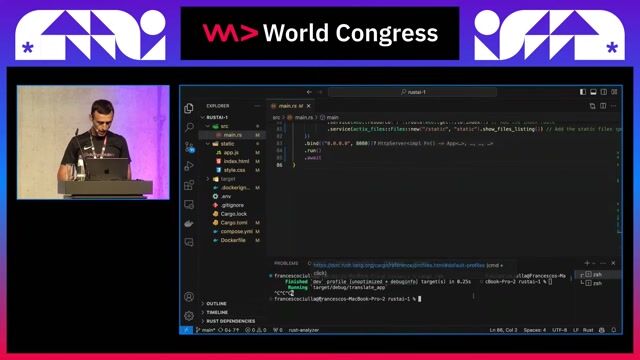
Containerizing the completed Rust application utilizing Docker Compose
Standardizing consistent multi-service deployment topologies involves tracking layered operating system requirements within comprehensive centralized build manifests.
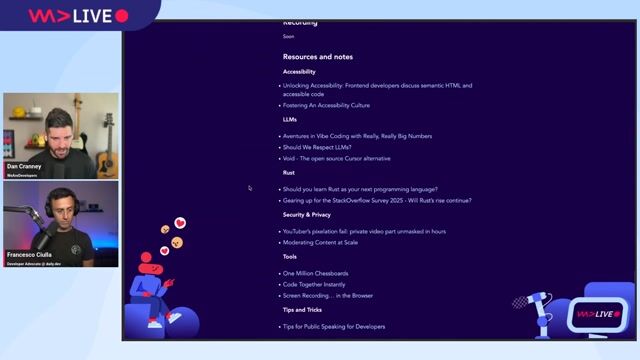
Exploring the rising adoption and versatility of Rust
Addressing performance bottlenecks with system-level languages opens new opportunities for building full-stack web applications.

Introduction to Rust's ownership model and guided memory management
Learning Rust's ownership model provides guided memory management for developers.

Why learning Rust offers strategic advantages for web developers
Exploring alternatives to crowded web frameworks reveals how learning Rust provides future-proof skills across diverse development domains.

Creating an AI-powered app using Rust and Docker technologies
Combining preferred technologies like Rust and Docker helps developers generate practical ideas for multilingual artificial intelligence applications.
Evaluating the advantages of Rust macros for boilerplate reduction
Generating boilerplate code dynamically during build time simplifies developer tools.
Parsing Rust implementations using the Syn crate and inline modules
Combining syntax tree parsers and environment paths extracts crate contexts comprehensively across isolated modules.
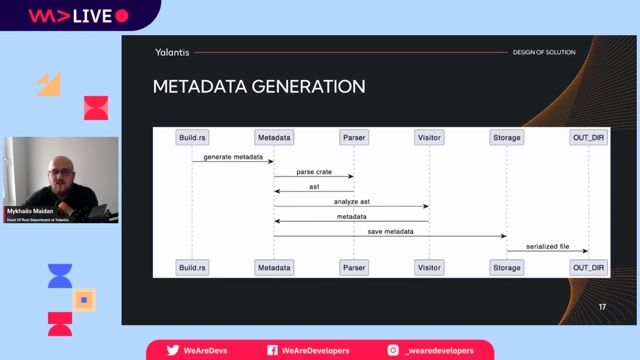
Implementing a metadata analyzer inside Rust build scripts
Analyzing abstract syntax trees inside build scripts captures essential architectural requirements before compilation.
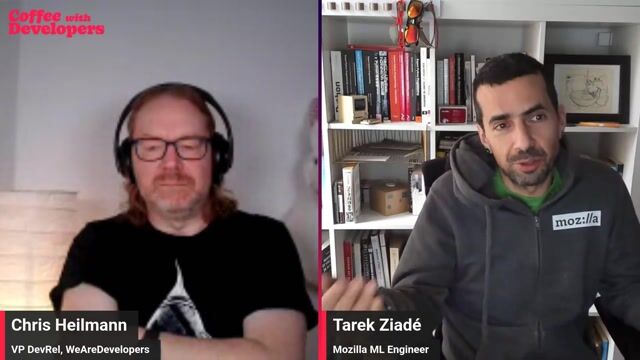
Evaluating JavaScript and Rust for internal web browser features
The friction of writing systems-level Rust can be mitigated by utilizing modern code generators.

Using Rust-based Linux core utilities on Windows
Executing familiar Linux command-line tools in the Windows environment using open-source Rust implementations.
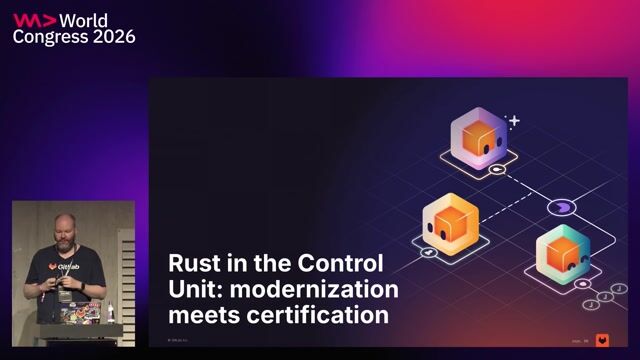
Evaluating Rust for modernizing embedded C firmware
Physical hardware limitations and strict ISO certification protocols frequently restrict automatic transitions from embedded systems to newer languages.
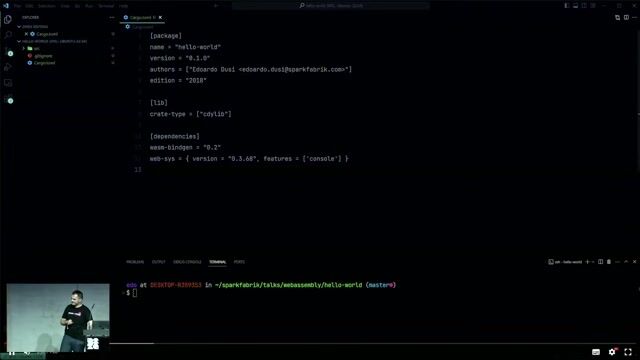
Compiling Rust code to WebAssembly for JavaScript runtimes
Translating basic Rust functions into WebAssembly formats allows native execution within standard Node and browser environments.
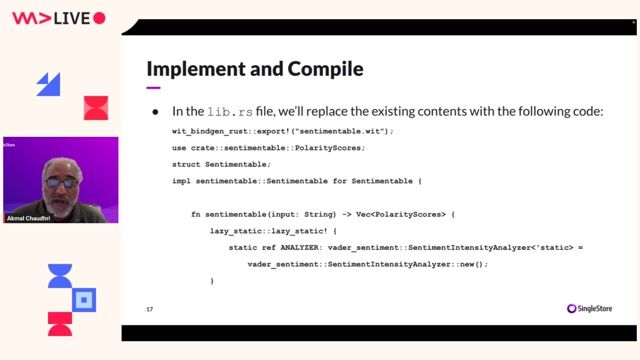
Compiling and uploading Rust logic into the DBMS
Creating the actual sentiment scoring function in Rust and pushing it to the database for use as a user-defined function.
Setting up the Wasm SDK and Rust toolchain
Instructions for downloading and configuring the WebAssembly SDK and Bytecode Alliance tools for local development.

Opening ongoing Clojure and Rust system developments to contributors
Encouraging early public oversight exposes evolving repository layouts to valuable external testing architectures before stable releases.
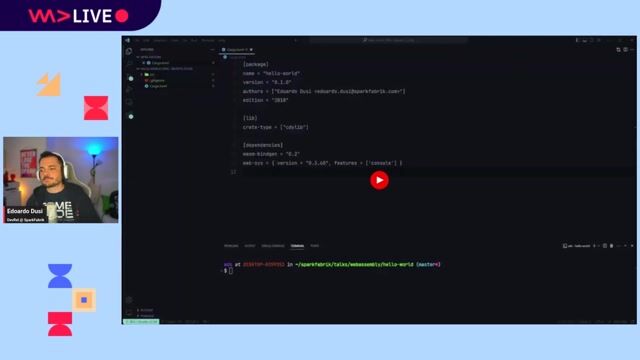
Compiling Rust to WebAssembly for browser deployment
Demonstrating how cross-compiled modules seamlessly integrate and execute within a standard JavaScript environment.
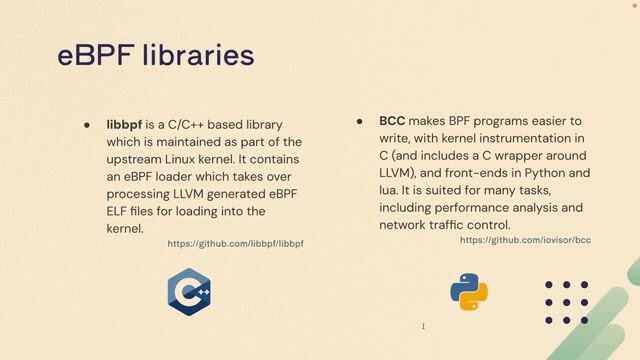
Comparing runtime libraries for C Go and Rust
High level bindings facilitate building loaders and logic for tools like Aya or BCC using popular programming languages.
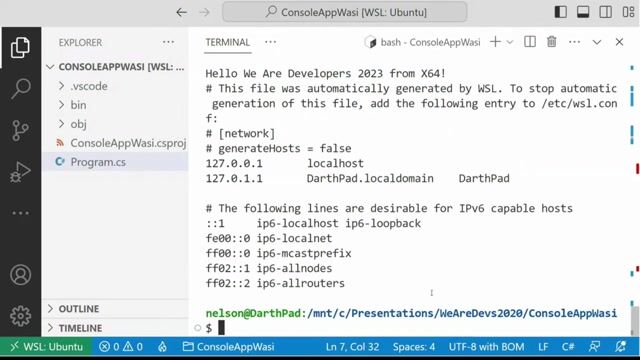
Extending managed applications with external Rust components
Cross-language setups require strict directory mapping constraints to maintain strong capability-based protections when calling external module dependencies.

Accelerating high-density particle calculations with Rust and WebGPU
Offloading complex physics calculations to compiled binaries and specialized graphics hardware dramatically improves browser frame rates.
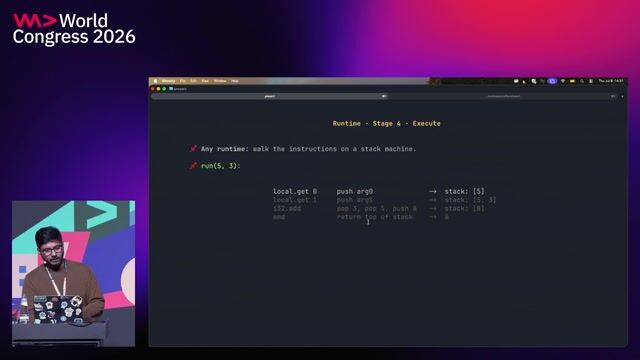
Executing instructions using a stack machine model in Rust
Building a functional runtime mechanism requires carefully handling instruction logic by pushing and popping sequence formats mapped through language enums.
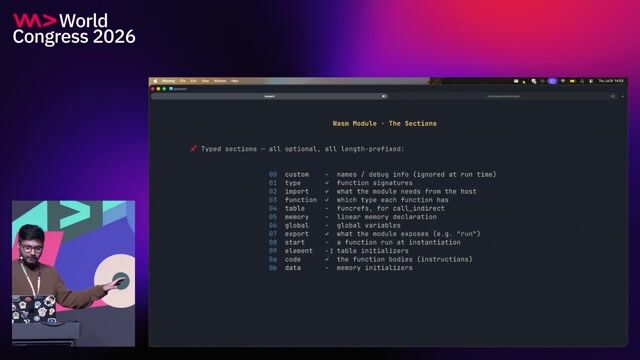
Runtime execution stages and the minimal Whisk interpreter
Stripping software VM engines down reveals how pure WebAssembly execution operates via decoding, validation, instantiation, and interpretation phases.
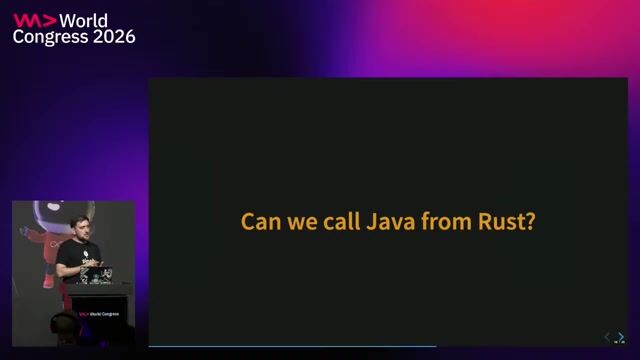
Implementing callbacks from Rust back to Java
Project Panama requires registering Java methods as native-callable function pointers to allow external Rust dependencies to invoke Java logic.
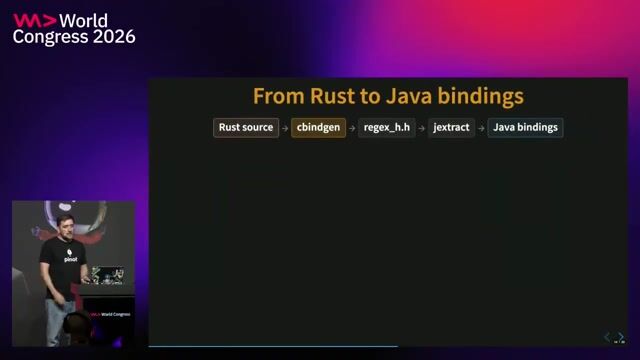
Generating Java bindings with jextract and cbindgen
Tools like jextract automate the generation of tedious Panama boilerplate by reading C header files produced from Rust with cbindgen.
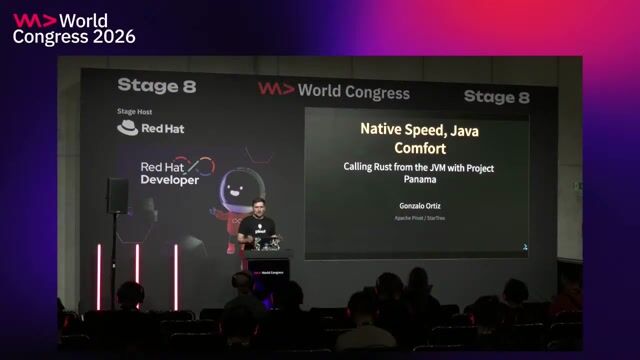
Motivations for calling native code from Java
The primary reasons to bridge Java and native languages like Rust lie in ecosystems and ergonomics rather than just raw performance.
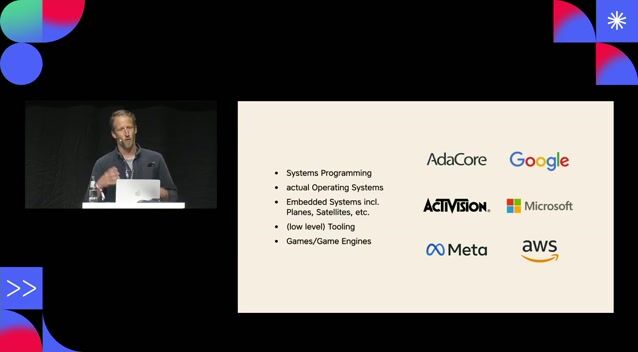
Shifting focus to Rust for web backend development
Applying systems-level capabilities simplifies building secure and performant cloud web applications.
Your mix. Instantly.
More mixes
AI & Machine Learning
AI coding agents
AI & Machine Learning
MCP (Model Context Protocol)
AI & Machine Learning
RAG
Languages & Frameworks
TypeScript
Languages & Frameworks
React
Languages & Frameworks
Java
Cloud, Platform & Data
Platform engineering
Cloud, Platform & Data
Observability
Cloud, Platform & Data
Infrastructure as code
Architecture, Quality & Security
System architecture
Architecture, Quality & Security
Code review
Architecture, Quality & Security
Software supply chain security
Leadership, Career & Community
Engineering strategy
Leadership, Career & Community
Developer experience
Leadership, Career & Community