World Congress 2026 Europe Jul 10, 2026 Session details

Agentic AI in Go

Marc Arndt

At their core, AI agents are just sophisticated for-loops. Ditch bloated frameworks and leverage Go's native concurrency to build scalable, ultra-lightweight AI solutions from scratch.

Pause
Mute Enter Fullscreen
#1 about 2 min

Why Go is suited for agentic AI

The architectural advantages of using Go for execution performance, minimal container sizes, and straightforward deployment.

#2 about 1 min

Deconstructing the core loops of agentic AI

How agentic AI functions under the hood as an iterative cycle of evaluated prompts and conditional logic.

#3 about 3 min

Implementing dynamic tool registration for AI agents

Refactoring hardcoded method configurations into an adaptable interface for passing custom tool requests to models.

#4 about 2 min

Bypassing LangChain for native HTTP calls

Why relying on bloated or unmaintained frameworks creates scaling bottlenecks and limits system maintainability.

#5 about 5 min

Processing single documents and gaining system observability

Tracking underlying HTTP requests with Bifrost to effectively monitor API interactions and AI reasoning paths.

#6 about 2 min

Executing basic document analysis with minimal resources

Reducing computational cost and latency by applying optimized three-billion parameter models to localized summarization tasks.

#7 about 4 min

Processing massive documents using parallel token chunking

Bypassing hard token limits through sequential data splitting and the parallel execution strengths of Go.

#8 about 4 min

Enabling multi-document search across varied dataset structures

Teaching an agent to formulate precise search queries to filter and summarize context from bulk file datasets.

#9 about 3 min

Wrapping remote servers into simple agentic tools

Abstracting complex remote procedure calls into focused, single-purpose agents to reduce confusion during tool invocation.

#10 about 4 min

Composing autonomous data pipelines across multiple models

Orchestrating distinct specialized models to decompose complex spreadsheet forms into actionable and programmatic data structures.

#11 about 2 min

Choosing the right language for AI workloads

Balancing the rapid exploratory prototyping capabilities of Python with the efficiency of Go in concurrent production environments.

Matching moments

3:25 min

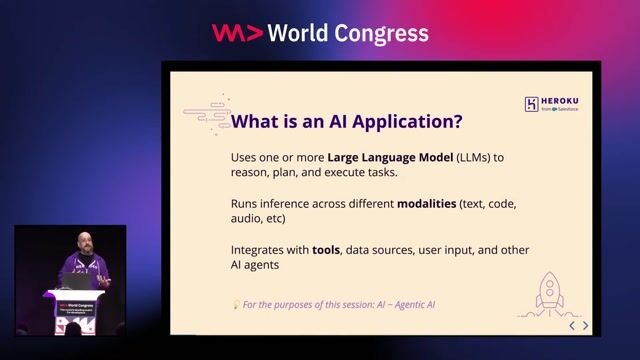
Constructing scalable AI solutions using LangChain and LangGraph

Julián Duque Julián Duque · World Congress 2025

1:48 min

Exploring AI integrations in modern agile development workflows

Markus Walker Markus Walker · World Congress 2023

1:55 min

Shifting developer workloads and realistic AI productivity gains

Chris Heilmann +2 · LIVE

2:36 min

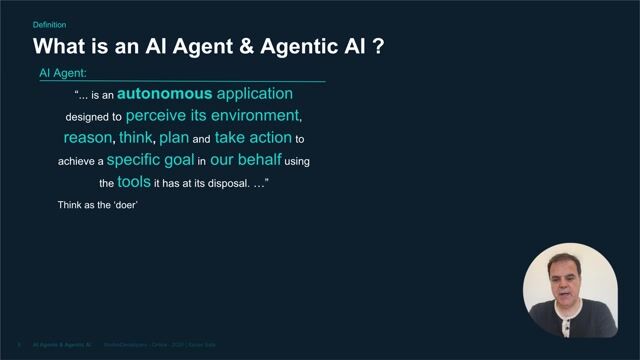
Exploring the core architecture and components of AI agents

Jörg Neumann Jörg Neumann · World Congress 2025

2:35 min

Evaluating frameworks and abstraction levels for building AI agents

Ahmad Adel Ahmad Adel · Europe 2026 Virtual

40 sec

Introduction to building real-world AI agent solutions

Dennis Zielke Dennis Zielke +1 · World Congress 2025

Upcoming sessions on this topic

Open session

World Congress 2026 North America

September 23, 2026 · 13:15–15:15

Stage 9

DeepAgents: Build Multi-Agent AI Systems That Actually Work

Anagha Rumade, Anjana Umapathy, Apoorva Jaiswal

Anagha Rumade
Anjana Umapathy
Apoorva Jaiswal
Open session

World Congress 2026 North America

September 24, 2026 · 14:10–14:40

Stage 5

Edge AI: Running Agentic Intelligence Where Internet Can't Reach

Nitin Eusebius

AWS - Principal Solutions Architect

Nitin Eusebius
Open session

World Congress 2026 North America

September 23, 2026 · 10:00–17:00

Stage 11

Building Stuff with GenAI - The Open Minded Workshop beyond OpenAI

Andreas Erben

CTO for Applied AI and Metaverse at daenet

Andreas Erben
Open session

World Congress 2026 North America

September 24, 2026 · 11:40–12:10

Mainstage

I Don't Trust AI Agents (And Neither Should You): Building Production-Ready Architectures

Darko Mesaros

Distinguished Developer Advocate at AWS

Darko Mesaros
Open session

World Congress 2026 North America

September 23, 2026 · 10:00–17:00

Stage 14

From Idea to Production with AI: Agentic Development in Practice

Daniel Ostrovsky

UI/UX Architect at Payoneer | AI Architect | Full Cycle Development Expert | Public Speaker | Open Source Contributor |

Daniel Ostrovsky
Open session

World Congress 2026 North America

September 24, 2026 · 14:50–15:20

Mainstage

Running AI-Written Software in Production

Anurag Goel, Ivan Burazin, Milin Desai

Anurag Goel
Ivan Burazin
Milin Desai