

WeAreDevelopers LIVE Oct 30, 2024

Exploring Durable Execution with Python

Geetha Anne

Stop building complex retry logic and manual state machines. Discover how Python and Temporal.io use durable execution to let you code as if transient failures never happen.

Pause
Mute Enter Fullscreen
#1 about 4 min

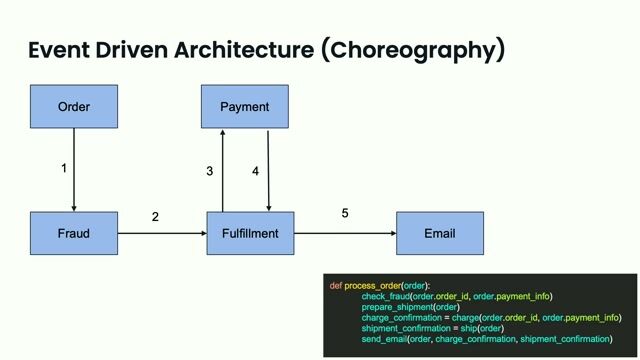
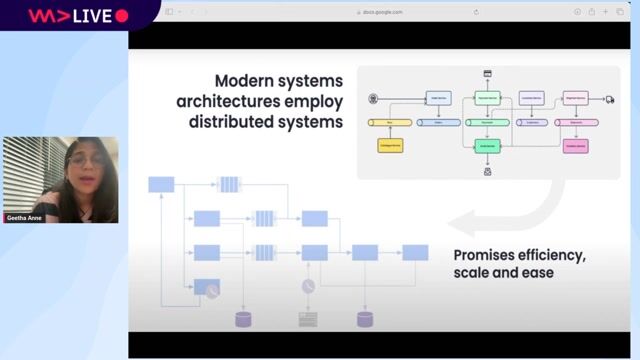
High-level overview of modern distributed system architectures

Complex ecosystems involving databases and microservices often suffer from cascading failures during state rollbacks.

#2 about 2 min

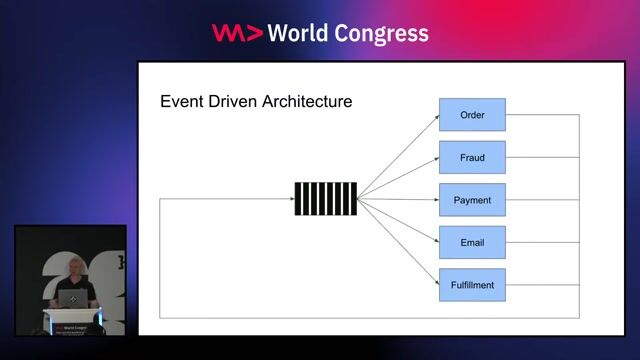
Complexity tradeoffs in event-driven legacy architecture replacements

Synchronizing state across messaging buffers and orchestration tools increases system complexity at the cost of developer velocity.

#3 about 2 min

Introducing durable execution and the Temporal framework

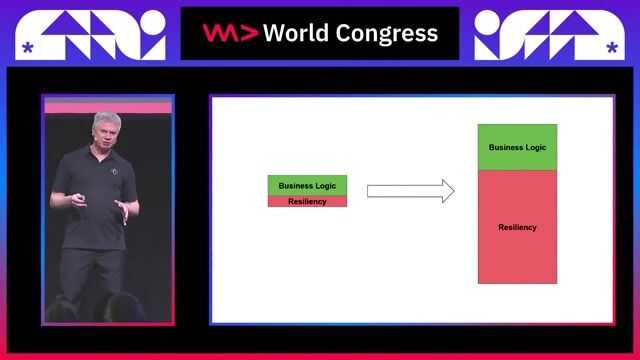
Replacing complex error logic with an architectural abstraction manages work orchestration and simplifies distributed application reliability.

#4 about 2 min

Writing workflows as code for resilient application execution

Utilizing code flow as a central concept enables applications to run reliably despite network outages and server crashes.

#5 about 2 min

Running deterministic events on worker nodes and activities

Replaying events safely requires deterministic execution behavior to ensure consistent state sequences across multiple worker nodes.

#6 about 2 min

Modeling workflows with asynchronous event loops in Python

Leveraging standard asynchronous modeling enables developers to seamlessly integrate external actions natively via standard Python setups.

#7 about 2 min

Understanding the runtime of Temporal application framework executions

Millions of concurrent executions consume minimal compute resources while remaining completely recoverable during server disruptions.

#8 about 1 min

Solving distributed system failures via durable execution abstractions

Building applications for a single positive outcome drastically simplifies the entire operational error handling requirement.

#9 about 4 min

Handling unexpected process crashes during external service calls

Capturing thread states and blocking functions prevents data loss and incomplete transactions after unexpected process errors.

#10 about 4 min

Key capabilities for optimizing workflow automation and reliability

Advanced framework capabilities like state auto-saving and native retry policies bypass the need to define manual fallbacks.

#11 about 1 min

Common enterprise use cases for temporal workflow deployment

Utilizing open-source workflow execution architectures streamlines process-intensive operations including supply chain logistics and user lifecycle management.

#12 about 3 min

Structuring application code into workflow definitions and activities

Separating central business flows from general purpose task routines establishes clear boundaries for automated retry loops.

#13 about 3 min

Deploying managed applications to self-hosted or cloud workers

External state management databases leverage continuous process polling to reliably restore application progress independently of task handlers.

#14 about 4 min

Implementing one-click purchase routines with the Python SDK

Combining client signals and status evaluation sequences smoothly handles unpredictable outcomes during interactive HTTP processing.

#15 about 2 min

Yielding process execution using durable asynchronous Python timers

Targeting underlying loops directly ensures that scheduled timer yields delay operations harmlessly rather than blocking active process threads.

#16 about 5 min

Handling deterministic event loops and safe task cancellations

Protecting essential tasks via runtime synchronization shielding ensures dependable activity results despite conflicting asynchronous cancellation boundaries.

#17 about 2 min

Supporting multi-threaded invocations across diverse activity execution styles

Executing custom callbacks across decoupled thread pools facilitates backward compatibility alongside diverse processing workloads and blocking integrations.

Matching moments

2:49 min

Overview of the Temporal open-source durable execution architecture

Maxim Fateev Maxim Fateev · WWC 2023

3:25 min

Use cases for durable execution and temporal workflows

Maxim Fateev Maxim Fateev · WWC 2023

2:19 min

Introduction to durable execution for resilient application code

Maxim Fateev Maxim Fateev · WWC 2024

2:17 min

Guaranteeing workflow completion with open-source temporal platform solutions

Maxim Fateev Maxim Fateev · WWC 2024

5:37 min

Demonstrating workflow recovery with Temporal and OpenAI

Maxim Fateev Maxim Fateev · WWC 2025

1:52 min

Introducing durable execution for robust distributed systems

Maxim Fateev Maxim Fateev · WWC 2023

Upcoming sessions on this topic

Open session

World Congress 2026 North America

Boring Failover: Predictable Region Recovery Across 5,000 Microservices

Sahil Sabharwal, Garvit Kataria

Sahil Sabharwal
Garvit Kataria
Open session

World Congress 2026 North America

You Can’t Re-Run Sunlight: Designing ML Data Architectures for Physical AI

An Phan

Senior Data Infrastructure Engineer @ Hippo Harvest

An Phan
Open session

World Congress 2026 North America

DeepAgents: Build Multi-Agent AI Systems That Actually Work

Anjana Umapathy, Apoorva Jaiswal, Anagha Rumade

Anjana Umapathy
Apoorva Jaiswal
Anagha Rumade
Open session

World Congress 2026 North America

Fault Tolerance and Consistency at Scale: Harnessing the Power of Distributed SQL Databases

Wei Hu

Senior Vice President of Research and Development

Wei Hu
Open session

World Congress 2026 North America

Agents Can't Iterate Against Tests That Lie

Rocky Warren

Senior Staff Software Engineer at Clipboard

Rocky Warren
Open session

World Congress 2026 North America

Designing APIs That Survive AI Agents at Scale

Phani Pendurthi

Mastercard, Principal Software Engineer

Phani Pendurthi