


WeAreDevelopers LIVE Jan 29, 2025

Using all the HTML, Running State of the Browser and "Modern" is Rubbish

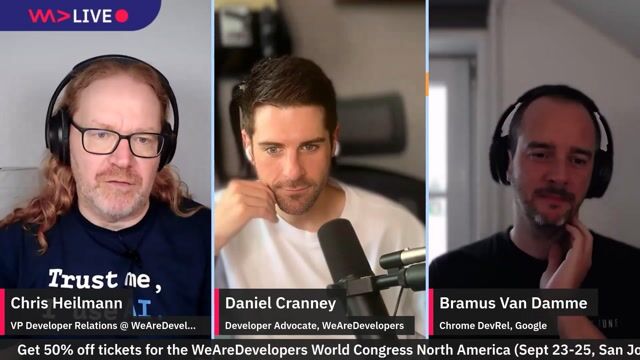
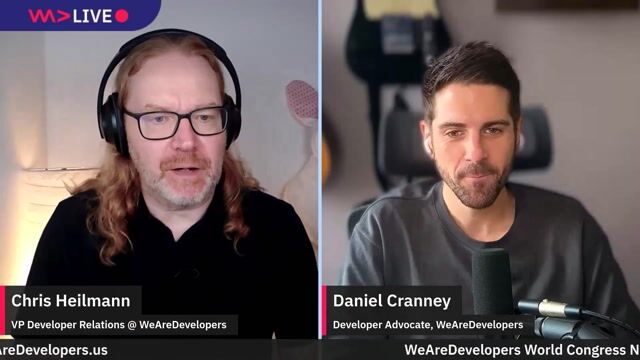
Chris Heilmann , Daniel Cranney , David Letorey

AI coding agents risk building a generation of illiterate programmers. Ditch over-engineered JavaScript platforms and embrace the native web platform using built-in APIs and semantic HTML.

Pause
Mute Enter Fullscreen
#1 about 5 min

Tracking website changes using version control tools

How public source code repositories act as living records of governmental policy shifts.

#2 about 3 min

Preserving deleted content through the web archive

Why caching services are critical for maintaining the historical record of abandoned web projects.

#3 about 2 min

Hypocrisy in artificial intelligence data scraping practices

How large language model providers complain about unauthorized data usage while relying entirely on scraped content.

#4 about 12 min

Generative artificial intelligence and programming fundamentals

How relying on automated code generation might erode essential problem-solving skills for incoming developers.

#5 about 7 min

Combining language models and communities for problem solving

Why querying real developers in specialized chat communities often outperforms automated debugging assistants.

#6 about 5 min

The problem with claiming technologies are modern

How labeling frameworks as modern creates fleeting relevance and litters search engines with outdated tutorials.

#7 about 2 min

Replacing algorithmic social media feeds with real syndication feeds

Why returning to direct content subscriptions provides better signal than engaging with automated engagement algorithms.

#8 about 2 min

Improving accessibility for icon buttons and vector components

How missing text labels on standalone iconography excludes screen reader users and obscures application functionality.

#9 about 2 min

Utilizing cascading style sheet attribute functions in Tailwind

How consuming data attributes directly in styling frameworks reduces the need for constant script-driven utility generation.

#10 about 5 min

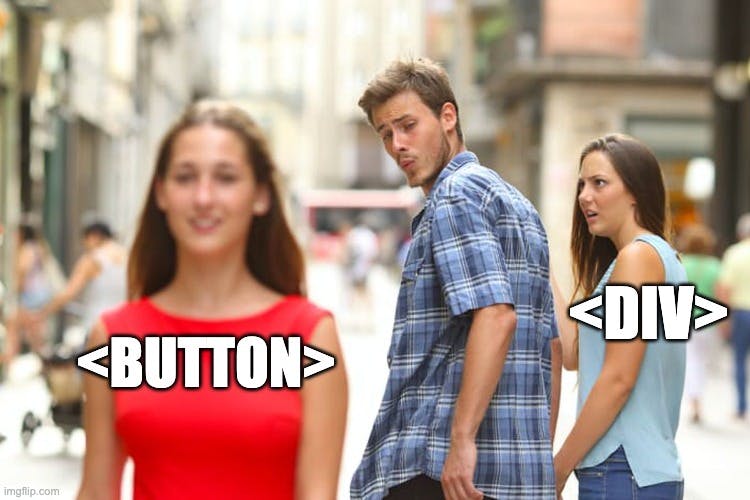
Relying on native markup elements over generic containers

Why selecting inherently semantic tags avoids the constant need for complex accessibility declarations.

#11 about 3 min

Participating in the web standards specification process

How developers can formally submit proposals for desired platform features instead of complaining on social media.

#12 about 5 min

Replacing legacy date objects with the temporal application interface

How native timezone awareness within the browser execution engine finally eliminates reliance on fragile external date parsing libraries.

#13 about 5 min

Security risks in web interfaces for automated vehicles

Why integrating remote locks via exposed browser endpoints leaves physical assets highly vulnerable to hacking.

#14 about 3 min

Frustrations with boilerplate syntax in web component designs

Why repetitive scoping declarations deter adoption of native encapsulation methods among interface engineers.

#15 about 2 min

Disabling integrated artificial intelligence assistants in operating systems

How to manually remove unwanted generative text features that are forcefully installed on productivity machines.

#16 about 5 min

Formatting text safely without impacting screen reader accessibility

Why transforming casing through style sheets preserves native readability for differently-abled users compared to scripted text mutations.

#17 about 3 min

Automating dynamic copyright years in footer components

Finding amusement in over-engineered deployment packages solely designed to render the current twelve-month period.

#18 about 9 min

Attending web standards and browser history community events

Previewing upcoming opportunities to witness the unveiling of an entirely independent rendering engine in local engineering meetups.

Matching moments

10:20 min

Advocating for semantic HTML over complex framework component workarounds

Chris Heilmann +2 · LIVE

6:00 min

Navigating web element APIs and emerging software vulnerabilities

Chris Heilmann +3 · LIVE

1:52 min

Adapting modern web architecture for artificial intelligence crawlers

Eric Enge · Coffee With Developers

3:51 min

Audience questions on accessibility and framework tradeoffs

Rowdy Rabouw Rowdy Rabouw · WWC 2022

6:50 min

Navigating accessibility standards and screen reader support limitations

Aaron T. Grogg · Coffee With Developers

2:06 min

Addressing browser support for legacy capabilities and modern frameworks

Peter Kröner Peter Kröner · WWC 2023

Upcoming sessions on this topic

Open session

World Congress 2026 North America

When Humans Stop Writing Code: Rethinking Languages, Compilers, and Responsibility

Simon Auer

Organizer of flutter vienna meetup and CEO of marqably

Simon Auer
Open session

World Congress 2026 North America

Small LLM in your Browser: Huge Opportunities for Web Applications

Daniel Ostrovsky

UI/UX Architect at Payoneer | AI Architect | Full Cycle Development Expert | Public Speaker | Open Source Contributor |

Daniel Ostrovsky
Open session

World Congress 2026 North America

Vibe Coding Accessibility

Karl Groves

Focused on actively fixing accessibility

Karl Groves
Open session

World Congress 2026 North America

The Broken Rung: How AI is Rebuilding Software Development from the Ground Up

Tomislav Tipurić

Chief Technology Officer, Nephos

Tomislav Tipurić
Open session

World Congress 2026 North America

Fast by Design: A Masterclass in High-Performance Web Engineering

Aaron Grogg

Senior web developer, committed to improving the user experience by improving web performance

Aaron Grogg
Open session

World Congress 2026 North America

Beyond Vibe Coding: Using CLI Tools as Your AI Counterpart in Pair Programming

Ron Veen

Java enthusiast and Special agent for Team Rockstars IT

Ron Veen