


WeAreDevelopers LIVE Jan 29, 2025

Using all the HTML, Running State of the Browser and "Modern" is Rubbish

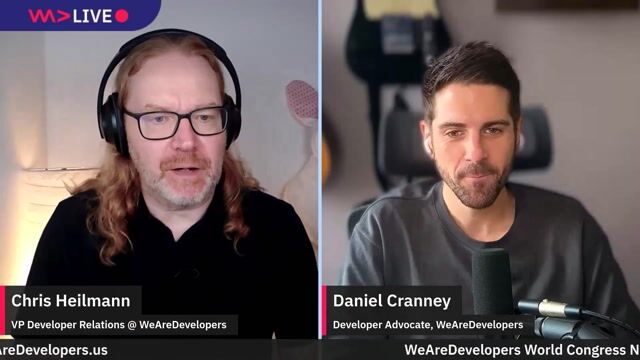
Chris Heilmann , Daniel Cranney , David Letorey

AI coding agents risk building a generation of illiterate programmers. Ditch over-engineered JavaScript platforms and embrace the native web platform using built-in APIs and semantic HTML.

Pause
Mute Enter Fullscreen
#1 about 5 min

Tracking website changes using version control tools

How public source code repositories act as living records of governmental policy shifts.

#2 about 3 min

Preserving deleted content through the web archive

Why caching services are critical for maintaining the historical record of abandoned web projects.

#3 about 2 min

Hypocrisy in artificial intelligence data scraping practices

How large language model providers complain about unauthorized data usage while relying entirely on scraped content.

#4 about 12 min

Generative artificial intelligence and programming fundamentals

How relying on automated code generation might erode essential problem-solving skills for incoming developers.

#5 about 7 min

Combining language models and communities for problem solving

Why querying real developers in specialized chat communities often outperforms automated debugging assistants.

#6 about 5 min

The problem with claiming technologies are modern

How labeling frameworks as modern creates fleeting relevance and litters search engines with outdated tutorials.

#7 about 2 min

Replacing algorithmic social media feeds with real syndication feeds

Why returning to direct content subscriptions provides better signal than engaging with automated engagement algorithms.

#8 about 2 min

Improving accessibility for icon buttons and vector components

How missing text labels on standalone iconography excludes screen reader users and obscures application functionality.

#9 about 2 min

Utilizing cascading style sheet attribute functions in Tailwind

How consuming data attributes directly in styling frameworks reduces the need for constant script-driven utility generation.

#10 about 5 min

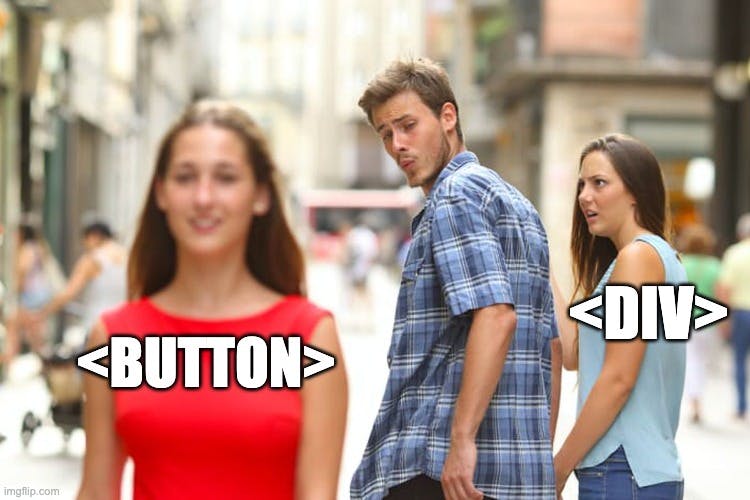
Relying on native markup elements over generic containers

Why selecting inherently semantic tags avoids the constant need for complex accessibility declarations.

#11 about 3 min

Participating in the web standards specification process

How developers can formally submit proposals for desired platform features instead of complaining on social media.

#12 about 5 min

Replacing legacy date objects with the temporal application interface

How native timezone awareness within the browser execution engine finally eliminates reliance on fragile external date parsing libraries.

#13 about 5 min

Security risks in web interfaces for automated vehicles

Why integrating remote locks via exposed browser endpoints leaves physical assets highly vulnerable to hacking.

#14 about 3 min

Frustrations with boilerplate syntax in web component designs

Why repetitive scoping declarations deter adoption of native encapsulation methods among interface engineers.

#15 about 2 min

Disabling integrated artificial intelligence assistants in operating systems

How to manually remove unwanted generative text features that are forcefully installed on productivity machines.

#16 about 5 min

Formatting text safely without impacting screen reader accessibility

Why transforming casing through style sheets preserves native readability for differently-abled users compared to scripted text mutations.

#17 about 3 min

Automating dynamic copyright years in footer components

Finding amusement in over-engineered deployment packages solely designed to render the current twelve-month period.

#18 about 9 min

Attending web standards and browser history community events

Previewing upcoming opportunities to witness the unveiling of an entirely independent rendering engine in local engineering meetups.

Matching moments

10:20 min

Advocating for semantic HTML over complex framework component workarounds

Chris Heilmann +2 · LIVE

5:43 min

Pushing back against predictable AI interfaces

6:00 min

Navigating web element APIs and emerging software vulnerabilities

Chris Heilmann +3 · LIVE

1:52 min

Adapting modern web architecture for artificial intelligence crawlers

Eric Enge · Coffee With Developers

3:51 min

Audience questions on accessibility and framework tradeoffs

Rowdy Rabouw Rowdy Rabouw · World Congress 2022

6:50 min

Navigating accessibility standards and screen reader support limitations

Aaron T. Grogg · Coffee With Developers

Upcoming sessions on this topic

Open session

World Congress 2026 North America

September 24, 2026 · 16:10–16:40

Outdoor Stage

When Humans Stop Writing Code: Rethinking Languages, Compilers, and Responsibility

Simon Auer

Organizer of flutter vienna meetup and CEO of marqably

Simon Auer
Open session

World Congress 2026 North America

September 24, 2026 · 10:20–10:50

Stage 1

The Browser Is Becoming an AI Runtime

Ajit Varma, Will Bryk

Ajit Varma
Will Bryk
Open session

World Congress 2026 North America

September 25, 2026 · 15:30–16:00

Stage 6

Small LLM in your Browser: Huge Opportunities for Web Applications

Daniel Ostrovsky

UI/UX Architect at Payoneer | AI Architect | Full Cycle Development Expert | Public Speaker | Open Source Contributor |

Daniel Ostrovsky
Open session

World Congress 2026 North America

September 24, 2026 · 15:30–16:00

Mainstage

Our Brains in the AI Era

Cassidy Williams

Senior Director of Developer Advocacy, GitHub

Cassidy Williams
Open session

World Congress 2026 North America

September 25, 2026 · 09:40–10:10

Stage 5

Vibe Coding Accessibility

Karl Groves

Focused on actively fixing accessibility

Karl Groves
Open session

World Congress 2026 North America

September 24, 2026 · 11:40–12:10

Tech Leaders Stage

Rethinking Developer Tools for the Agent Era

Han Wang, Sam Bhagwat

Han Wang
Sam Bhagwat