





World Congress 2025 β€’ Aug 20, 2025 β€’ Session details

Lessons learned from observing a billion API requests

Pratim Bhosale

An analysis of a billion API requests reveals a shocking vulnerability: nearly half lack basic authentication. Learn to secure your architecture and prepare your endpoints for AI consumers.

Pause
Mute Enter Fullscreen
#1 about 4 min

The current state of enterprise APIs and security trends

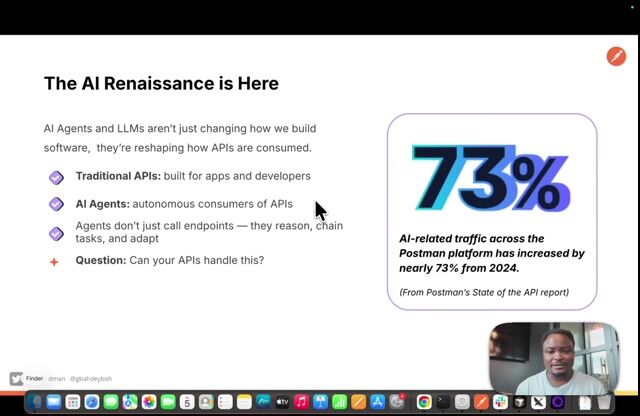
The explosive growth of internal APIs reveals critical vulnerabilities like the lack of basic authentication.

#2 about 3 min

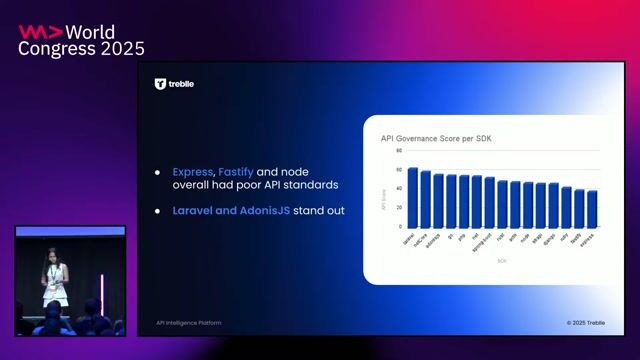
Security comparisons across web frameworks and development languages

Opinionated architectural frameworks provide robust default security environments compared to generic router libraries.

#3 about 5 min

Understanding the four core pillars of API scoring

Evaluating API quality requires measuring design standards, performance characteristics, internal security measures, and AI readiness.

#4 about 5 min

Improving API scores through practical OpenAPI specification audits

Reviewing production OpenAPI documents reveals that explicit HTTP response codes and rich metadata dramatically improve compliance.

#5 about 2 min

Optimising operation IDs and documentation for AI consumers

Defining descriptive operation IDs and extensive examples allows large language models to accurately implement programmatic SDKs.

#6 about 3 min

Implementing application-level security and masking sensitive responses

Embedding rate limit logic directly into services mitigates automated agent scraping while protecting sensitive user data.

#7 about 2 min

Achieving full traceability for API observability and debugging

Tracking granular service communication is essential for debugging unexpected interactions triggered by third-party data consumers.

#8 about 2 min

Designing use-case driven APIs and consolidating broad endpoints

Structuring endpoints around specific business requirements instead of database schemas mitigates sprawl and simplifies version control.

#9 about 3 min

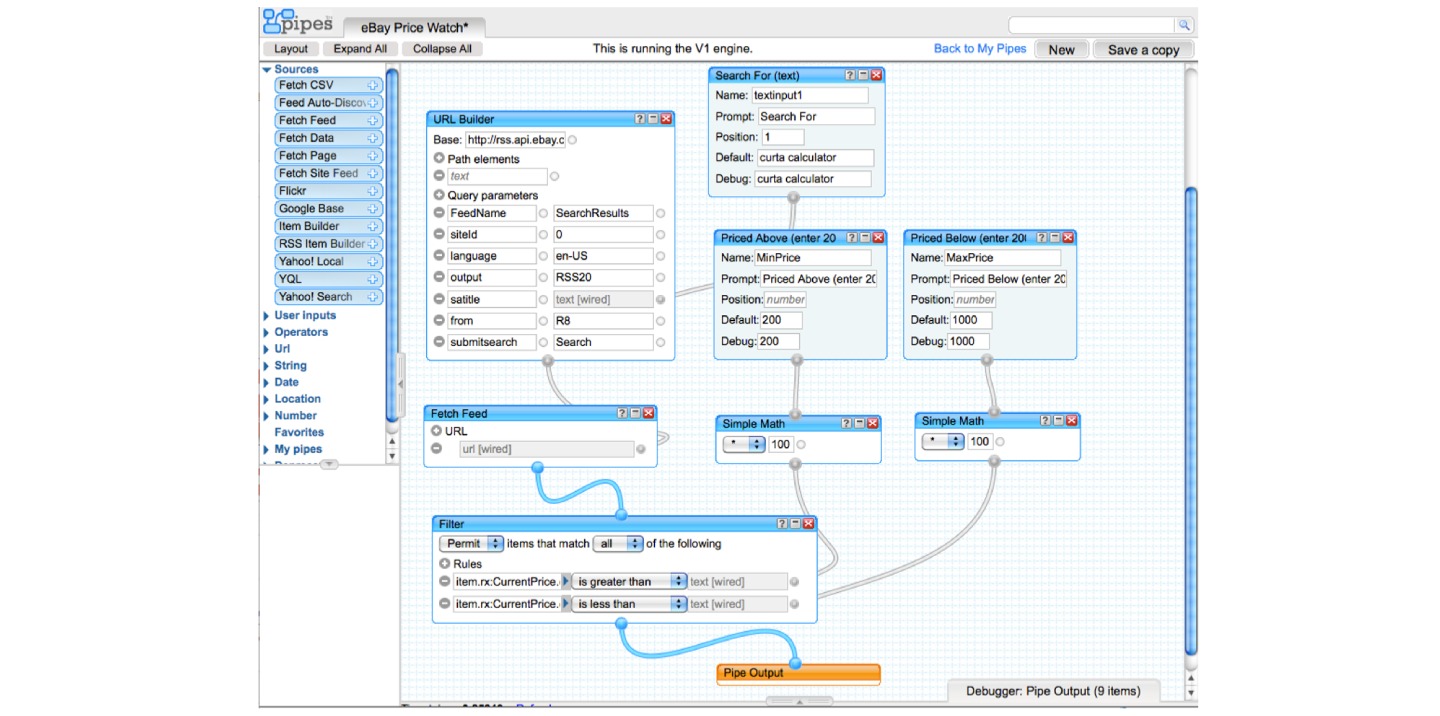
Building composable interfaces and data sources for agents

Exposing structured and predictably versioned endpoints transforms standard APIs into native training sources for autonomous frameworks.

Matching moments

9:56 min

Final code walk-through and audience Q&A session

GermÑn Álvarez · LIVE

1:40 min

Summarizing key engineering lessons for platform API development

Anto Anto Β· World Congress 2024

2:00 min

Key architectural takeaways for building secure APIs

Philippe De Ryck Β· LIVE

3:26 min

Designing APIs for security from day one

Philippe De Ryck Β· LIVE

11:18 min

Addressing audience questions on security and microservice architectures

Reinhard Kugler Β· LIVE

2:04 min

Clarifying API technologies and future scope

Simon Auer Simon Auer Β· World Congress 2025

Upcoming sessions on this topic

Open session

World Congress 2026 North America

September 25, 2026 Β· 12:20–12:50

Stage 9

Designing APIs That Survive AI Agents at Scale

Phani Pendurthi

Mastercard, Principal Software Engineer

Phani Pendurthi
Open session

World Congress 2026 North America

September 25, 2026 Β· 10:20–10:50

Stage 2

API = Some REST and HTTP, right? RIGHT?!

Rustam Mehmandarov

Passionate computer scientist

Rustam Mehmandarov
Open session

World Congress 2026 North America

September 25, 2026 Β· 16:50–17:20

Stage 5

The Things Your AI Isn't Telling You

Desmond Lamptey

Lead Software Engineer at Capital One

Desmond Lamptey
Open session

World Congress 2026 North America

September 24, 2026 Β· 14:10–14:40

Stage 7

Designing High-Performance AI APIs: Lessons from Serving Millions of Real-Time Requests

Wayne Liu

Chief Growth Officer and Americas President of Perfect Corp.

Wayne Liu
Open session

World Congress 2026 North America

September 24, 2026 Β· 17:30–18:00

Stage 5

Securing AI Agent Infrastructure: Identity, Attestation, and Trust at Scale

Abdel Fane

Founder of OpenA2A

Abdel Fane
Open session

World Congress 2026 North America

September 24, 2026 Β· 14:25–14:35

Outdoor Stage

SecurePrompt: Building a Pre-Flight Security Layer for Agentic AI

Ravi Sastry Kadali

AI/ML Engineer at General Motors

Ravi Sastry Kadali