




World Congress 2025 • Aug 20, 2025 • Session details

Agentic AI Systems for Critical Workloads

Mario Fusco

Move your generative AI prototypes from experimental notebooks into enterprise-grade Java. Discover how to build, orchestrate, and test autonomous agent workloads using LangChain4j and Quarkus.

Pause
Mute Enter Fullscreen
#1 about 2 min

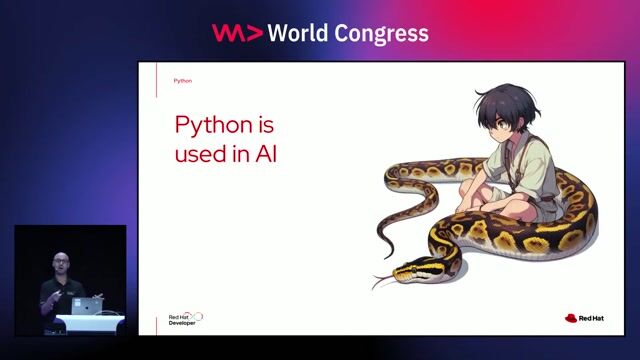
Choosing Java over Python for enterprise AI integration

Java provides transaction management, observability, and security capabilities necessary for enterprise-grade generative deployments.

#2 about 2 min

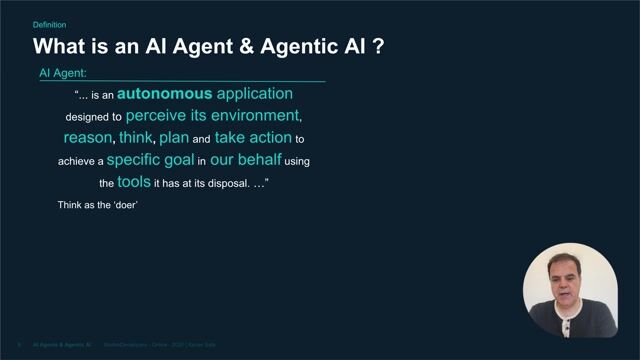
Core components of autonomous agentic AI systems

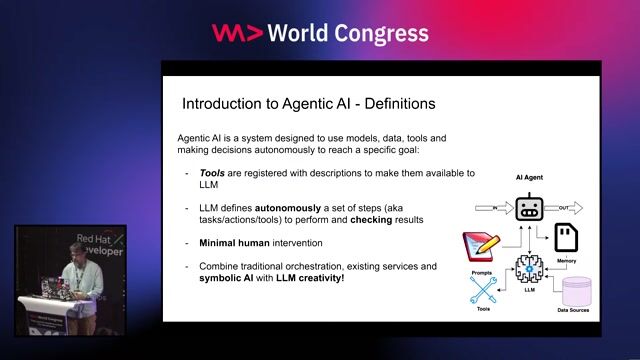
Agentic systems combine a foundational model with tools, memory access, and orchestration to perform tasks with minimal human intervention.

#3 about 2 min

Workflow patterns versus independent agent architectures

Developers can orchestrate tasks using programmatically defined workflows or rely on independent agents that coordinate themselves.

#4 about 3 min

Navigating model selection and hallucination challenges locally

Local model deployment requires significant trial and error for prompt engineering and managing occurrences like tool hallucination.

#5 about 3 min

Implementing sequential and parallel agent workflow pipelines

Chaining agents sequentially allows progressive task refinement, while parallel execution effectively splits independent domains before combining results.

#6 about 3 min

Utilizing the mixture of experts routing pattern

A central router agent evaluates input contexts to accurately delegate complex requests to specialized domain experts.

#7 about 6 min

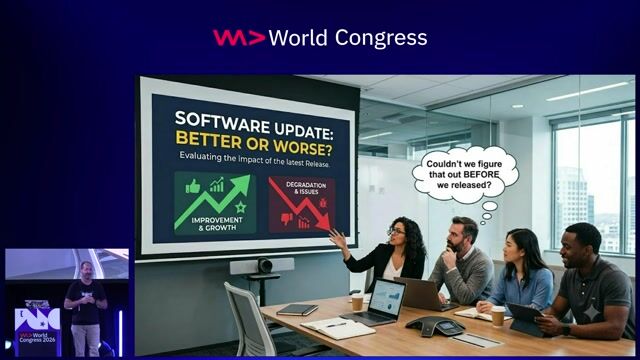
Testing strategies for non-deterministic AI system outputs

Validating probabilistic responses involves building classification functions using evaluation strategies like cosine distance or LLM-as-a-judge approaches.

#8 about 6 min

Transitioning to autonomous multi-agent task execution

Replacing programmatic routers with pure agentic capabilities offers greater dynamic flexibility at the expense of predictable debugging.

#9 about 5 min

Optimizing tool invocation and external API retrieval

Agents autonomously integrate external web services and internet searches to answer complex queries lacking initial context.

#10 about 2 min

Future API protocols and programmatic system structures

Upcoming integration frameworks like Google's A2A protocol will enable comprehensive logical looping and sequence building for agent orchestration.

Matching moments

2:12 min

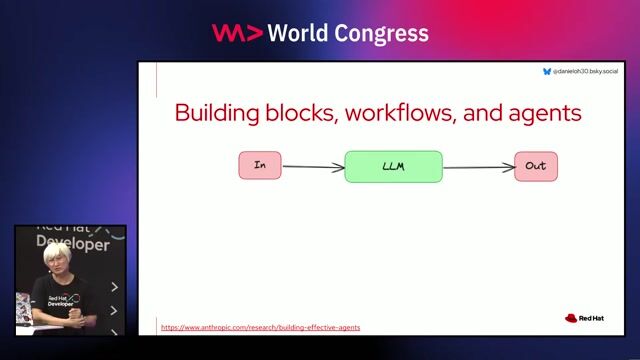
Navigating the AI landscape as a Java developer

Daniel Oh Daniel Oh +1 · World Congress 2025

2:54 min

Utilizing Java frameworks to interface with AI models

Mary Grygleski Mary Grygleski · LIVE

4:37 min

Transitioning to a hybrid human and agent workforce

Thomas Dohmke Thomas Dohmke · World Congress 2025

1:32 min

Building autonomous functions with conversational agent frameworks

Modood Alvi · World Congress 2025

3:36 min

Overview of generative AI and the presentation agenda

juarezjunior juarezjunior · World Congress 2024

2:02 min

Shifting focus from isolated models to enterprise AI systems

Mohak Chadha Mohak Chadha · World Congress 2026 Europe

Upcoming sessions on this topic

Open session

Java is Coming for Python’s Lunch: The Rise of JVM AI Agents

  • Frederik Pietzko

    Jetbrains

    Developer Advocate

Open session

Architecting Trusted AI: Coupling Multi-Agent Systems with dbt Semantic Store for Zero-Hallucination

  • Pushkar Mishra

    J.P. Morgan

    Senior Vice President

Open session

Beware of Strangers Bearing Code: Open Source Trust in the Agent Era

  • Vikram Vaswani

    Consultant

Open session

Build a Zero-Cost AI Agent in Your Browser

  • Aishwarya Mathuria

    Adobe

    Computer Scientist

  • Nishant Thakur

    Adobe

    Senior Computer Scientist

Open session

Teaching AI Coding Agents to Build It Right the First Time

  • Sajeetharan Sinnathurai

    Microsoft

    Principal Product Manager

Open session

Autopsy of an Autonomous Incident: When the Agent Made It Worse

  • Navin Pai

    StackGen

    Director of Engineering