







CH
Chris Heilmann
Coffee With Developers
•
Feb 23, 2026
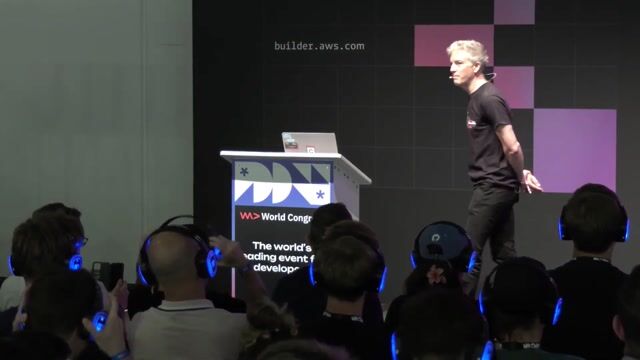
The Why and How of WebMCP - Alex Nahas
Alex Nahas
- Discuss this with your agent
- Open in Claude
- Open in ChatGPT
Alex Nahas reveals how WebMCP transforms standard websites into secure, agent-ready applications. Ditch fragile DOM scraping for a standardized protocol that slashes AI token consumption by 90%.
Matching moments
4:20 min
Automating tasks securely through agentic browser protocols
 Christian Liebel · World Congress 2026 Europe
2:49 min
Introduction to the model context protocol and WebMCP
Andre Cipriani Bandarra +1 · Coffee With Developers
5:54 min
Standardizing agent interactions with the Web MCP proposal
 Chris Heilmann +2 · LIVE
1:39 min
Transforming interactive website elements into automated WebMCP tools
 Edvin Teskeredzic · World Congress 2026 Europe
2:36 min
Core concepts and advantages of the Model Context Protocol
 Rishabh Budhiraja +1 · World Congress 2026 Europe
2:58 min
Origin and purpose of the Model Context Protocol
 David Soria Parra +3 · World Congress 2026 Europe
More from Coffee With Developers
Related videos
Related articles
MH
Michael Hunger
CH
Chris Heilmann

CH
Chris Heilmann
DC
Daniel Cranney
From learning to earning
Jobs that call for the skills explored in this talk.
22 days ago
Senior AI Developer

PwC
United States
Expert
Remote
Docker
Github
Fastapi
about 1 month ago
•
Verified
Staff Software Engineer, Agentic Platform

Docker, Inc.
Seattle, United States
Expert
Remote
Cloud (AWS/Google/Azure)
about 1 month ago
•
Verified
ML Engineer
Docker, Inc.
Seattle, United States
Expert
Remote
Go
about 1 month ago
•
Verified
Partner Sales Director - AI Alliances - Model Providers

Dynatrace
San Francisco, United States
Expert
Remote
DevOps
AI Frameworks
Machine Learning
about 2 months ago
MLOps AI Engineer

TeamViewer Germany GmbH,
Austin, TX, United States
Expert
Caching
Routing
Standard Sql
about 1 month ago
Senior Software Engineer, Sandboxes (Eu Or East Coast Preferred)
Docker, Inc.
Madrid, Spain
€94k–155k
Remote
Docker
Adobe InDesign
Virtual Agents