


WeAreDevelopers LIVE Jul 28, 2020

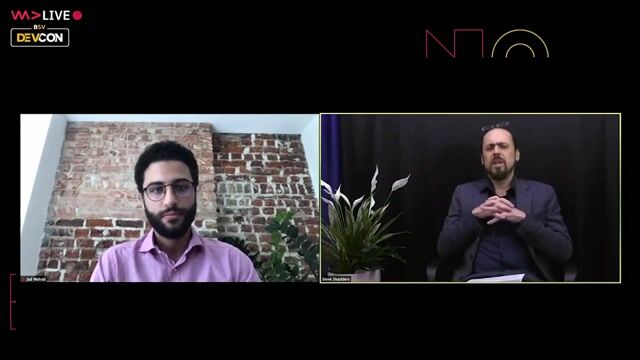
Miner fee calculation and merchant API - new tools for the Bitcoin SV network

Jad Wahab

Why scan entire blockchain blocks for payments when you can communicate directly with miners? Learn how the Merchant API unlocks scalable, peer-to-peer transaction settlement on Bitcoin SV.

Pause
Mute Enter Fullscreen
#1 about 3 min

Introduction to transaction fee limits and the merchant API

An overview of navigating transaction fee calculation and how the merchant API acts as an interface to blockchain nodes.

#2 about 6 min

Bitcoin scaling and the transition to peer-to-peer transactions

Rapid network growth necessitates shifting from legacy broadcast validation methods to direct peer-to-peer transaction settlements.

#3 about 7 min

Understanding double spending patterns and block network topology

Monitoring small world network connectivity among miners alters traditional perspectives on managing duplicate transaction threats.

#4 about 6 min

Navigating practical security trade-offs for merchant transactions

Effective merchant security relies on balancing access friction with rapid network double-spend notifications rather than absolute prevention.

#5 about 5 min

Practical limitations of theoretical double spend validation attacks

Substantial hardware investments and aligned economic incentives deter commercial transaction processors from participating in theoretical chain reorganization attacks.

#6 about 5 min

Extended node services for transaction security and verification

Providing modular node functionality enables enhanced consumer services like delayed lock times and cryptographic transaction inclusion proofs.

#7 about 4 min

Evolving infrastructure from standard miners to dedicated transaction processors

Diminishing block rewards drive operations to adopt microservice architectures centered entirely on consistent transaction fee revenue.

#8 about 4 min

Implementing merchant APIs and peer-to-peer payment data flows

Utilizing native network endpoints alongside standard payment request protocols simplifies peer discovery and automated settlement processes.

#9 about 5 min

Securing node responses with miner identity and JSON envelopes

Generating deterministic string payloads ensures network operators can validly sign complex data structures using standard cryptographic keys.

#10 about 3 min

Deterministic fee calculations and tiered transaction data pricing models

Establishing predictable transaction costs through standard integer math allows networks to price custom data storage independently from core transfers.

#11 about 3 min

Adopting the merchant API across various modern blockchain operators

Industry mining pools and wallet providers are deploying the new interface standard to facilitate customized wholesale transaction agreements.

#12 about 6 min

Addressing questions regarding secondary APIs and offline merchant security

Comparing direct node interfaces to traditional secondary query layers highlights reliable inclusion strategies for environments with significant internet latency.

Matching moments

2:03 min

Comparing peer-to-peer and legacy Bitcoin payment networks

Jad Wahab · LIVE

6:25 min

Incentivizing blockchain infrastructure through high transaction volume

Jimmy Nguyen +1 · LIVE

3:58 min

Simplifying payment verification with standardized REST interfaces

Jimmy Nguyen +1 · LIVE

2:38 min

Simplifying complex marketplace transactions with financial application interfaces

Arik Shtilman · World Congress 2023

1:58 min

Establishing interconnected payment channels for cross-miner communication

Lin Zheming · LIVE

2:52 min

Alternative payment rails and transaction simulation logic

Brian Whippo Brian Whippo · World Congress 2026 Europe

Upcoming sessions on this topic

Open session

World Congress 2026 North America

September 25, 2026 · 11:40–12:10

Stage 7

x402: Building Pay-Per-Request APIs for AI Agents

Brian Whippo

Senior Director Integrations and Developer Tooling, Algorand Foundation

Brian Whippo
Open session

World Congress 2026 North America

September 25, 2026 · 10:00–12:00

Stage 10

Insert Coin: Build Live with J.P. Morgan Payments APIs and AI

Alan Torrance

Senior Executive Director of Engineering, JPMorganChase

Alan Torrance
Open session

World Congress 2026 North America

September 25, 2026 · 09:40–10:10

Stage 2

Your next customer won’t be human

Benjamin Smith

Staff Developer Advocate at Stripe

Benjamin Smith
Open session

World Congress 2026 North America

September 25, 2026 · 14:50–15:20

Stage 7

The $0.15/month Algo-Trader: Architecting High-Performance Serverless Trading Engines

Vishwak Thatikonda

Lead Full Stack Engineer at SDH Systems

Vishwak Thatikonda
Open session

World Congress 2026 North America

September 25, 2026 · 12:20–12:50

Stage 9

Designing APIs That Survive AI Agents at Scale

Phani Pendurthi

Mastercard, Principal Software Engineer

Phani Pendurthi
Open session

World Congress 2026 North America

September 24, 2026 · 14:10–14:40

Stage 1

Anatomy of an AI Request: Where Latency and Cost Are Really Born

Dan Fu

VP of Kernels at Together AI

Dan Fu