

DC
Daniel Cranney
WeAreDevelopers LIVE
•
Oct 12, 2020
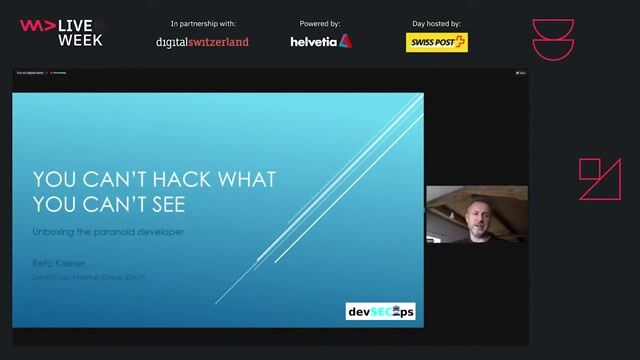
You can’t hack what you can’t see
Reto Kaeser
- Discuss this with your agent
- Open in Claude
- Open in ChatGPT
Traditional boundary firewalls are obsolete. Since 80% of cloud traffic is internal, perimeter breaches are devastating. Harness microsegmentation and zero trust to make workloads invisible to attackers.
Matching moments
6:32 min
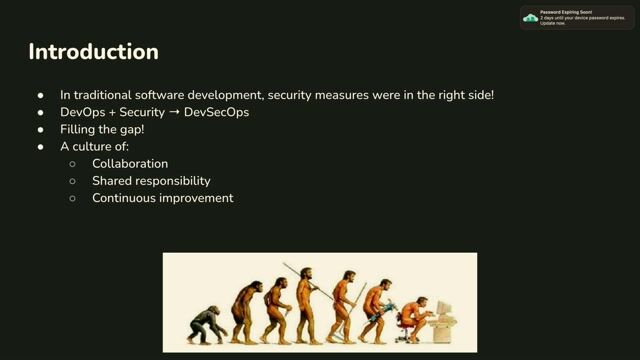
Embracing DevSecOps and automating the software development lifecycle
Mathias Tausig · LIVE
2:09 min
Shifting security left using the DevSecOps approach
Aarno Aukia · LIVE
5:25 min
Shifting left and creating internal security champion programs
Vandana Verma Sehgal · LIVE
1:53 min
Transitioning toward DevSecOps with dynamic scanning and secrets management
Christoph Ruggenthaler · LIVE
2:39 min
Shifting security testing focus toward critical application logic problems
 Julian Totzek-Hallhuber · World Congress 2026 Europe
2:07 min
Integrating security practices for devsecops adoption
Nevelina Aleksandrova · LIVE
More from WeAreDevelopers LIVE
Related videos
Related articles

BB
Benedikt Bischof
.gif)
DC
Daniel Cranney

AB
Andre Braun, GitLab

From learning to earning
Jobs that call for the skills explored in this talk.
about 2 months ago
Staff Developer Advocate, GitHub Security Lab

GitHub
United States
Experienced
$121k–323k
Remote
Git
Github
Databases
29 days ago
•
Verified
Senior Supply Chain Security Engineer

Docker, Inc.
Expert
Remote
Linux
Kubernetes
14 days ago
Cloud Engineer (German)

Stackit
Barcelona, Spain
Git
Okta
OAuth
4 days ago
Senior Security Architect / Secure Software Developer

PwC
Linz, Austria
Expert
€53k
OAuth
Golang
Docker
29 days ago
•
Verified
Senior Principal Software Engineer, Docker and Ecosystem
Docker, Inc.
Seattle, United States
Expert
Remote
Cloud (AWS/Google/Azure)
3 days ago
Penetration Tester / Red team Specialist

Raiffeisen Bank International AG
Stans, Austria
€47k
Linux
OAuth
Scripting