

WeAreDevelopers LIVE β€’ Nov 30, 2020

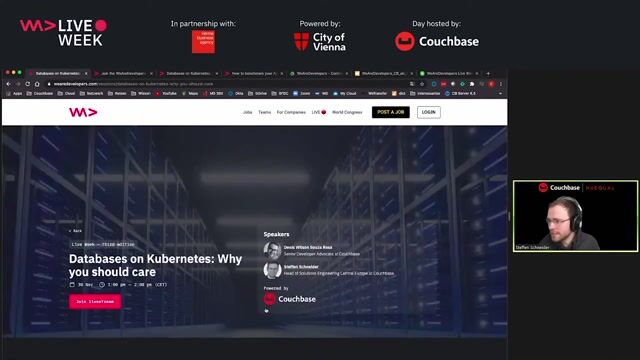
Databases on Kubernetes: Why you should care

Denis Wilson Souza Rosa , Steffen Schneider

Still afraid to run stateful applications in containers? Discover how Kubernetes Operators bring the hands-off convenience of a managed DBaaS straight into your own cluster.

Pause
Mute Enter Fullscreen
#1 about 6 min

Shifting mindsets on running databases in containers

Developers shifted from avoiding stateful deployments to successfully running databases at scale.

#2 about 2 min

Challenges of deploying stateful databases on native Kubernetes

Standard deployment methods struggle with managing node failures, replication, and state recovery.

#3 about 5 min

Managing database configuration with custom resource definitions

Creating domain-specific resource types enables developers to manage cluster configurations without external tools.

#4 about 5 min

Addressing pod availability and state recovery in replicated nodes

Even when failed stateful pods return online, native scheduling lacks mechanisms to recover replicated data.

#5 about 5 min

Automating database recovery and management using Kubernetes operators

Software operators listen to cluster events to coordinate node recovery, service upgrades, and scaling logic.

#6 about 8 min

Deploying and validating configuration state using admission controllers

Applying an admission controller ensures manual edits synchronize correctly with defined configuration manifests.

#7 about 3 min

Demonstrating automated cluster recovery during intentional node failures

The automation logic responds to missing nodes by seamlessly provisioning replacements and rebalancing data.

#8 about 7 min

Scaling clustered resources and independently tuning running database services

Adjusting hardware allocations and unbundling internal components allows clusters to support specific traffic demands.

#9 about 4 min

Comparing managed database services against native Kubernetes deployments

Hosting databases on clusters delivers better lifecycle flexibility and economics than restrictive managed configurations.

#10 about 3 min

Optimizing persistent storage performance for containerized stateful applications

Local persistent storage outperforms remote volume mounting when running self-replicating database engines.

#11 about 3 min

Measuring container performance overhead and assessing operational benchmarks

Accounting for minor containerization overhead through intentional resource allocation guarantees steady database performance.

Matching moments

1:58 min

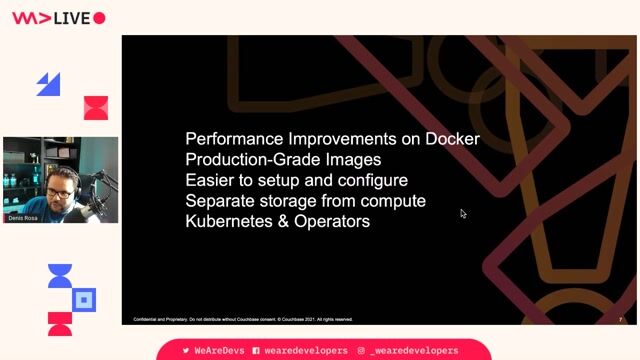
Modern improvements driving database adoption in Kubernetes

Denis Souza Rosa Β· LIVE

2:49 min

Deploying mission-critical databases within container infrastructures

Wei Hu Wei Hu Β· World Congress 2022

2:49 min

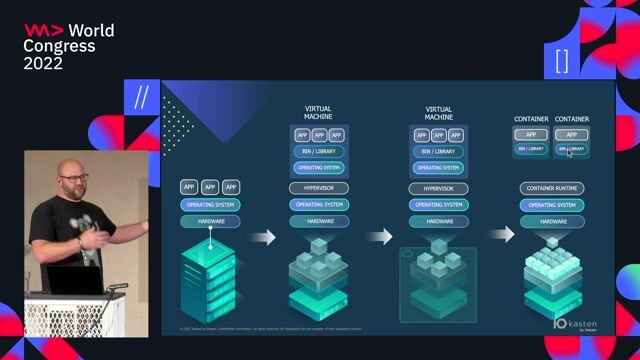
Evolution of stateful applications in container environments

Denis Souza Rosa Β· LIVE

4:54 min

Managing heterogeneous deployment lifecycles via Kubernetes operators

Wei Hu Wei Hu Β· World Congress 2022

3:39 min

Comparing managed database services against self-hosted Kubernetes operators

Denis Souza Rosa Β· LIVE

5:12 min

Extending Kubernetes functionality with custom resource definitions

Denis Souza Rosa Β· LIVE

Upcoming sessions on this topic

Open session

World Congress 2026 North America

September 24, 2026 Β· 12:50–13:20

Stage 3

Fault Tolerance and Consistency at Scale: Harnessing the Power of Distributed SQL Databases

Wei Hu

Senior Vice President of Research and Development

Wei Hu
Open session

World Congress 2026 North America

September 24, 2026 Β· 17:30–18:00

Stage 4

Boring Failover: Predictable Region Recovery Across 5,000 Microservices

Garvit Kataria, Sahil Sabharwal

Garvit Kataria
Sahil Sabharwal
Open session

World Congress 2026 North America

September 24, 2026 Β· 14:50–15:20

Stage 2

Databases in the Agent Era

Monica Sarbu

Founder and CEO of xata.io

Monica Sarbu
Open session

World Congress 2026 North America

September 24, 2026 Β· 15:30–16:00

Stage 9

Run your agents in Kubernetes: Build once, deploy anywhere. But really?

Michal Salanci

Senior Systems Engineer at ESET Cybersecurity

Michal Salanci
Open session

World Congress 2026 North America

September 24, 2026 Β· 11:40–12:10

Stage 2

Stop Running Mystery Meat in Production

Jeroen van Erp

Technical Advocate @ SUSE

Jeroen van Erp
Open session

World Congress 2026 North America

September 25, 2026 Β· 12:55–13:25

Stage 3

Replay-Safe Architecture: Building Event-Driven Systems That Can Recover With Confidence

Ishan Shah

PayPal, Software Engineer | Distributed Systems, AI, and Platform Engineering

Ishan Shah