Senior Cryptography Engineer - C and FPGA

Cryptonext Security
Paris, France
20 days ago
Apply on fr.indeed.com
Prepare application

Role details

Contract type
Permanent contract
Employment type
Full-time (> 32 hours)
Experience level
Expert
Experience required
5 years minimum
Working hours
Regular working hours
Languages
French
Job source

Tech stack

Microsoft Windows Android Software Development Apple IOS ARM Architecture Public-Key Cryptography Communications Protocols Computer Programming Continuous Integration Linux Electronic Design Automation Linux on Embedded Systems Embedded Software
+18 more
Cryptographic Protocols Federal Information Processing Standards (FIPS) Field-Programmable Gate Array (FPGA) GNU Debuggers Hardware Design Internet Protocol Security (IP SEC) Joint Test Action (IEEE Standards) OpenSSL X.509 Quick EMUlator (QEMU) Reduced Instruction Set Computing Vivado Fpga Hardware Gitlab-ci Information Technology Hardware Acceleration Software Version Control Hardware Debugging

Job description

  • Design and implement efficient C code for post-quantum cryptographic algorithms (NIST-selected or recommended by EU agencies), balancing performance, portability and security.
  • Port and optimize the CryptoNext Quantum Safe Library (C-QSL) across multiple platforms and architectures, with an emphasis on hardware/software FPGA accelerators.
  • Contribute to hardware/software co-design: specify and prototype cryptographic accelerators, evaluate trade-offs between software and FPGA-based implementations.
  • Adapt implementations for constrained and embedded environments (e.g., IoT, Cortex-M, embedded Linux).
  • Define and run test and validation strategies (functional, performance, security) across all target platforms.
  • Support security certification processes (CSPN, Common Criteria, FIPS) for the ported implementations.
  • Document your work through technical reports and, where relevant, scientific papers.
  • Collaborate closely with the R&D team and cross-functional teams to solve complex technical challenges.

The CryptoNext Quantum Safe Library is developed mainly in C and Assembly, targeting several operating systems (Linux, Windows, iOS, Android…) and processor architectures (x86, Arm, RISC-V…), as well as FPGA-based hardware accelerators.

Other tasks may include, depending on your profile and the product roadmap: work on side-channel countermeasures, and collaboration with the team in charge of integrating the library with communication protocols and cryptographic objects (TLS, IPsec, PKCS#11, X.509…) in post-quantum or hybrid mode.

Requirements

We are looking for a highly motivated, senior Cryptography R&D Engineer to join our team and take ownership of a key strategic project: porting our post-quantum cryptographic library across multiple platforms, with a particular focus on hardware/software FPGA accelerators. This role sits at the intersection of cryptography, low-level C engineering and embedded/hardware design., * Significant, senior-level experience in cryptography engineering, ideally 5+ years, gained in a software company or department of a larger organization (cybersecurity vendor, IT application or hardware provider), ideally with international teams or clients.

  • Engineering degree or Master’s in computer science, mathematics or a related field; a PhD in cryptography or a related discipline is a strong plus.
  • Solid foundations in algorithmics and algebra, with the ability to translate mathematical constructs into efficient, correct implementations.
  • Strong programming skills in C; comfort working close to the hardware and optimizing for performance and security.
  • Comfort using embedded development and hardware debugging tools (GCC, GDB, QEMU, JTAG…) and practical experience with source code management and continuous integration using GitLab CI.
  • Experience with public-key cryptography, symmetric-key cryptography, hash functions, and cryptographic protocols/frameworks such as OpenSSL is a plus.
  • Experience in one or more of the following is a strong plus: embedded software development, hardware/software co-design, FPGA implementation.
  • Exposure to FPGA development using Intel (Altera) or AMD (Xilinx) devices, including familiarity with the associated EDA tools (Quartus Prime, Vivado), would be considered a plus.
  • Good French & English communication skills, both oral and written.

Benefits & conditions

  • Ownership of a strategic, high-impact technical challenge - multi-platform porting and hardware acceleration - at the heart of our product roadmap.
  • A fast-growing, globally recognized deep-tech start-up, named among Gartner’s 5 reference leaders in post-quantum cryptography.
  • Full-time position, based in Paris.
  • Competitive salary, commensurate with experience.

About the company

CryptoNext Security is a Paris-based start-up founded in 2019, building on more than 20 years of academic research. CryptoNext is a software vendor specializing in quantum-computer-resistant cryptography (PQC: post-quantum cryptography). Its software suite, the Quantum Safe Remediation Suite, includes the world-reference Quantum Safe Library (C-QSL), covering the full selection of NIST algorithms, and helps enterprises and integrators migrate to the era of post-quantum cybersecurity.

CryptoNext Security was cited among the 5 reference leaders in Gartner’s report on post-quantum cryptography (October 2021) and received the Innovation Prize at «Les Assises 2022». CryptoNext is a member of Campus Cyber, Hexatrust and Systematic, and was selected in 2022 to join a workgroup of the US National Cybersecurity Center of Excellence (NCCoE) dedicated to PQC migration best practices.

Apply for this position

This job is hosted externally. Click below to view the full posting and apply.

Apply on fr.indeed.com
Prepare application

Good distractions

Talks and stories from around this role — technically off-topic, practically not.

52 sec

Running persistent Linux environments directly on Windows

Ben Breard Ben Breard · World Congress 2025

2:17 min

Preparing for quantum resilience and post-quantum cryptography

Jakub Gaj Jakub Gaj · World Congress 2026 Europe

3:55 min

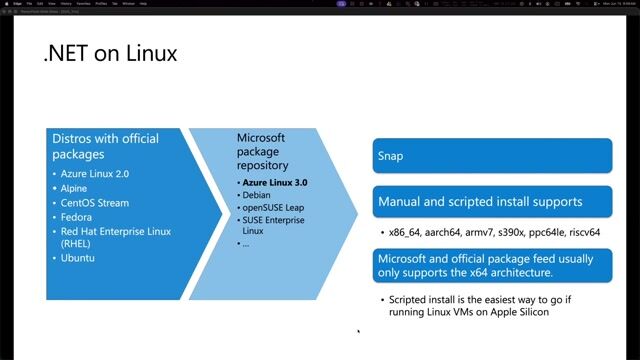
Demonstrating .NET installation on Debian and Azure Linux

Silvano Coriani Silvano Coriani · Europe 2026 Virtual

1:22 min

Piloting industry optimizations and enforcing post-quantum security updates

Ilie-Daniel Gheorghe-Pop Ilie-Daniel Gheorghe-Pop · World Congress 2026 Europe

3:00 min

Leveraging large quantitative models for intermediate quantum advantage

Yuval Dvir Yuval Dvir +1 · World Congress 2026 Europe

8:22 min

Simulating a Linux terminal and running Spring Boot

Jakov Semenski · LIVE

Videos

See all

Related articles

See all