
Systems Architect
- Discuss this with your agent
- Open in Claude
- Open in ChatGPT
Role details
Tech stack
+8 more
Job description
As Platform Systems Architecture, Security and Compliance design are your priorities. You’re responsible for defining and driving the target platform architecture as the organization modernizes from a landscape of legacy systems and tightly coupled, workflow-heavy applications to a layered platform model with clear boundaries. This role establishes architectural guardrails across the Experience, Orchestration, and ERP layers, champions best practices, and partners with product and engineering leaders to deliver solutions that are scalable, performant, secure, and resilient. The Systems Architect ensures designs are automation-ready and AI-ready (instrumented, observable, well-governed, and designed for safe augmentation) while enabling teams to move quickly without eroding platform integrity.
Role responsibilities:
- Design systems with strong observability, data quality, metadata, lineage, and access controls; define patterns for safe AI augmentation (e.g., retrieval over governed data, human-in-the-loop controls, prompt/tooling boundaries).
- Strengthen security and compliance by design: embed identity, authorization, secrets management, encryption, auditability, and secure SDLC practices into platform standards.
- Establish and maintain reference architectures, principles, standards, and decision records for the platform and its integration patterns.
- Analyze complex end-to-end workflows across legacy systems, identify coupling and risk, and create pragmatic decomposition and migration paths that preserve business continuity.
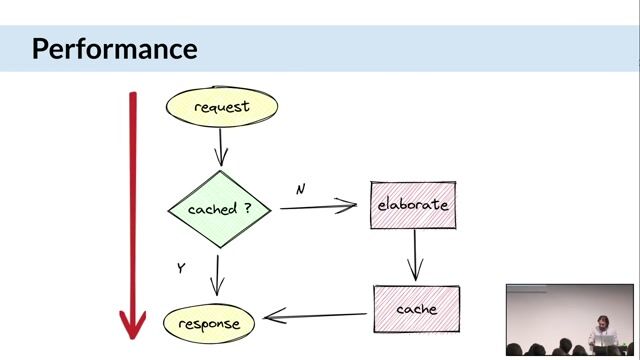
- Create architectures that meet SLOs/SLAs, handle peak demand, optimize latency and throughput, and apply caching, asynchronous processing, and data-partitioning strategies as appropriate.
- Eensure systems can be provisioned, deployed, and operated via automation (IaC, CI/CD, policy-as-code, automated testing, automated rollback and recovery).
Requirements
Do you have experience in Stakeholder management?, * 8+ years of experience in software engineering, solutions architecture, or platform architecture, with demonstrated ownership of cross-team architecture decisions.
- Proven experience modernizing legacy systems and untangling complex workflows (e.g., monolith-to-services, integration rationalization, phased migrations, strangler patterns).
- Deep knowledge of layered architecture and domain boundaries, including API design, integration patterns, and distributed system tradeoffs.
- Strong understanding of ERP-adjacent integration considerations (e.g., master data, financial and operational workflows, batch vs. real-time interfaces, change management).
- Hands-on experience designing for performance and scale (capacity planning, load testing strategy, caching, async processing, data modeling).
- Experience with cloud platforms and modern delivery practices (CI/CD, infrastructure as code, automated testing, containerization/orchestration).
- Strong observability mindset (logging, metrics, tracing), with ability to translate operational needs into architecture and standards.
- Excellent communication and influence skills: able to align stakeholders, lead architecture reviews, and mentor teams.
- Hands-on builder willing to roll up sleeves to help get the initial platform MVP stood up.
- Experience mentoring and coaching engineering teams.
Benefits & conditions
Pulled from the full job description
- 401(k)
- Health insurance
- Retirement plan
- Paid time off
- Vision insurance
- Dental insurance, * 401(k)
- Dental insurance
- Health insurance
- Paid time off
- Retirement plan
- Vision insurance
Apply for this position
This job is hosted externally. Click below to view the full posting and apply.
Apply on indeed.comGood distractions
Talks and stories from around this role — technically off-topic, practically not.
Moments
Explore playlistsVideos
See allRelated articles
See all
Dev Digest 120 - Apple and peers
Is Software Engineering Over-Saturated?
What Are The Top Skills Required For Azure Developers?
Why Attend a Developer Event in 2026?