
Power Platform Solution Architect Expert
- Discuss this with your agent
- Open in Claude
- Open in ChatGPT
Role details
Tech stack
+40 more
Job description
- Own and maintain the authoritative STAAND architecture: logical and physical data models, Dataverse table and relationship design, solution segmentation, environment strategy, and integration topology.
- Personally build in the platform - model-driven app configuration, plug-ins and custom APIs (C#/.NET), PCF controls, TypeScript/JavaScript client extensions, Power Fx, and plug-in pipeline optimization.
- Establish and enforce architecture standards, design patterns, naming conventions, and technical debt registers across all modules and portals.
- Chair design authority review for significant changes; sign off on solution designs before build.
- Diagnose deep platform issues: performance degradation, API and service-protection limits, plug-in execution ordering, solution layering conflicts, storage growth, portal rendering.
- Maintain architecture artifacts sufficient to satisfy CCWIS review, federal audit, and District IT governance. 2. Cross-Cloud Architecture: GCC and Commercial Azure:
- Design, document, and harden the boundary between the GCC Dynamics/Power Platform tenant and Azure commercial-cloud services.
- Define what data may traverse that boundary, in what form (de-identified, tokenized, aggregated, or full record), under what authorization, and with what logging - including explicit architectural boundaries for protected data categories such as Medicaid Enrollment.
- Implement cross-tenant identity, managed identities, service principals, Key Vault secret lifecycle, private networking, and API gateway patterns.
- Maintain a defensible position on data residency and FedRAMP authorization boundaries for every commercial-cloud service in use, and present that position to auditors and federal reviewers. 3. AI and Agentic Development:
- Serve as hands-on technical lead for CFSA’s AI capability, including CORA and its expansion into agentic workflows.
- Design, build, evaluate, and productionize agents in Azure AI Foundry and Copilot Studio: tool and function calling, orchestration and multi-agent patterns, grounding and retrieval over Dataverse and document stores, prompt and context engineering, structured output, and human-in-the-loop checkpoints.
- Own AI evaluation discipline: golden datasets, automated evals, groundedness and hallucination measurement, regression testing on model or prompt changes, latency and cost benchmarking, controlled rollout.
- Manage the AI model lifecycle - track model releases and deprecations, run comparative evaluation before adopting a new model, execute migrations without regression to worker-facing quality.
- Implement responsible AI controls appropriate to a child welfare setting: content safety, PII/PHI handling, bias and fairness testing, explainability, audit logging of AI-influenced actions, and clear framing of AI output as decision support rather than decision making.
- Support predictive and analytic capability aligned to agency mission priorities, ensuring models are validated, monitored for drift, and governed.
- Build reusable AI platform assets - prompt libraries, agent templates, evaluation harnesses, observability dashboards. 4. Application and Platform Security:
- Own the security architecture of STAAND end to end; serve as technical counterpart to the agency ISSO, OCTO security, and District privacy officials.
- Apply and evidence compliance with OCTO IT policies (octo.dc.gov/page/it-policies), NIST SP 800-53, FISMA, FedRAMP, HIPAA, 45 CFR 1355 (CCWIS), Title IV-E confidentiality, and District data protection law including DC Code 28-3851 et seq. breach notification obligations.
- Design and enforce least privilege: Dataverse business unit and role architecture, row/column-level security, portal web roles and table permissions, privileged access management, separation of duties for finance and eligibility functions.
- Lead secure SDLC: threat modeling, secure code review, static and dynamic analysis, dependency and supply-chain scanning, secrets management, remediation tracking with severity-based SLAs.
- Support penetration tests, vulnerability assessments, and audit response; own STAAND-assigned POA&M items.
- Define AI-specific security requirements: prompt injection defenses, tool-permission scoping, data exfiltration prevention, agent action auditing.
- Contribute to incident response, continuity, and disaster recovery planning; validate RTO/RPO through periodic exercises. 5. Continuous Improvement and Release Management:
- Own the STAAND change pipeline from enhancement request through design, build, test, release, and post-release verification, including published release notes and coordination with the CISA training organization.
- Plan and execute against Microsoft’s Dynamics 365 biannual release waves and Power Platform service updates: early-access testing in a dedicated environment, deprecation and breaking-change assessment, and a documented impact and remediation plan per wave.
- Evaluate new platform, Azure, and AI capabilities against the STAAND roadmap; run structured proofs of concept and make evidence-based adopt / trial / hold / retire recommendations.
- Maintain a rolling multi-year technical roadmap balancing stabilization, platform health, security, federal compliance, and innovation.
- Drive performance, reliability, and cost optimization - capacity and license consumption, Azure spend, storage tiering, API efficiency.
- Advance DevOps maturity: source-controlled solutions, automated build and deploy pipelines, environment refresh, automated regression testing, release quality metrics.
- Maintain and report the technical issues and risk register with mitigation owners and timelines. 6. Data, Interoperability, and Federal Reporting:
- Own the data architecture supporting AFCARS, NCANDS, NYTD, CFSR, and Title IV-E reporting, including lineage, quality rules, exception handling, and submission validation.
- Design and maintain bi-directional exchanges with District and external partners consistent with CCWIS interoperability requirements.
- Establish automated data quality controls, duplicate person detection and merge integrity, and reconciliation with legacy records. 7. Stakeholder and Senior Leadership Engagement:
- Translate between social work practice and technical architecture; observe real workflow with intake workers, investigators, case managers, placement staff, and fiscal teams before designing for it.
- Brief the CFSA IT Steering Committee Members, CIO, STAAND Product Leadership, OCTO leadership, Council oversight staff, court monitors, and ACF/Children’s Bureau reviewers, calibrating to each audience.
- Serve as principal technical liaison to Microsoft (Industry Solutions Delivery, Customer Success, product groups) and to implementation and support vendors; hold them to architectural and quality standards.
- Author decision memos, architecture decision records, briefing decks, and federal reporting content requiring minimal editing.
- Mentor CFSA staff and other contract resources; build internal capability and reduce single-point-of-failure dependency.
Requirements
Bachelor’s degree in Computer Science, Software Engineering, Information Systems, Data Science, or a closely related technical discipline from an accr, Microsoft Certified: Cybersecurity Architect Expert (SC-100)
Desired
Microsoft Certified: Fabric Analytics Engineer (DP-600) or Azure Data Engineer (DP-203)
Desired
Progressive IT experience
Required
16 Years
Solution or enterprise architecture on enterprise-scale, mission-critical systems
Required
8 Years
Lead or principal architect on full D365 implementation lifecycles (min. 2 lifecycles)
Required
5 Years
Microsoft Azure architecture and hands-on build (PaaS integration, data, identity)
Required
4 Years
Generative AI / agentic development in production - Azure AI Foundry, Azure OpenAI, or Copilot Studio
Required
2 Years
RAG / grounding, tool calling, agent orchestration, and AI evaluation methodology
Required
2 Years
Application security in a regulated environment (NIST 800-53 or equivalent, threat modeling, secure SDLC)
Required
5 Years
Government cloud delivery - GCC, GCC High, or Azure Government
Required
2 Years
Pro-code D365 extensibility - C#/.NET plug-ins, custom APIs, PCF controls
Required
5 Years
Cross-cloud or cross-tenant architecture (government ? commercial)
Required
2 Years
Power Platform ALM, solution layering, Azure DevOps CI/CD
Required
4 Years
Operating a live production system through vendor platform release waves without disruption
Required
3 Years
Direct briefing of executive / non-technical program leadership
Required
5 Years
Health and Human Services domain - child welfare (CCWIS/SACWIS), Medicaid/MMIS, integrated eligibility, behavioral health, or public health systems
Desired
3 Years
Federal child welfare reporting - AFCARS, NCANDS, NYTD, CFSR, Title IV-E
Desired
2 Years
Power Pages / portal architecture and external-user security
Desired
3 Years
Data engineering and BI - Fabric, Synapse, Data Factory, Power BI
Desired
3 Years
Public sector or District government delivery experience
Apply for this position
This job is hosted externally. Click below to view the full posting and apply.
Apply on www.dice.comGood distractions
Talks and stories from around this role — technically off-topic, practically not.
Moments
Explore playlistsVideos
See allRelated articles
See all
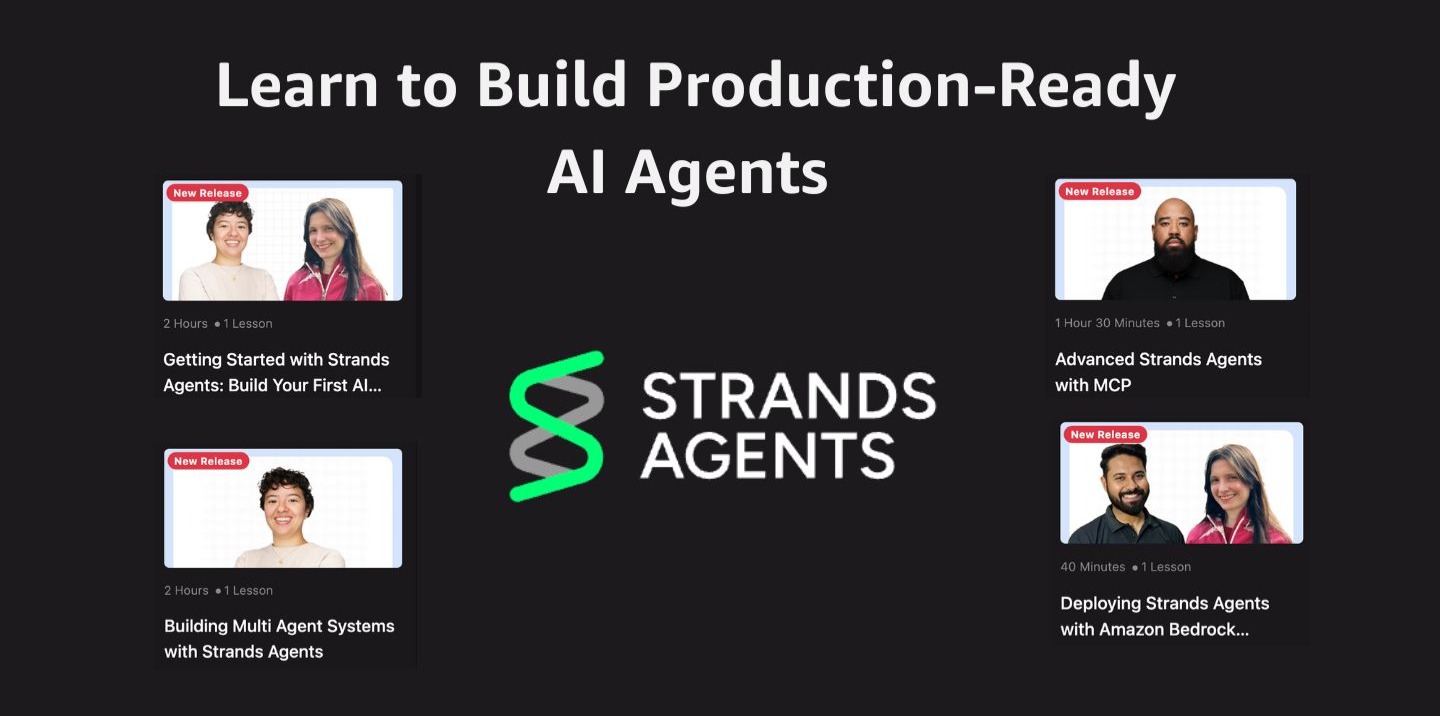
From Prototype to Production: Build AI Agents with This Free 4-Course Learning Path
Dev Digest 120 - Apple and peers
Top Must-Visit Developer Conferences in the US in 2026
Graph and AI Trends 2026: Why Is AI Running but Not Yet Delivering?