AI SoC Modeling Engineer, Annapurna Labs Machine Learning Accelerators, AWS

Amazon.com, Inc.
Austin, TX, United States
23 days ago
Apply on www.amazon.jobs
Prepare application

Role details

Contract type
Permanent contract
Employment type
Full-time (> 32 hours)
Experience level
Experienced
Experience required
2 years minimum
Compensation
$165,200.0 - $223,600.0
Working hours
Regular working hours

Tech stack

Java (Programming Language) Artificial Intelligence Amazon Web Services Automation of Tests C++ (Programming Language) Code Review Microarchitecture Software Debugging Microprocessors Perl (Programming Language) Hardware Design Python (Programming Language)
+11 more
Machine Learning Software Engineering SystemC Multithreading Graphics Processing Unit (GPU) Application Specific Integrated Circuits Pytest Build Process Software Coding Software Version Control Programming Languages

Job description

Develop and maintain high-fidelity functional model of AI/ML accelerator and its SoC subsystems, including compute engines, memory hierarchies, on-chip interconnects, and data paths - translating architecture specs and RTL behavior into accurate, testable C++ models

  • Validate model behavior against RTL simulations, emulation platforms, or silicon measurements; debug discrepancies and drive model-to-RTL correlation to high fidelity
  • Partner with design verification teams to integrate models into pre-silicon validation environments and catch architectural bugs early in the design cycle
  • Collaborate with architects/micro-architects, RTL design engineers, ML SW engineers, and compiler engineers to evaluate architecture and microarchitecture tradeoffs and help make hardware design decisions
  • Contribute to cycle-approximate performance model effort enabling architectural exploration ahead of RTL availability, early software development
  • Quantify system-level tradeoffs across compute, memory bandwidth, networking, and storage to influence reference architectures and long-term silicon strategy
  • Build and improve modeling infrastructure: simulation frameworks, regression suites, automated correlation checks, and coverage-driven validation flows
  • Develop modeling methodologies and tools that scale across multiple IP blocks and SoC generations, improving team efficiency and model reuse

Why this role is interesting:

  • Your models are used to verify silicon before it’s built - bugs you catch save months of schedule and millions of dollars
  • You’ll work at the intersection of software engineering and chip design, with deep visibility into how custom ML accelerators are architected
  • As the team scales, there’s a clear path into architectural modeling - using your models to influence chip design decisions, not just validate them
  • Small team, high ownership, direct impact on AWS’s most strategic silicon programs

Requirements

Have built functional or performance models of SoCs, ASICs, GPUs, CPUs, or IP blocks

  • Are comfortable working with architectural / design specifications or reference implementations and translating them into C++ or SystemC models
  • Understand verification concepts and have worked with DV teams or in pre-silicon validation environments
  • Care about model fidelity and have experience correlating models against RTL or silicon
  • Are interested in expanding into architectural performance modeling as the team grows
  • Enjoy working on a small, high-impact team where you own significant pieces of the stack

No ML background needed. You’ll learn the ML accelerator domain on the job., Experience programming languages such as C/C++, Python, Java or Perl

  • 2+ years writing functional or performance models of hardware (SoCs, ASICs, GPUs, CPUs, IP blocks)
  • Familiarity with SoC, CPU, GPU, and/or ASIC architecture and micro-architecture, 2+ years of full software development life cycle, including coding standards, code reviews, source control management, build processes, testing, and operations experience
  • Experience working with DV teams or integrating models into verification flows
  • Experience with SystemC or TLM-based modeling
  • Experience correlating functional models against RTL simulation or emulation
  • Experience developing or calibrating performance models
  • Familiarity with Modern C++ (20 and beyond)
  • Experience with PyTest, GoogleTest, or similar test frameworks
  • Experience with multi-threaded simulation

Benefits & conditions

The base salary range for this position is listed below. Your Amazon package will include sign-on payments and restricted stock units (RSUs). Final compensation will be determined based on factors including experience, qualifications, and location. Amazon also offers comprehensive benefits including health insurance (medical, dental, vision, prescription, Basic Life & AD&D insurance and option for Supplemental life plans, EAP, Mental Health Support, Medical Advice Line, Flexible Spending Accounts, Adoption and Surrogacy Reimbursement coverage), 401(k) matching, paid time off, and parental leave. Learn more about our benefits at https://amazon.jobs/en/benefits.

USA, CA, Cupertino - 165,200.00 - 223,600.00 USD annually USA, TX, Austin - 143,700.00 - 194,400.00 USD annually

About the company

AWS’s Trainium and Inferentia chips power the world’s largest machine learning clusters. Our team builds C++ models of these custom SoCs that RTL designers, verification engineers, and software teams depend on throughout the silicon development lifecycle. We’re looking for a modeling engineer to build and own models that directly impact how our chips are designed, verified, and brought to production.

Apply for this position

This job is hosted externally. Click below to view the full posting and apply.

Apply on www.amazon.jobs
Prepare application

Good distractions

Talks and stories from around this role — technically off-topic, practically not.

3:18 min

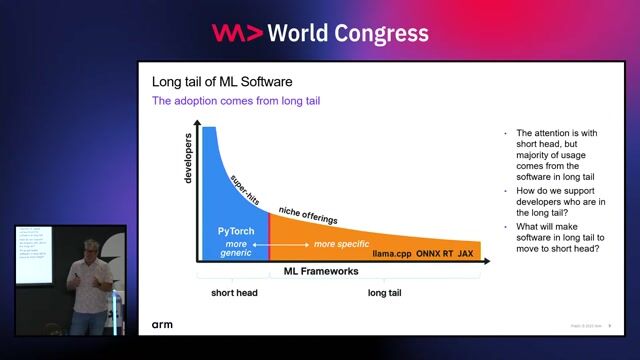
Hardware architectures tailored for specific artificial intelligence computations

Stephan Gillich Stephan Gillich · World Congress 2024

3:39 min

Addressing code review surrender and process exploitation

Laura Tacho Laura Tacho · World Congress 2026 Europe

3:05 min

Tagging and organizing execution scenarios with pytest markers

Florian Bruhin · World Congress 2021

2:42 min

Dissecting artificial intelligence layers from compute to applications

Christian Nagel Christian Nagel +3 · World Congress 2026 Europe

56 sec

The hidden costs of delayed peer code reviews

Tim Gilboy Tim Gilboy

5:30 min

Extending testing workflows using popular pytest plugins

Florian Bruhin · World Congress 2021

Videos

See all

Related articles

See all