


Quick guide: How to write a Software Developer CV
over 5 years ago
According to the U.S. Bureau of Labor Statistics, jobs in software engineering and development will grow by 22% in the decade between 2019 and 2029. Globally, according to Evans Data Corporation, the number of developer jobs is expected to increase to 28.7 million in 2024.
However -
Though more software engineer positions will open up in the coming years, more candidates will be vying for your position. And that’s especially true for the higher-paying jobs at top startups and multinational companies.
Meaning, don’t phone it in if you want a serious shot at an interview. You need to know how to write a killer software engineering resume to be considered.
Well, you’re in luck!
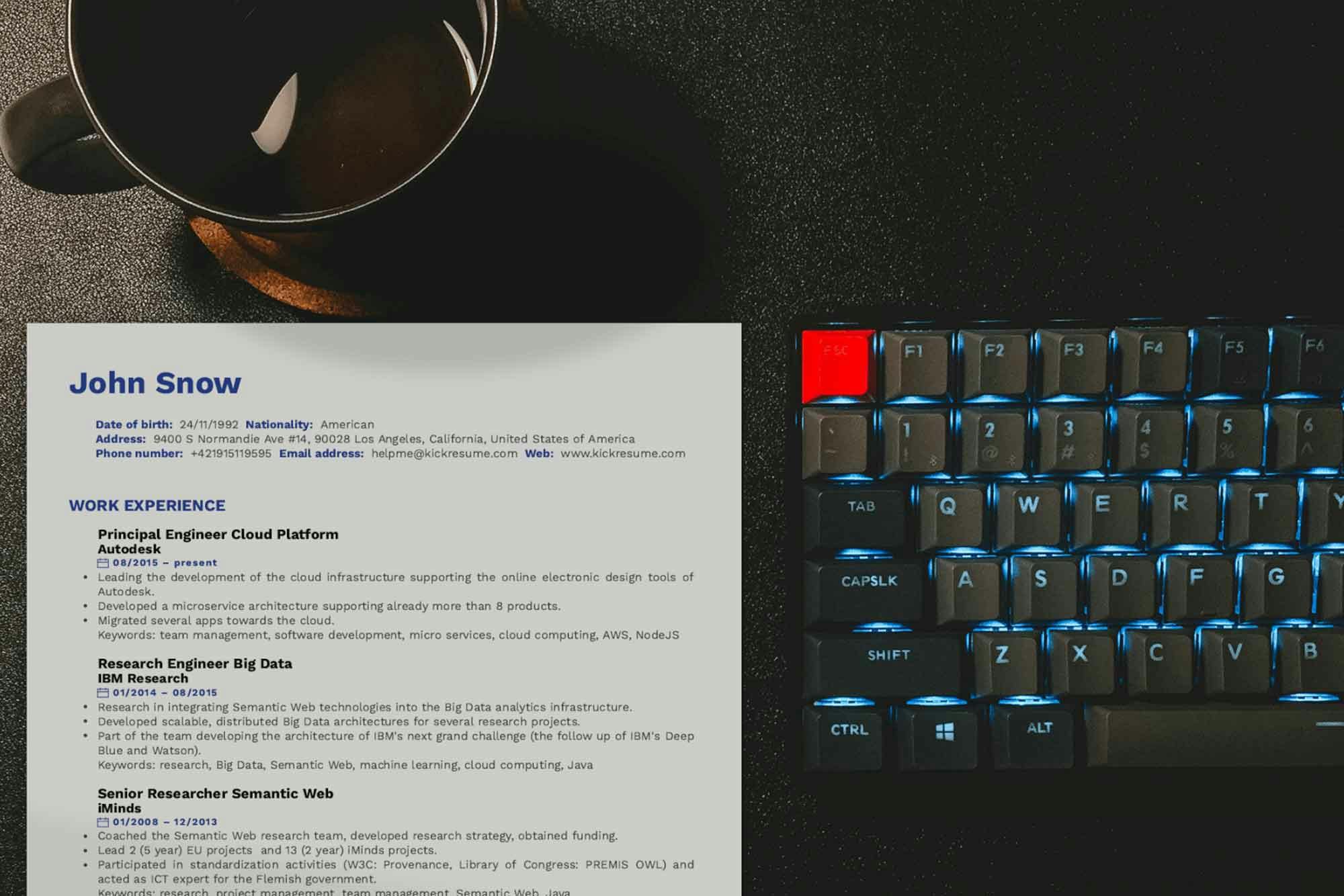
Below, you’re going to learn exactly how to write a resume for software engineering jobs. What to include on your resume, how to structure it, things to omit, and more - it’s all here. There is no need to hire a resume writing service, as you can do this by choosing a great developer CV template on Google Docs or Microsoft Word or start building your resume using our resume builder.
For this guide, Arc partnered with Christian Eilers, career expert and CPRW (Certified Professional Resume Writer) to lay out exactly how to write a resume for software engineering jobs in detail.
Whether you’re starting from scratch, already have the alpha version of a software engineer resume drafted up, or want to find a software engineer example resume, you’ll find all the best advice and expert tips below to transform it into a stable release candidate.
Read more: What to Include on a Software Developer Resume - and What to Leave Off, Website - A personal portfolio website is a great supplement to your resume for software engineer jobs. Use it to document your past professional, freelance, and personal projects in detail.
LinkedIn profile - Around 72% of recruiters use LinkedIn to make hiring decisions. Before sending your software developer resume, complete your profile and update it with current information. To showcase your software engineer skills, complete LinkedIn skills assessments to earn badges and impress IT recruiters with your expertise.
GitHub URL - If you’re active on GitHub, add a link to your profile to show off your projects, repositories, and other development activities. Many hiring managers give you bonus points if you’ve contributed to open-source projects.
Other social media profiles - In most cases, leave your other social profiles off, as they’re likely irrelevant (and easily found on Google anyway). However, add these profiles to round out your resume if you are a software engineering thought leader on Reddit or Twitter.
Sensitive information - Don’t include your social security number, date of birth, political affiliations, religion, or other super-personal details. It’s not safe and could lead to bias, which may result in you being excluded from consideration.
Formatting - Feel free to be a bit creative here and consider customization options, but don’t go overboard. Make sure your name stands out (larger font size, bold, etc.), and align as you please. Keep the header the same on both your software engineer cover letter and resume template for consistency.
Hyperlinks - Make it as easy as possible for recruiters and CTOs by hyperlinking any URLs in your software engineering resume.
Finally, before we move on to the actual resume content, a warning - make sure to clean up your online presence!
Whether you list your social media profile links or not, an interested hiring manager or head of IT will Google your name to see what comes up. You want it all (e.g., Facebook, Twitter, LinkedIn) to be professional, so thoroughly comb them beforehand for lewd photos, political rants, and other potentially offensive material. Hide them, or better yet, remove them completely!
Introduction paragraph
Hiring managers and IT recruiters spend an average of six seconds scanning through every single resume the first time around, which is really no time at all.
If they notice something they like during that quick glance, your software engineer resume will be reviewed more thoroughly. If not, it’s game over at this particular company, unfortunately.
So, write an irresistible introduction paragraph to capture their attention.
This opening statement is a sales pitch that tells them, “Here’s why you should continue reading my resume and keep me in the running as a software engineer job candidate.” Let’s start off by looking at two examples of this opening paragraph., First and foremost, the bad example is hard to notice as it’s crammed there into a corner. The good example makes use of white space all around to ensure the contents stand out to hiring managers.
Also, always remember to stay consistent. The bad example uses the full name of one certification as the first entry but the abbreviation for the second. Our recommendation is to write out the full name and include the abbreviation in parentheses to maximize resume keywords.
Finally, if you have several certifications and awards each, consider splitting them up into their own sections. Otherwise, one section combining both is just fine.
Personal projects section
Software developers are a passionate, dedicated, enterprising bunch, and you likely have some (or many) personal projects, open-source contributions, or freelance work to show off. And that’s great! These software side projects are very useful in getting the hiring manager on your side.
However -
Let’s just figure out how to highlight your software projects in the best possible way.
A personal projects section on a resume is a good idea for lower-level software engineering positions with little professional experience. If you’re writing an entry-level software development resume or a resume for a software engineering internship position, add a few of your proudest projects. Having these projects shows you’re not just in it for the paycheck, but rather you are wholly passionate about software development and engineering.
But, for mid-level and senior software engineering resumes, link out to an online portfolio of your projects in the resume contact information section instead. As a software engineer with experience, you’re going to need all the room on the resume you can get, which is why the online projects portfolio is better. However, if you find yourself with room to spare, by all means, include them!
Anyway, if you’ve decided to add projects directly onto your resume, here’s what to do:
Grouping - When listing more than a couple of projects, group them into subheadings like “Technical Projects,” “Business Projects,” and “Other Projects.”
Title - On the first line, identify the type of project. It could be something like “iOS Mobile Application” or “eCommerce Chatbot.” If you have a website with expanded details on the project, hyperlink the title there.
Description - Give a short description of the project, no more than 3 sentences. Perhaps include the problem it solved, why you created it, and the client (if applicable).
Skills - To end each entry, identify the skills you used (e.g., API access, JavaScript Interop) or tech stacks required to complete the project (e.g., LAMP, MEAN)., Still using “worked on” or “participated in” to start off your sentences on your resume? It’s time to bring more power and action into your resume to show off your assertiveness and proactiveness. Here are some powerful action verbs to help you start each bullet point in your resume:
and some more inspirations from MIT Career Advising & Professional Development.
Some technical “power-words” you can add in to the content of your experience and achievements include:
and more from CV Compiler about how other power words can be incorporated into your resume.
Instead of painting yourself as a passive participant, use action verbs to assert the active role you played in the completion of different projects. Incorporate power-words to showcase the impact of your contribution to products you’ve worked on and the company you’ve worked for.
Degree - If you’ve earned a degree, the first line of each entry should be the degree name and your major. Follow the naming convention the job description uses when deciding to choose between “bachelor’s degree,” “BS,” or “B.S.” If you’re working on a degree, write instead “Majoring in Computer Science,” for example., Minor - Listing a minor (or double major) on your resume shows you can balance a heavy workload and are eager to soak up knowledge.
Honors - If you graduated with honors or earned any academic awards, show them off.
Projects - Similarly, highlight any relevant software engineering projects, academic publications, or research papers.
Finally, while most job descriptions may specifically seek someone with a degree in computer science or software engineering, don’t pass up the chance just because your university history doesn’t match. As one of the more modern employment sectors, they may still consider you - especially if you have enviable software engineering skills and experience., The software engineering resume skills area should be well thought out. Managers are looking for abilities you have that are relevant to the position, and anything that doesn’t just get in the way., Quantity - Include only relevant skills that will help you land the software engineering position. These will usually be listed in the job description. As a software engineer, there’s probably no point listing your proficiency with Microsoft Office, but more relevant software applications should certainly be included.
Go “Hard” - Hard skills are those that can be developed through learning, such as technical skills, while soft skills are acquired as life goes by, such as people skills. Go heavier on the hard skills.
Grouping - IT managers often prefer you to include skill levels to identify just how proficient you are at each one. Follow our convention above or choose your own, but omit any skills with which you have only a rudimentary understanding., Languages - I don’t mean Java, Go, or Python here, but human languages. Adding languages you’re fluent in, along with your proficiency level in each, could be a great addition - especially if you’re joining an international team!, Developers often include a separate “Skills” section on their resume that lists their technical skills in bullet point form. This is a great strategy because hiring managers can quickly scan your resume to see what skills you possess. To showcase your hard skills, you should list some of the skills you possess in the following areas:
(Make sure you use standardized spelling of technical terms - if in doubt, check!)
With that said, soft skills should be woven into your resume in succinct, story-telling bullet points. As the old saying goes, it’s better show than tell when it comes to soft skills. When you’re writing about your experiences, these are some of the soft skills you want to keep in mind:
You’ve probably browsed enough websites and apps to know that fonts and font sizes can make or break a product and its readability/brand consistency.
The same applies to your resume.
Your resume is the first impression you make on the hiring manager and is part of your self branding. What fonts are best?
Feeling a little too overwhelmed by all the fonts out there? Just decide whether you want to use a serif font or a sans-serif font. Serifs are fonts with little lines at the end of each stroke in a letter while sans-serifs are those without lines at the end of each stroke. Serifs tend to be easier to skim but a little old-fashioned, whereas sans-serifs might be tougher on the eye but modern, simple, and minimalistic.
Besides what fonts you use, you should also make sure your font size is larger than 10pt. The standard font size is 12pt, but for names, job titles, and company names, you can either enlarge the font or bold the words for emphasis.
This job is hosted externally. Click below to view the full posting and apply.
Talks and stories from around this role — technically off-topic, practically not.
1:10 min
6:36 min
1:00 min
 Stan Girard · World Congress 2024
3:04 min
3:32 min
 Francesco Ciulla · World Congress 2023
2:40 min