Cyber Threat Intelligence Analyst

Búsqueda Avanzada
Madrid, Spain
2 days ago
Apply on www.adzuna.es
Prepare application

Role details

Contract type
Permanent contract
Employment type
Full-time (> 32 hours)
Working hours
Regular working hours
Job source

Tech stack

CompTIA Security+ Cyber Security Computer Telephony Integration Decision Support Systems Intelligence Analysis Cyber Threat Analysis

Job description

This position is listed on behalf of a partner company, who manages all applications and next steps. Our partner is looking for a Cyber Threat Intelligence Analyst based in Spain. As a Cyber Threat Intelligence Analyst, you will develop practical experience turning incomplete and complex threat information into actionable intelligence. You will assess sources, threat actors, tactics, techniques, indicators, and intelligence gaps within realistic simulated environments. The role focuses on understanding what threats mean, why they matter, and what organizations should consider doing next. You will practice structured analytical reasoning, evaluate competing hypotheses, and communicate confidence and uncertainty effectively. Your work will include producing intelligence assessments and translating technical findings into concise insights for decision-makers. The experience is designed for aspiring analysts, cybersecurity professionals, students, graduates, career changers, and self-taught practitioners. All activities are conducted within controlled simulations for legitimate defensive, educational, and professional-development purposes. Accountabilities

  • Threat-information triage: Review multiple pieces of simulated threat information and determine which intelligence is relevant to organizational priorities and warrants further investigation.
  • Source evaluation: Assess the reliability, credibility, relevance, and quality of intelligence sources and explain how these factors affect analytical confidence.
  • Threat-actor analysis: Examine available intelligence on simulated threat actors to assess motivation, capabilities, targeting patterns, behaviors, and relevance to an organization.
  • TTP analysis: Analyze simulated tactics, techniques, and procedures associated with malicious activity and determine their implications for defensive priorities.
  • Indicator analysis: Evaluate indicators of compromise within their broader context, considering their evidential significance rather than treating individual indicators as conclusive.
  • Intelligence requirements: Identify critical intelligence gaps and define the additional information needed to support better organizational decision-making.
  • Threat prioritization: Compare multiple simulated threats and determine their relative importance based on organizational relevance, likelihood, potential impact, and available evidence.
  • Structured analysis: Evaluate competing explanations or hypotheses and communicate why the available evidence supports one assessment more strongly than another.
  • Threat assessment: Synthesize information from multiple sources into clear assessments explaining what is happening, why it matters, and what defensive actions should be considered.
  • Confidence assessment: Clearly communicate the level of confidence associated with intelligence judgments, including assumptions, evidence limitations, and areas of uncertainty.
  • Executive communication: Translate technical threat information into concise, decision-relevant intelligence suitable for senior stakeholders.
  • Defensive recommendations: Develop proportionate defensive priorities based on intelligence findings and within the scope of legitimate defensive security.
  • Assessment updates: Reassess previous judgments when new information becomes available and demonstrate how additional evidence changes-or confirms-the original assessment.
  • Professional artefacts: Produce practical intelligence outputs such as threat assessments, threat-actor profiles, executive briefs, intelligence requirements documents, TTP assessments, indicator assessments, confidence statements, and intelligence updates.

Requirements

  • Target background: Suitable for aspiring Cyber Threat Intelligence Analysts, cybersecurity students and graduates, SOC professionals seeking CTI exposure, career changers, intelligence or security professionals transitioning into cyber, self-taught practitioners, and professionals holding relevant cybersecurity certifications.
  • Threat intelligence: Understanding of core cyber threat intelligence concepts, including threat assessment, intelligence requirements, source evaluation, threat prioritization, and adversary analysis.
  • Analytical reasoning: Strong critical-thinking and structured-analysis skills, with the ability to evaluate incomplete information and reach evidence-based judgments.
  • Threat assessment: Ability to analyze threat actors, TTPs, indicators, organizational exposure, and potential impact within a broader intelligence context.
  • Source analysis: Ability to assess the credibility, reliability, relevance, and limitations of available information.
  • Intelligence communication: Ability to communicate complex findings clearly and adapt analysis for both technical and senior business audiences.
  • Decision support: Ability to convert intelligence findings into practical, decision-useful insights and proportionate defensive recommendations.
  • Evidence-based thinking: Ability to identify assumptions, intelligence gaps, competing hypotheses, and confidence levels rather than overstating certainty.
  • Adaptability: Comfortable working with incomplete or evolving information and updating assessments when new evidence becomes available.
  • Ethical approach: Commitment to using cybersecurity knowledge and analytical capabilities for legitimate defensive, educational, and professional-development purposes.
  • Professional development: Willingness to build practical evidence of CTI capabilities through structured simulations and professional analytical artefacts.

Benefits & conditions

  • Remote opportunity: Participate remotely in a flexible, simulation-based professional experience.
  • Practical experience: Develop hands-on exposure to realistic Cyber Threat Intelligence scenarios without requiring access to live production environments.
  • Portfolio development: Create professional artefacts that demonstrate analytical reasoning, threat assessment, intelligence communication, and decision-support capabilities.
  • Career exploration: Gain practical exposure to CTI workflows for those entering cybersecurity or transitioning from related security disciplines.
  • Transferable skills: Strengthen critical thinking, structured analysis, source evaluation, risk prioritization, and executive communication.
  • Multiple scenarios: Experience different combinations of CTI activities depending on the simulations activated.
  • Ethical environment: Complete all activities within controlled environments intended for legitimate defensive, educational, and professional-development purposes.
  • Professional evidence: Demonstrate the ability to transform raw and incomplete information into clear, actionable, decision-useful intelligence.

Apply for this position

This job is hosted externally. Click below to view the full posting and apply.

Apply on www.adzuna.es
Prepare application

Good distractions

Talks and stories from around this role — technically off-topic, practically not.

1:23 min

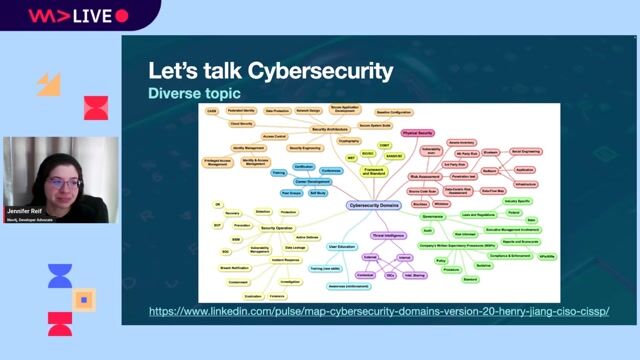
Understanding the complexity of cybersecurity domains

Jennifer Reif · LIVE

4:11 min

Introduction to cloud-native application developer security

Micah Silverman · World Congress 2022

51 sec

Utilizing artificial intelligence for holistic development data analysis

Serdar Bicer Serdar Bicer · World Congress 2025

4:01 min

Finding personal fulfillment in the cybersecurity industry

LIVE

3:44 min

Current industry adoption and future security initiatives

Alexander Allmendinger · LIVE

11:18 min

Addressing audience questions on security and microservice architectures

Reinhard Kugler · LIVE

Videos

See all

Related articles

See all