
CH
Chris Heilmann
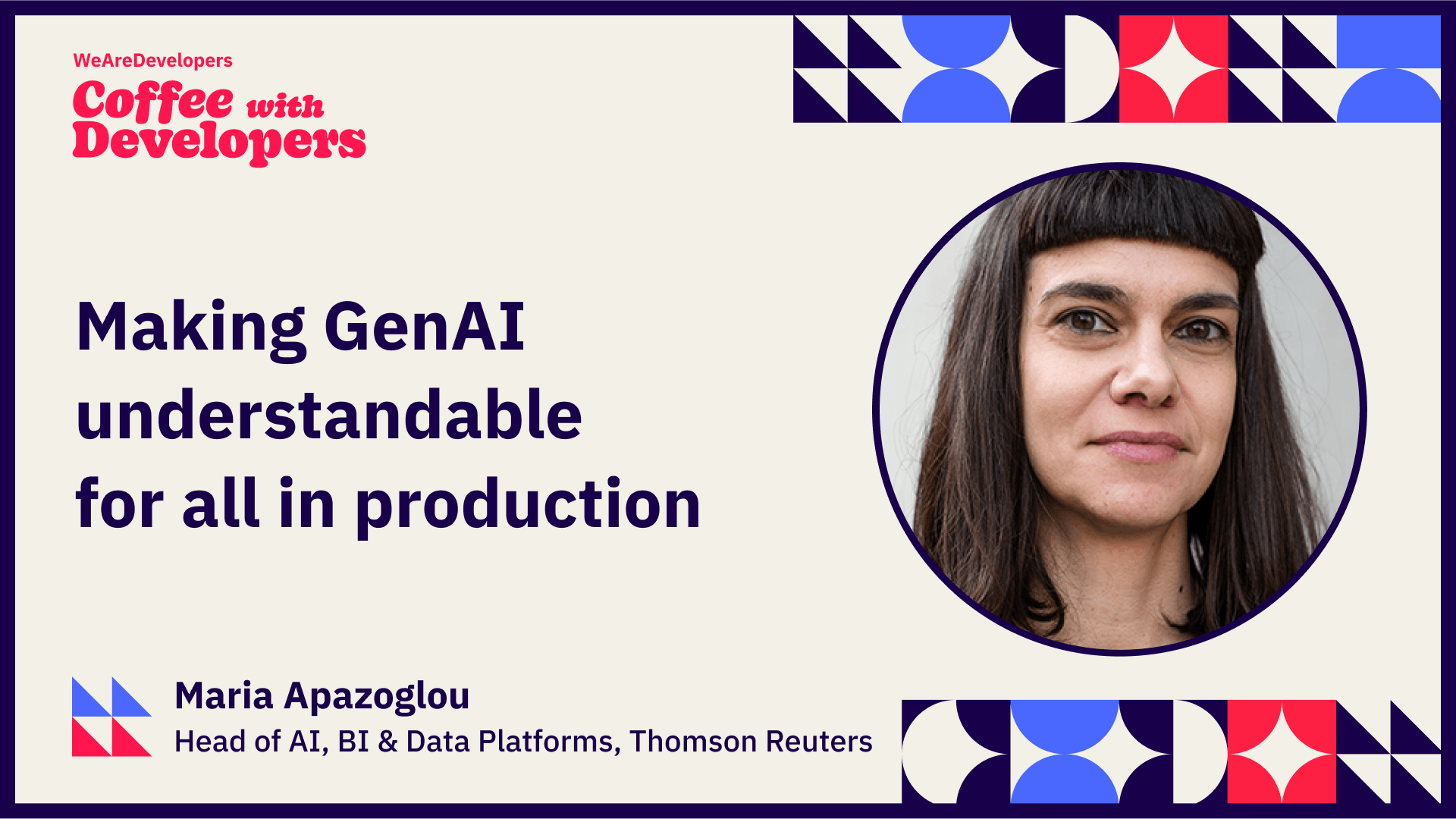
Coffee with Developers - Maria Apazoglou - Making AI understandable for all in production
about 2 years ago
3 plus years of experience and an advanced degree, PhD or equivalent experience.
Deep expertise in mass spectrometry-based proteomics and peptidomics, including a working understanding of experimental design, data characteristics, limitations and interpretation challenges.
Strong hands-on data science and software delivery experience, with a track record of building, deploying and maintaining analytical or AI-enabled systems used by scientific teams.
Demonstrated experience developing agentic AI workflows or advanced AI systems for scientific data exploration, interpretation or workflow automation.
Proven ability to integrate and analyse multidimensional datasets spanning proteomics, peptidomics, sequencing, transcriptomics and associated metadata to generate biological insight.
Ability to operate as an independent, hands-on technical contributor - combining scientific judgement with pragmatic engineering and delivery.
Excellent communication and collaboration skills, with a track record of translating complex scientific and technical concepts into solutions that scientific and technical users adopt.
Desirable criteria
PhD in proteomics, computational biology, bioinformatics, data science, biostatistics, computer science or a related discipline.
Experience applying digital proteomics and AI-enabled approaches in oncology, immunology, cancer vaccines, immunopeptidomics or neoantigen discovery.
Experience designing data foundations, ontologies, harmonised analytical environments or reusable AI capabilities for large-scale scientific research.
Experience extending across additional omics modalities in partnership with domain specialists.
Track record of innovation evidenced through deployed tools, software products, open-source contributions, peer-reviewed publications or conference presentations in proteomics, peptidomics, AI or data science.
Make a meaningful impact on patients’ lives around the world
At AstraZeneca, we are combining cutting-edge science, data and artificial intelligence to transform how we discover and develop medicines. This role sits within the Centre for Genomics Research (CGR) and works in close collaboration with AstraZeneca Infectious Disease and Oncology, offering a unique opportunity to shape new digital and AI capabilities for the cancer vaccine space.
Based in CGR, you will sit at the intersection of mass spectrometry-based proteomics, immunopeptidomics and agentic AI - building the data foundations and intelligent systems that allow scientists to explore high-throughput proteomics, HLA-peptidomics, neoantigen discovery, genetic sequencing, transcriptomics and emerging molecular assays as a connected whole. This is a hands-on technical role for someone who can combine deep proteomics expertise with the practical engineering judgement needed to design, deploy and scale AI systems that scientific users actually rely on., At AstraZeneca, we’re dedicated to being a Great Place to Work, where you are empowered to push the boundaries of science and unleash your entrepreneurial spirit. There’s no better place to make a difference in medicine, patients, and society. An inclusive culture that champions diversity and collaboration. Always committed to lifelong learning, growth, and development.
This job is hosted externally. Click below to view the full posting and apply.
Talks and stories from around this role — technically off-topic, practically not.
1:48 min
54 sec
 Chris Heilmann +2 · LIVE
1:19 min
 Jeremy Murray · World Congress 2026 Europe
1:36 min
3:03 min
 Alexandre Guenoun +3 · World Congress 2026 Europe
5:42 min
Chris Heilmann +2 · LIVE
.png)


.gif)