
Senior Scientist, Computational Biology (Multimodal Data Integration)

Genentech
San Francisco, CA, United States
about 2 months ago

Role details

Contract type
Permanent contract
Employment type
Full-time (> 32 hours)
Experience level
Expert
Experience required
0 years minimum
Compensation
$130,800.0 - $242,800.0
Working hours
Regular working hours
Job source

Tech stack

Artificial Intelligence Big Data Bioinformatics Clinical Data Repository Computational Biology Computer Simulation Data Integration Data Sharing Data Visualization Python (Programming Language) Machine Learning Simple Data Format
+1 more
Deep Learning

Job description

A healthier future. It’s what drives us to innovate. To continuously advance science and ensure everyone has access to the healthcare they need today and for generations to come. Creating a world where we all have more time with the people we love. That’s what makes us Roche.

Advances in AI, data, and computational sciences are transforming drug discovery and development. Roche’s Research and Early Development organisations at Genentech (gRED) and Pharma (pRED) have demonstrated how these technologies accelerate R&D, leveraging data and novel computational models to drive impact. Seamless data sharing and access to models across gRED and pRED are essential to maximising these opportunities. The Computational Sciences Center of Excellence (CoE) is a strategic, unified group whose goal is to harness this transformative power of data and Artificial Intelligence (AI) to assist our scientists in delivering more innovative and transformative medicines for patients worldwide.

The sub-department of Oncology in Computational Biology and Medicine at Genentech is seeking a visionary and highly motivated Senior Scientist to join a newly forming team focused on Multimodal Data Integration. This role will focus on modeling high-dimensional data at the critical interface of disease biology and translational medicine.

The successful candidate will be responsible for the vertical integration of diverse, disease-specific large datasets. In this role, you will work alongside experts in disease biology and drug development to address the missing link: integration across pre-clinical and clinical modalities to associate biological mechanisms with clinical outcomes. You will develop computational frameworks and advanced statistical models in partnership with other computational biologists to creatively address complex scientific questions from Research and Translational Medicine and to deliver actionable biological insights and therapeutic strategies.

The Opportunity:

  • Vertical Integration: You will lead the integration of multimodal datasets - including high-throughput transcriptomics, epigenomics, drug-response, and clinical data (e.g., ctDNA, imaging) - to enable multi-state modeling and patient subtyping.
  • Bridge Pre-clinical & Clinical: You will develop methods to associate pre-clinical model profiles (cell lines, organoids) with clinical segments to validate biomarkers and therapeutic targets.
  • Method Development: You will design and deploy computational workflows and frameworks leveraging statistical, computational biology and advanced machine learning methods to enable insight generation from high-dimensional profiling techniques.
  • Interpretability & Insight: Your focus will be on “interpretable AI” - developing models that go beyond prediction to explain the underlying biology and mechanisms of action/resistance.
  • Collaborative Leadership: Sitting next to the biologists, you will co-create and lead technical roadmaps for complex experimental questions, acting as a creative bridge between experimental oncology and machine learning groups.
  • Strategic Impact: As a senior member of the team, you will provide the vision to transition from simple data processing to sophisticated biomarker development and mechanism-driven discovery.

Requirements

Do you have experience in Scalable systems?, * Educational Background: Ph.D. in Computational Biology, Systems Biology, Bioinformatics, or a related field with 0-2 years of significant postdoctoral or industry experience.

  • Multimodal Expertise: Proven track record in integrating data from multiple modalities (e.g., NGS, single-cell, proteomics, perturbational and clinical data) using advanced statistical modeling or systems biology.
  • Machine Learning & Modeling: Deep understanding of recent ML methods with a specific emphasis on model interpretability.
  • Technical Proficiency: Expert-level fluency in R and Python. Experience building scalable computational workflows for large-scale data integration is required. You are familiar with AI-supported and agentic coding tools.
  • Biological Depth: Strong foundation in cancer biology and oncogenic signaling. Proficiency in communicating intricate biological principles is essential for facilitating productive collaborations and strategic alignment with experimental research leadership.
  • Visionary & Creative: Ability to navigate ambiguity and partner with stakeholders to turn creative research ideas into impactful, innovative computational strategies.
  • Communicator: Excellent skills in data visualization and the ability to present complex multimodal findings to diverse audiences (from ML scientists to clinical physicians).

Onsite presence, on our South San Francisco campus, is expected for at least 3 days a week.

Apply for this position

This job is hosted externally. Click below to view the full posting and apply.

Apply on indeed.com

Good distractions

Talks and stories from around this role — technically off-topic, practically not.

1:19 min

Empowering life science researchers with artificial intelligence

Jeremy Murray Jeremy Murray · WWC Europe 2026

3:28 min

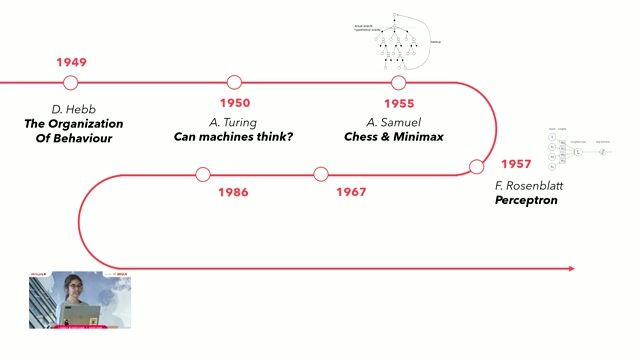
Defining big data and machine learning fundamentals

Ayon Roy · LIVE

3:18 min

Utilizing AI and public data sharing for urban planning

Christian Wiegand +3 · WWC 2024

1:25 min

Distinguishing artificial intelligence from deep learning

Sam Witteveen · Coffee With Developers

3:14 min

Structuring career paths and localized data architectures

Ulrich Wurstbauer +1 · LIVE

2:10 min

Why organizations combine big data and machine learning

Ayon Roy · LIVE

Videos

See all

Related articles

See all