
Flight Performance Engineer
- Discuss this with your agent
- Open in Claude
- Open in ChatGPT
Prepare application
- Draft this with your agent
- Open in Claude
- Open in ChatGPT
Role details
Tech stack
Job description
Corvid Technologies’ Launch Vehicles team is adding an additional engineer to focus on trajectory development and analysis for rocket and missile systems. This position will join a diverse team developing and launching/firing target systems for DoD customers. Candidate will get to work on systems ranging from short range sounding rockets to hypersonic systems.
Candidate will use experience analyzing trajectories with TAOS to provide recommendations to technical and program leadership during development of target systems. The position will work with other engineering teams, including aero, mechanical, and GNC to develop simulation input models used to predict system performance during development. The position will be a key contributor to trade studies that help understand/recommend different rocket and missile configurations - specifically their impact to the intended target representation of the system being developed.
Some sample tasking will include:
- Preliminary trade studies to understand launch vehicle performance envelope
- Optimizing a specific configuration to meet nominal trajectory requirements
- Running Monte Carlo analysis to meet customer and flight safety requirements
- Providing onsite launch support that includes calculating updated launcher settings for unguided rockets for specific weather conditions during launch windows
- Post-mission data analysis to assess actual performance and improve models
Requirements
- Position requires a Bachelor’s Degree in Aerospace Engineering (or similar STEM discipline) and technical ability in one or more of the following areas: aerodynamics, structural mechanics, or 6-DOF trajectory modeling
- Position will require extended travel to launch events, including OCONUS travel as required
- Experience using TAOS as well as fast running aero tools (DATCOM, TAD7) is a plus
- Demonstrated understanding of or ability to quickly learn statistics (MC analysis, sensitivity studies, correlation) is desired
Benefits & conditions
We value our employee-owners and in addition to providing challenging work opportunities and competitive pay, Corvid believes in providing a strong benefit package that provides value to our team members at all stages of their career.
Our benefits include:
- Employee Stock Ownership Plan via our generous 401(k) Matching
- Medical Insurance via Blue Cross - including a PPO and High-Deductible offering (with company HSA contribution)
- Paid Time Off (PTO) based on years of industry experience (not tenure)
- Career Development and Continuing Education opportunities
- Company provided life, long-term, and short-term disability insurance
- Incentive opportunities to reward strong performance and corporate growth
- Attractive corporate facilities that include Lake Norman access, kayaks, paddle boards, pickleball courts, grills, and more
About the company
Corvid Technologies is an engineering firm specializing in using high-fidelity, computational modeling and simulation to analyze, design, and manufacture products for aerospace, DoD, and commercial customers. We offer a fast-paced and flexible work environment that encourages creativity and collaboration. Our team works on difficult, cutting-edge technical challenges using state-of-the-art technologies and resources.
Apply for this position
This job is hosted externally. Click below to view the full posting and apply.
Prepare application
- Draft this with your agent
- Open in Claude
- Open in ChatGPT
Good distractions
Talks and stories from around this role — technically off-topic, practically not.
Moments
Explore playlistsVideos
See allRelated articles
See all
Best US AI Conferences for CTOs in 2026: Build vs. Buy, Vendor Evaluation, and Peer Intelligence
Why Attend a Developer Event in 2026?
How We Built a Worry-Free System That Runs for 10+ Years – And What We’d Do Again
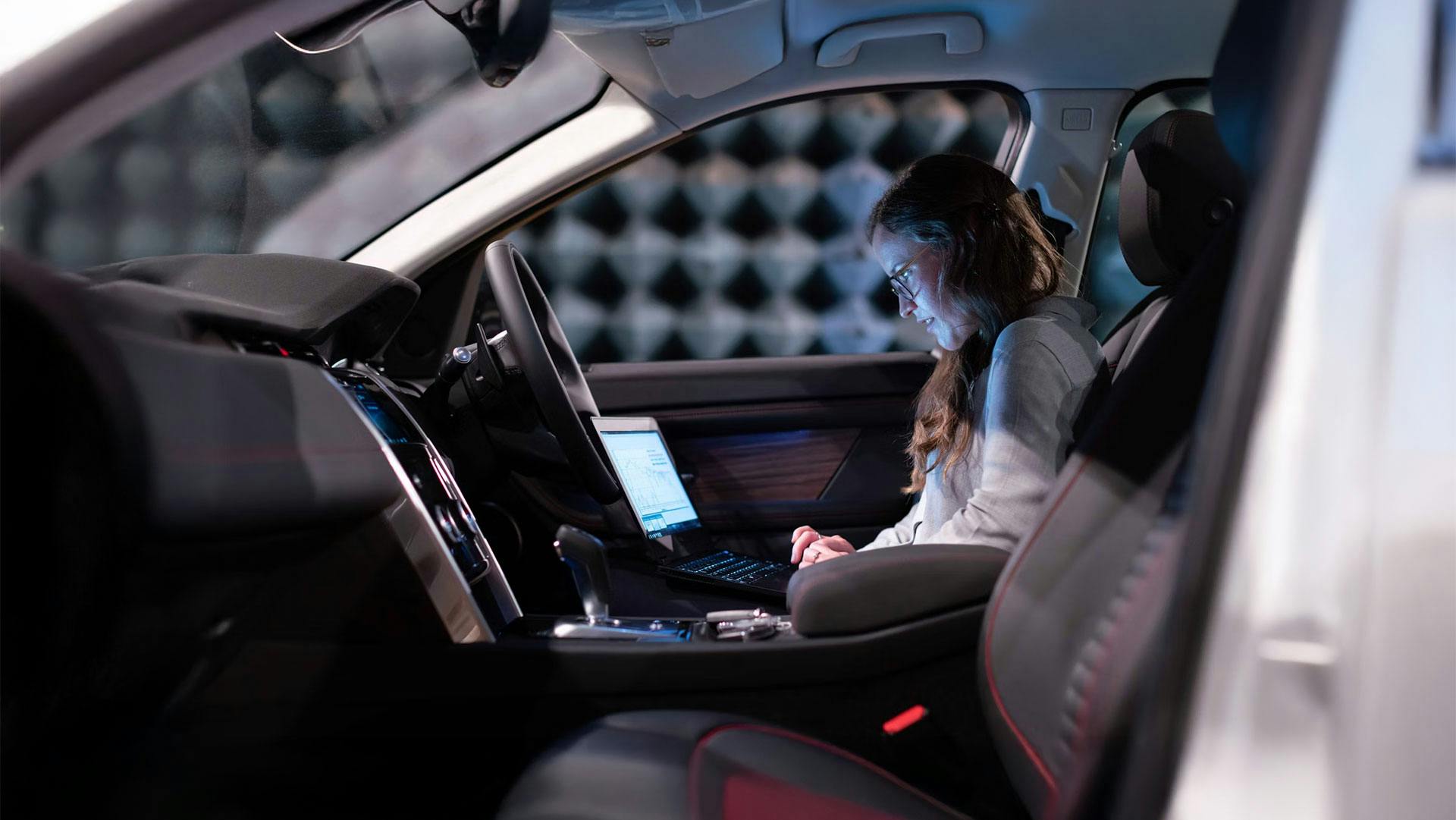
How software is steering vehicle technology