.png)
LM
Luis Minvielle
What Are Large Language Models?
almost 3 years ago
Build and own functional models of SoC subsystems that integrate into our full-system virtual platform, used by firmware, driver, runtime, and application software teams
Design models for usability and performance - your customers are software engineers who need to run real workloads on your platform efficiently
Develop and improve the virtual platform infrastructure: QEMU integration, simulation performance, build and release tooling, and customer-facing documentation
Work with software teams (your primary customers) to understand their workflows, debug issues on the platform, and shape the model to maximize their productivity
Drive simulation performance improvements so the platform can handle increasingly complex workloads at scale
Contribute to model architecture decisions - choosing the right level of abstraction and fidelity for each subsystem based on customer needs
Why this role is interesting:
You’ll own a product that software teams across AWS depend on - they literally can’t start development without your virtual platform
The engineering challenges are genuinely interesting: full-system simulation, multi-subsystem integration, QEMU development, performance optimization at scale
You’ll see the direct impact of your work when software teams hit the ground running on new silicon
As the team grows, there’s a path into architectural modeling - using the platform to explore design alternatives and influence chip architecture
Have built functional models, virtual platforms, or system-level simulations for SoCs, ASICs, GPUs, or CPUs
Think of yourself as a software engineer first, with deep domain knowledge in chip architecture
Are comfortable in C++ or SystemC, and familiar with Python for tooling
Care about your customers’ experience - you think about usability, documentation, and reliability, not just model accuracy
Are interested in expanding into performance or architectural modeling as the team scales
Enjoy working on a small, high-impact team where you own significant pieces of the stack
No ML background needed. You’ll learn the ML accelerator domain on the job.
This role can be based in Cupertino, CA or Austin, TX.
Basic Qualifications
Experience programming languages such as C/C++, Python, Java or Perl
2+ years writing functional models, virtual platforms, or system-level simulations for hardware (SoCs, ASICs, GPUs, CPUs)
Familiarity with SoC, CPU, GPU, and/or ASIC architecture and micro-architecture
Preferred Qualifications
2+ years of full software development life cycle, including coding standards, code reviews, source control management, build processes, testing, and operations experience
Experience developing for or integrating with QEMU
Experience with SystemC, TLM, or transaction-level modeling
Experience building simulation infrastructure, CI pipelines, or release tooling
Familiarity with Modern C++ (20 and beyond)
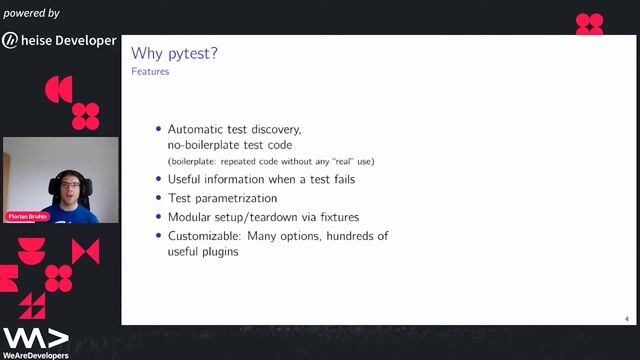
Experience with PyTest, GoogleTest, or similar test frameworks
Experience with multi-threaded programming
Familiarity with firmware, driver, or runtime software development
The base salary range for this position is listed below. Your Amazon package will include sign-on payments and restricted stock units (RSUs). Final compensation will be determined based on factors including experience, qualifications, and location. Amazon also offers comprehensive benefits including health insurance (medical, dental, vision, prescription, Basic Life & AD&D insurance and option for Supplemental life plans, EAP, Mental Health Support, Medical Advice Line, Flexible Spending Accounts, Adoption and Surrogacy Reimbursement coverage), 401(k) matching, paid time off, and parental leave. Learn more about our benefits at https://amazon.jobs/en/benefits .
USA, CA, Cupertino - 165,200.00 - 223,600.00 USD annually
USA, TX, Austin - 143,700.00 - 194,400.00 USD annually
AWS’s Trainium and Inferentia chips power the world’s largest machine learning clusters. Our team builds virtual platforms - full-system C++ and SystemC models of these custom SoCs - that let software teams start development months before silicon arrives. For Trainium3, our virtual platform enabled running a full training workload within 12 hours of first silicon. We’re looking for a software engineer to build and own the models and infrastructure that make this possible.
This job is hosted externally. Click below to view the full posting and apply.
Apply on juju.comTalks and stories from around this role — technically off-topic, practically not.
58 sec
 Thomas Tomow · WWC 2025
3:05 min
2:19 min
1:36 min
 Andrew Wafaa · WWC 2024
5:30 min
2:20 min
 Daniel Meilak +1 · WWC Europe 2026

.png)