World Congress 2026 Europe Jul 10, 2026 Session details

The New AI Security Stack: Observe, Detect, Protect

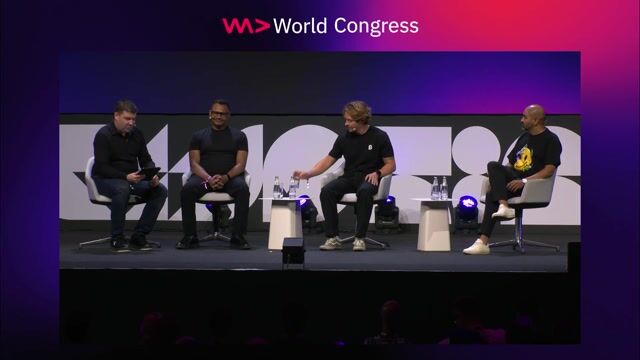
Milin Desai , Christian Trummer , Jyoti Bansal , Tomislav Tipurić

Traditional security paradigms cannot survive the massive influx of AI-generated vulnerabilities. Learn how to build aggressive DevSecOps guardrails that treat autonomous agents as inherently untrustworthy.

Pause
Mute Enter Fullscreen
#1 about 2 min

Exponential code growth and emerging security vulnerabilities in sprints

How generating eight times more code with AI agents demands a change in traditional security observability.

#2 about 2 min

Increasing security stack investments to mitigate novel AI vectors

The surge in new AI attack vectors requires proactive frameworks and robust investment in security tooling.

#3 about 2 min

Shifting security left to adapt to rapid code generation

Catching and fixing software issues before runtime production prevents engineers from drowning in vulnerability backlogs.

#4 about 4 min

Designing fine-grained permissions for agent interactions with financial services

Implementing least privilege guardrails prevents untrusted AI agents from executing unauthorized transactions across sensitive portfolios.

#5 about 3 min

Constructing safety architectures for agents integrating with knowledge graphs

A six-layer safety framework combined with contextual understanding safeguards production systems from rogue agent actions.

#6 about 4 min

Applying deterministic outcomes and best practices in self-healing loops

Utilizing frameworks like Warden alongside deterministic checks prevents automated bots from introducing new security flaws.

#7 about 5 min

Automating verification while adhering to the four-eye regulatory principle

Maintaining human accountability via the four-eye principle ensures compliance without hindering automated delivery speeds in critical systems.

#8 about 4 min

Implementing risk-based autonomy to regulate automated production code deployments

Adjusting the degree of manual intervention based on the inherent risk of system changes fortifies continuous deployment safety.

#9 about 3 min

Deploying AI firewalls to prevent prompt injections by non-technical staff

Utilizing advanced AI firewalls and dynamic execution blocking intercepts data leaks prompted by unaware business users.

#10 about 4 min

Automating incident resolution and prioritizing intervention by severity parameters

Grading anomaly severity enables agents to self-heal minor issues while ensuring human oversight for isolating essential infrastructure.

#11 about 3 min

Preparing engineering organizations for rapid vulnerability response and remediation

Embedding security processes across the entire organization allows teams to apply rapid fixes against sophisticated zero-day exploits.

Matching moments

4:15 min

Security integration and AI skepticism in developer tooling

Chris Heilmann +2 · LIVE

1:55 min

Current state of security in AI applications

Deepu Deepu · WWC 2025

2:09 min

Securing AI agents against internal and external threat vectors

Julia Kordick Julia Kordick · WWC Europe 2026

3:37 min

Managing security risks in AI-accelerated development processes

Carey Liu Carey Liu · WWC Europe 2026

3:00 min

Top security vulnerabilities for AI applications

Deepu Deepu · WWC 2025

2:01 min

The necessity of developer intelligence amidst automated attack generation

Julian Totzek-Hallhuber Julian Totzek-Hallhuber · WWC 2024

Upcoming sessions on this topic

Open session

World Congress 2026 North America

Securing AI Agent Infrastructure: Identity, Attestation, and Trust at Scale

Abdel Fane

Founder of OpenA2A

Abdel Fane
Open session

World Congress 2026 North America

The Things Your AI Isn't Telling You

Desmond Lamptey

Lead Software Engineer @ Capital One

Desmond Lamptey
Open session

World Congress 2026 North America

Responsible AI Architecture with Zero Trust Agents

Ashok Prakash

Staff ML Engineer at Apple

Ashok Prakash
Open session

World Congress 2026 North America

Closing the Visibility Gap: Lessons from Safety Critical Agentic Systems

Vivek Pandit

Principal Engineer at Cadence

Vivek Pandit
Open session

World Congress 2026 North America

The Broken Rung: How AI is Rebuilding Software Development from the Ground Up

Tomislav Tipurić

Chief Technology Officer, Nephos

Tomislav Tipurić
Open session

World Congress 2026 North America

When Agents Became Users: Rearchitecting Identity and Permissions for AI at Scale

Yoav Gal, Dor Cohen

Yoav Gal
Dor Cohen