



BB
Benedikt Bischof
WeAreDevelopers LIVE
•
Oct 2, 2024
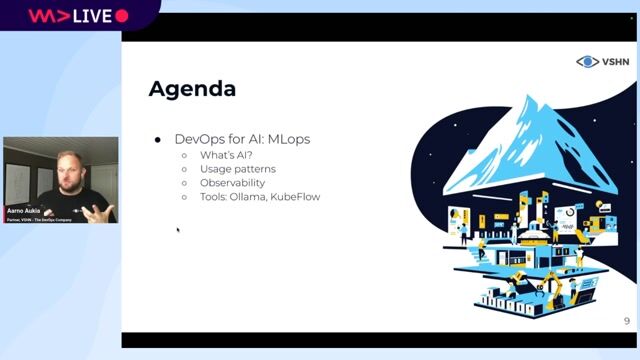
DevOps for AI: running LLMs in production with Kubernetes and KubeFlow
Aarno Aukia
- Discuss this with your agent
- Open in Claude
- Open in ChatGPT
Are silent API updates secretly breaking your production AI? Regain control by self-hosting and autoscaling LLMs natively with Kubernetes, KServe, and proven DevOps principles.
Matching moments
4:15 min
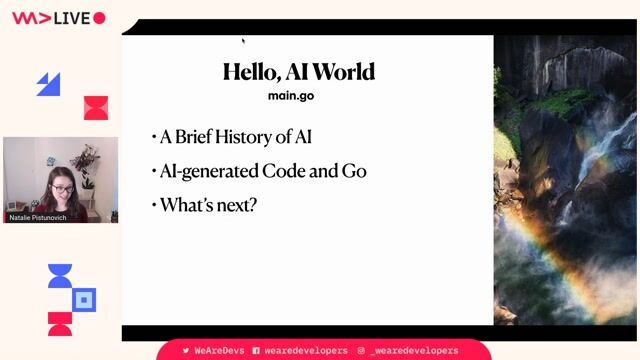
Introduction to artificial intelligence driven development
Natalie Pistunovich · LIVE
2:08 min
Essential engineering roles in the generative AI space
 Mary Grygleski · LIVE
5:28 min
Defining MLOps and its role in production systems
Hauke Brammer · World Congress 2023
2:14 min
Differences between traditional MLOps and GenAIOps
 Maxim Salnikov · World Congress 2025
7:28 min
Accelerating product features using generative large language models
 David Singleton +1 · Coffee With Developers
4:57 min
Centralizing LLMOps workflows within Azure AI Foundry
Maxim Salnikov · LIVE
More from WeAreDevelopers LIVE
Related videos
Related articles
.gif)
BB
Benedikt Bischof
.gif)
BB
Benedikt Bischof
.gif)
LM
Luis Minvielle
.png)
From learning to earning
Jobs that call for the skills explored in this talk.
about 1 month ago
•
Verified
Senior AI/ML Engineer

PagerDuty
Lisbon, Portugal
Expert
Remote
AI Frameworks
AI-assisted coding tools
about 2 months ago
MLOps AI Engineer

TeamViewer Germany GmbH,
Austin, TX, United States
Expert
Caching
Routing
Standard Sql
about 1 month ago
•
Verified
LLM Training Engineer

Sciforium
San Francisco, United States
Expert
$155k–220k
Python
28 days ago
•
Verified
ML Engineer

Docker, Inc.
Seattle, United States
Expert
Remote
Go
28 days ago
•
Verified
Staff ML Engineer
Docker, Inc.
Seattle, United States
Expert
Remote
Go
about 1 month ago
•
Verified
Partner Sales Director - AI Alliances - Model Providers

Dynatrace
San Francisco, United States
Expert
Remote
DevOps
AI Frameworks
Machine Learning