World Congress 2025 • Jul 31, 2025 • Session details

Open Source AI, To Foundation Models and Beyond

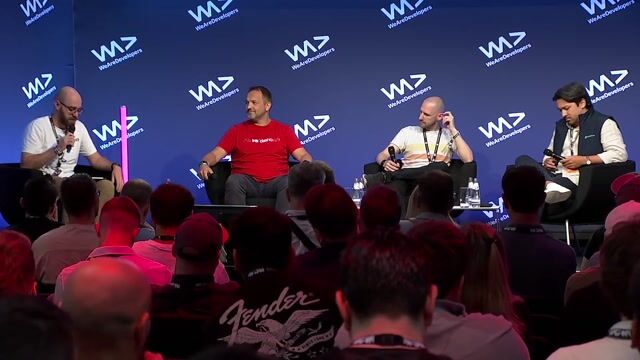
Andreas Blattmann , Ankit Patel , Lucie-Aimée Kaffee , Matt White , Philipp Schmid

Closed AI is not naturally safer. Transparent access accelerates vulnerability detection, pushing engineers past generalized foundation models toward hyper-specialized, highly efficient edge computing.

Pause
Mute Enter Fullscreen
#1 about 4 min

Defining and classifying open source artificial intelligence models

The Linux Foundation categorizes open source artificial intelligence across tiers from open science to open models based on completeness.

#2 about 3 min

Balancing open access and commercial sustainability in foundation models

Releasing powerful generative models using specialized non-commercial licenses helps fund ongoing research and immense computational requirements.

#3 about 4 min

Navigating legal frameworks and policy incentives for AI sharing

Permissive model licenses and government regulations aim to encourage data sharing without penalizing creators through extensive copyright risks.

#4 about 5 min

Accelerating ecosystem innovation through open source model competition

Accessible base layers drive rapid ecosystem advancements by allowing developers to reliably build efficient and specialized derivative models.

#5 about 7 min

Developing specialized and personalized evaluation benchmarks for AI systems

Creating customized evaluation sets is more critical for robust enterprise applications than maximizing computational scores on standardized leaderboards.

#6 about 6 min

Debunking common misconceptions about open source artificial intelligence

Openly releasing artificial intelligence models enhances overall public safety through decentralized independent research rather than increasing abuse risks.

Matching moments

2:53 min

The impact of open source models on industry dynamics

4:16 min

Refocusing Hacktoberfest on open source artificial intelligence

Mike Swift · Coffee With Developers

3:53 min

Balancing free public access with commercial AI licensing requirements

Prashanth Chandrasekar Prashanth Chandrasekar · World Congress 2024

53 sec

Creating an open ecosystem for artificial intelligence models

Chris Heilmann +2 · LIVE

2:42 min

Recognizing the value and challenges of defining open AI

Matt White Matt White · World Congress 2025

3:52 min

Evaluating large language model licensing categories

Antoine Thomas Antoine Thomas · Europe 2026 Virtual

Upcoming sessions on this topic

Open session

World Congress 2026 North America

September 25, 2026 · 10:20–10:50

Tech Leaders Stage

Democratizing AI: Why Open Models Are Essential for the Next Era

Mitesh Patel, Joey Conway, Olivier Lacombe, Varun Vontimitta

Mitesh Patel
Joey Conway
Olivier Lacombe
Varun Vontimitta
Open session

World Congress 2026 North America

September 23, 2026 · 10:00–17:00

Stage 11

Building Stuff with GenAI - The Open Minded Workshop beyond OpenAI

Andreas Erben

CTO for Applied AI and Metaverse at daenet

Andreas Erben
Open session

World Congress 2026 North America

September 24, 2026 · 12:15–12:45

Stage 6

AI vs. AI: Defending the open source supply chain with agentic workflows

Manfred Moser

Senior Principal DevRel Engineer at Chainguard

Manfred Moser
Open session

World Congress 2026 North America

September 25, 2026 · 12:55–13:25

Outdoor Stage

Building the AI Era Through Developer Communities: A Competitive Advantage for Engineers & Teams

John Komarnicki

National Executive Advisor at Code & Coffee | Engineering & AI Community Leader

John Komarnicki
Open session

World Congress 2026 North America

September 24, 2026 · 12:15–12:45

Stage 4

It's Not About the Models

Bob Wambach

VP, Market and Customer Insights at Dynatrace

Bob Wambach
Open session

World Congress 2026 North America

September 25, 2026 · 09:00–09:30

Mainstage

Building AI that fits your business

Benny Chen

Co-Founder of Fireworks

Benny Chen