









DC
Daniel Cranney
WeAreDevelopers LIVE
•
May 12, 2021
GitLab CI pipelines for a whole company
Martin Beránek
- Discuss this with your agent
- Open in Claude
- Open in ChatGPT
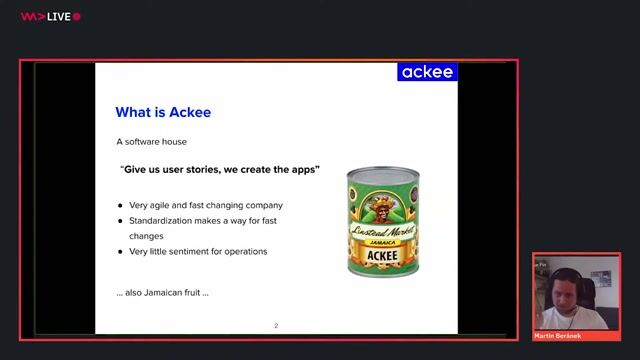
Martin Nik explains how AKI escaped undocumented Jenkins toil by adopting a standardized GitLab CI monorepo. Learn how they slashed operations support to just eight hours a month.
Matching moments
1:31 min
The ongoing role of continuous integration pipelines in GitOps
Roberth Strand · LIVE
2:35 min
Architecture of a GitOps backup pipeline demonstration
Florian Trieloff · World Congress 2023
6:14 min
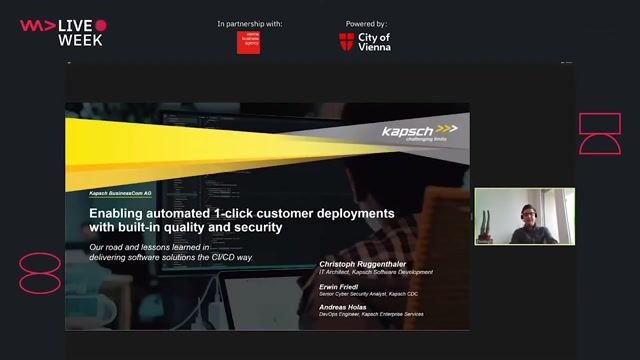
Structuring CI/CD pipelines with integrated security and quality checks
Christoph Ruggenthaler · LIVE
2:38 min
Exploring the core benefits of adopting GitOps
 Davide Imola · LIVE
1:37 min
Building automated continuous deployment pipelines and final architectural insights
 Simone Desantis · World Congress 2026 Europe
1:07 min
Evaluating current trends in CI/CD pipelines
Dominik Kress · LIVE
More from WeAreDevelopers LIVE
Related videos
Related articles

IK
Igor Khokhriakov
CH
Chris Heilmann

DC
Daniel Cranney

CH
Chris Heilmann
From learning to earning
Jobs that call for the skills explored in this talk.
30 days ago
•
Verified
DevOps Engineer - CI/CD & Platform Engineering

procilon Group
Berlin, Germany
Experienced
Remote
GIT
Kubernetes
about 1 month ago
•
Verified
Founding Developer Advocate

Plumber
San Francisco, United States
Experienced
$150k–190k
Remote
GIT
Bash
Linux
about 2 months ago
Software Engineer, Infrastructure Platform
Docker, Inc.
Madrid, Spain
€72k–123k
Remote
Istio
Linux
Docker
about 1 month ago
•
Verified
Manager, Engineering, Secure Build and SCS Services
Docker, Inc.
Expert
Remote
Team Leadership
17 days ago
Cloud Engineer (German)

Stackit
Barcelona, Spain
Git
Okta
OAuth
about 2 months ago
Software Engineer, Infrastructure Platform
Docker, Inc.
Cartagena, Spain
€72k–123k
Remote
Linux
Istio
Docker