




World Congress 2025 Aug 20, 2025 Session details

Three years of putting LLMs into Software - Lessons learned

Simon A.T. Jiménez

Models do not think, they are simply high-dimensional pattern matchers. Learn how to treat LLMs as an unreliable API tier using robust error handling, strict constraints, and secure architectures.

Pause
Mute Enter Fullscreen
#1 about 1 min

Introduction to practical lessons for AI software integration

Applying fundamental lessons from early AI adoption helps streamline language model integration into existing software architectures.

#2 about 3 min

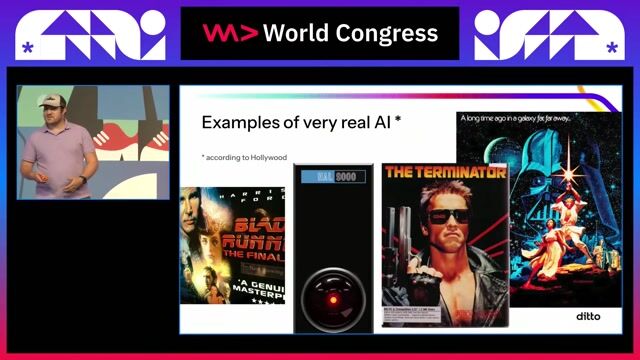
Recognizing the inherent unreliability and illusion of model reasoning

Recognizing that language models mimic human reasoning through text prediction rather than cognitive thought prevents misplaced reliance.

#3 about 3 min

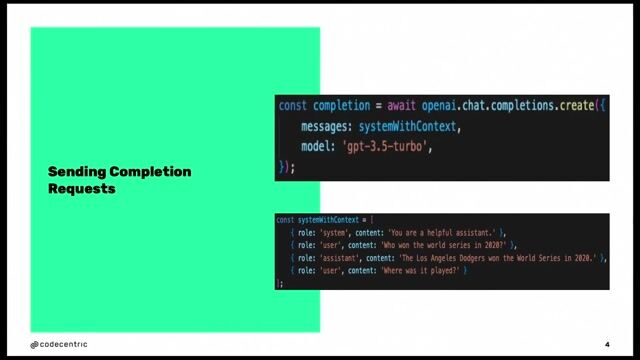
Handling stateless language model APIs and context window limits

Managing stateless API interactions by carefully designing context windows mitigates token limits and long-term performance degradation.

#4 about 2 min

Configuring language model parameters for deterministic application outputs

Configuring parameters like temperature and penalties enables deterministic text outputs that can be reliably unit tested.

#5 about 2 min

Visualizing token generation dynamics inside multidimensional vector spaces

Visualizing how models navigate multidimensional token vector spaces clarifies the algorithmic reality behind generated text.

#6 about 3 min

Emerging instruct model capabilities from massive internet training datasets

Leveraging the strict logic of modern instruct models trained on immense datasets enables the creation of robust custom system prompts.

#7 about 2 min

Treating language models as advanced textual pattern matching engines

Treating language models as advanced pattern matchers rather than intelligent entities improves the effectiveness of problem-solving prompts.

#8 about 3 min

Utilizing available language models as predictable text calculation APIs

Treating multiple interchangeable language model endpoints as standard text calculation APIs builds redundancy and simplifies continuous application delivery.

#9 about 3 min

The limitations of mathematical calculations and explainable artificial intelligence

Avoiding assumptions about a model's arithmetic or self-awareness prevents hallucinations and uncovers the deceptive nature of explainable AI.

#10 about 3 min

Integrating audio models, text rewriting, and reliable JSON formatting

Utilizing multimodal capabilities with strict instructional prompting guarantees specific output structures like valid JSON for downstream processing.

#11 about 3 min

Navigating data privacy constraints and commercial API usage rights

Evaluating self-hosted open-source models versus paid commercial APIs resolves underlying issues regarding corporate data privacy.

#12 about 2 min

Implementing EU AI Act compliance via human-in-the-loop workflows

Establishing human-in-the-loop workflows ensures compliance with the European AI Act while legally transferring final accountability to the end user.

#13 about 2 min

Mitigating prompt injection vulnerabilities in external AI tool integrations

Restricting external data permissions neutralizes extreme security vulnerabilities like automated prompt injections found in active agent protocols.

Matching moments

4:29 min

Designing AI applications defensively for inevitable failures

Krzysztof Cieślak Krzysztof Cieślak · World Congress 2026 Europe

2:54 min

Establishing context and limitations for artificial intelligence platforms

Anna Fritsch-Weninger · LIVE

1:48 min

Exploring AI integrations in modern agile development workflows

Markus Walker Markus Walker · World Congress 2023

2:37 min

Understanding core parameters and mechanics of large language models

Julián Duque Julián Duque · World Congress 2025

1:44 min

Artificial intelligence components in the software supply chain

Mackenzie Mackenzie · World Congress 2024

1:44 min

Summarizing developer experience and artificial intelligence companions

Robert Hoffmann Robert Hoffmann +1 · LIVE

Upcoming sessions on this topic

Open session

World Congress 2026 North America

September 24, 2026 · 17:30–18:00

Stage 6

No Single Model to Rule Them All: Building Resilient AI Agents Across Open & Closed LLMs

Emmanuel Acheampong

Senior Manager Developer Relations at Crusoe AI

Emmanuel Acheampong
Open session

World Congress 2026 North America

September 25, 2026 · 11:40–12:10

Stage 2

Reinventing Testing Practices in the AI Era

Eric Deandrea

Java Champion & Senior Principal Software Engineer, IBM

Eric Deandrea
Open session

World Congress 2026 North America

September 25, 2026 · 11:40–12:10

Stage 9

You Can’t Re-Run Sunlight: Designing ML Data Architectures for Physical AI

An Phan

Senior Data Infrastructure Engineer @ Hippo Harvest

An Phan
Open session

World Congress 2026 North America

September 25, 2026 · 16:50–17:20

Stage 5

The Things Your AI Isn't Telling You

Desmond Lamptey

Lead Software Engineer @ Capital One

Desmond Lamptey
Open session

World Congress 2026 North America

September 24, 2026 · 13:30–14:00

Stage 9

Understanding LLM Architectures: Inside the Design of Modern Models

Jofia Jose Prakash

Director - AI & Governance at Humanity + AI, Inc

Jofia Jose Prakash
Open session

World Congress 2026 North America

September 24, 2026 · 14:10–14:40

Stage 1

Anatomy of an AI Request: Where Latency and Cost Are Really Born

Dan Fu

VP of Kernels at Together AI

Dan Fu