World Congress 2025 Aug 20, 2025 Session details

Backstage Software Templates for Java Developers

Markus Eisele

Stop wasting time on repetitive project scaffolding. Learn how Java developers can build, scale, and secure Backstage software templates while sidestepping the JavaScript ecosystem completely.

Pause
Mute Enter Fullscreen
#1 about 3 min

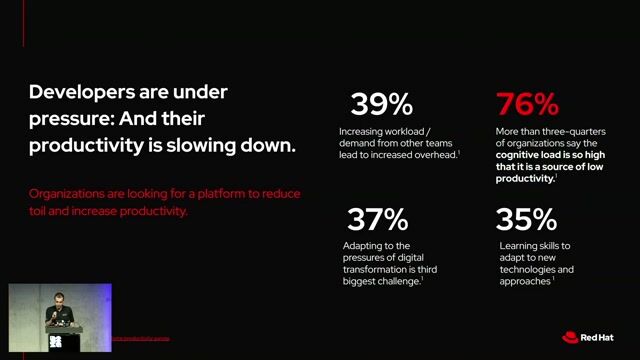
Balancing developer productivity with modern demands

Why software engineers need centralized tools to handle the increasing pressure of faster delivery and reduced budgets.

#2 about 4 min

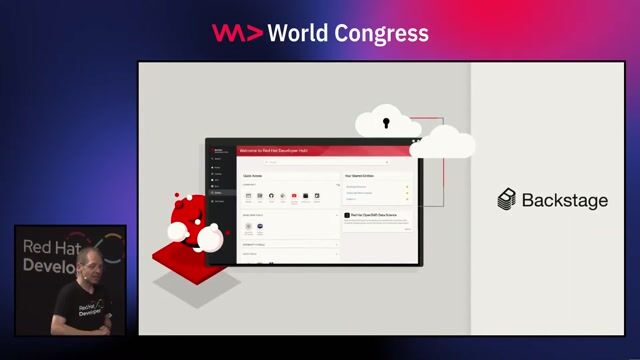
Streamlining team workflows with the Backstage developer portal

Utilizing Backstage as a centralized developer workbench to streamline team workflows and access open-source functionalities.

#3 about 3 min

Understanding Backstage architecture and plugin proxy components

How frontend and backend plugins interact with proxy systems to form a customized internal portal.

#4 about 3 min

Scaffolding Java projects with software templates

Defining standardized company knowledge as YAML configurations to instantly generate customized projects in code repositories.

#5 about 2 min

Extending templates using custom workflow actions

Leveraging hidden endpoints and backend plugins to discover and trigger complex routines during scaffolding workflows.

#6 about 3 min

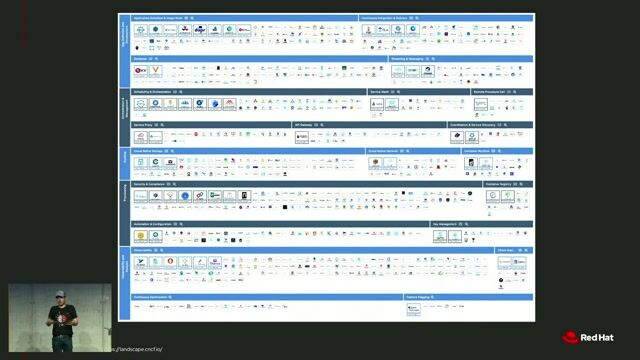
Running Backstage locally without JavaScript configurations

Exploring local container images, helm charts, and Quarkus extensions to bypass complex node environments completely.

#7 about 2 min

Debugging YAML templates with the online portal editor

Utilizing the built-in template editor and debug tools to iteratively fix syntax errors and validate logic.

#8 about 2 min

Defining custom UI inputs and Nunjucks components

Leveraging Nunjucks to build custom entities and user input forms extending beyond basic template behaviors.

#9 about 3 min

Best practices for structuring and versioning template definitions

Structuring template configurations and safely updating parameters through automated pull requests for organized evolution.

#10 about 1 min

Enhancing discoverability with template tags and documentation

Applying metadata tags and embedding TechDocs directly into project definition templates to ensure proper team reuse.

#11 about 1 min

Finding existing community template actions and examples

Searching curated community repositories to leverage pre-built actions and configurations instead of recreating complex routines from scratch.

#12 about 1 min

Building custom backend plugins using JavaScript hooks

Evaluating the technical implications of writing native JavaScript components when existing community plugins are insufficient.

#13 about 2 min

Preventing template drift across generated legacy applications

Updating foundational scaffolding definitions continuously so generated downstream applications remain aligned with unified code standards.

#14 about 1 min

Integrating automated approval workflows into the portal

Using workflow engines to gate database provisioning and infrastructure approval steps within the project portal directly.

#15 about 1 min

Defining template scope and automation deployment strategy

Deciding the exact flexibility levels of software layouts to match either infrastructure provisioning or rigid microservices.

#16 about 1 min

Accessing safe hands-on learning resources and sandboxes

Accessing online hosted environments and guided coding tutorials to safely practice building complete portal modules.

#17 about 1 min

Running the Backstage API through Quarkus integrations

Treating the catalog infrastructure as an API service natively integrated with local Java runtime dependencies.

#18 about 1 min

Extending portal functionality safely via dynamic plugins

Packaging application customizations as independent container images to streamline deployments and avoid complex global framework rebuilds.

#19 about 1 min

Scaling platform engineering adoption across organizational boundaries

Evaluating internal capability bottlenecks to ensure widespread platform usage scales smoothly for huge organizational engineering populations.

Matching moments

2:13 min

Core features of the Backstage development framework

Um e Habiba Um e Habiba · Europe 2026 Virtual

5:11 min

Automating workflows with Backstage software templates

Um e Habiba Um e Habiba · Europe 2026 Virtual

2:20 min

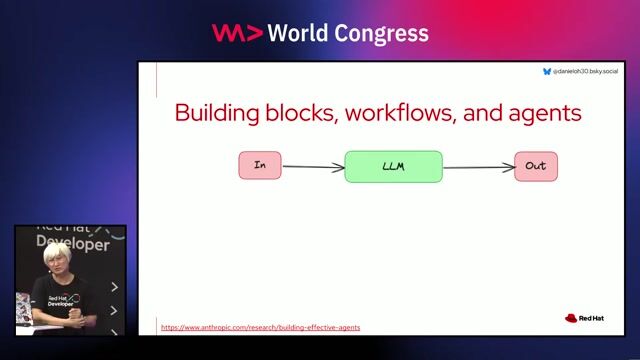
Distributing multi-agent templates via Backstage internal developer portals

Daniel Oh Daniel Oh · WWC 2025

2:51 min

Adopting backstage for enterprise developer platform construction

Natale Vinto Natale Vinto · WWC 2024

5:08 min

The essential sections of a Backstage software template

Um e Habiba Um e Habiba · Europe 2026 Virtual

2:44 min

Introduction to Backstage and platform self-service

Um e Habiba Um e Habiba · Europe 2026 Virtual

Upcoming sessions on this topic

Open session

World Congress 2026 North America

It’s Alive! Taming the MLOps Franken-Stack: Write, Run, and Serve with Michelangelo

Eric Wang, Paul Zimmerman

Eric Wang
Paul Zimmerman
Open session

World Congress 2026 North America

From Cloud Native to Multi-Cloud Native: Write Once, Deploy Anywhere

Sandeep Pal

Principal Member of Technical Staff at Salesforce

Sandeep Pal
Open session

World Congress 2026 North America

Full Stack with Flutter - are we there yet?

Nemanja Stošić

Senior Flutter Developer

Nemanja Stošić
Open session

World Congress 2026 North America

Look What Java Can Do Now: Live-Coding a GenAI MCP Server with the JAQ Stack

Suren Konathala

Senior Engineering Leader, Marketing & AdTech, AI GTM & Digital Experience Platforms, Java x AI

Suren Konathala
Open session

World Congress 2026 North America

Agentic Drift: keeping pace with your agents

John Coghlan

Senior Director, Developer Advocacy at GitLab

John Coghlan
Open session

World Congress 2026 North America

Building Pragmatic AI: 10 AI Features Your Users Actually Want

Jonathan "J." Tower

.NET Foundation Board | 12x Microsoft MVP | Founder & Consultant

Jonathan "J." Tower