





CS
Christina Schaireiter
Cappuccino with HR
•
Apr 2, 2026
Designing How Work Feels: The Science Behind Sanofi’s Workplace Experience
Rudi Bauer , Fernando Faria , Roger Morawksi
- Discuss this with your agent
- Open in Claude
- Open in ChatGPT
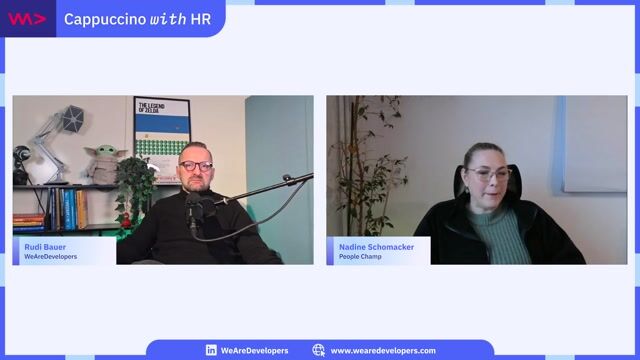
Sanofi discovered a lemon-scented office fragrance could reduce cognitive errors by 50 percent. See how their science-backed, invisible workplace design organically pulls employees back without corporate mandates.
Matching moments
3:53 min
Designing modern workplaces around essential human needs
 Rudi Bauer +1 · Cappuccino with HR
5:31 min
Rethinking return-to-office mandates with neuroinclusive spatial design
Rudi Bauer +1 · Cappuccino with HR
2:35 min
Emphasizing people and purpose in modern employer branding
 Rudi Bauer +2 · Cappuccino with HR
3:29 min
Demonstrating the business value of inclusive office environments
1:27 min
Retaining talent by improving actual employee workplace realities
 Ute Neher · World Congress 2025
3:05 min
Demonstrating the business return on investment for neuroinclusion
Rudi Bauer +1 · Cappuccino with HR
More from Cappuccino with HR
Related videos
Related articles
BR
Benjamin Ruschin

DC
Daniel Cranney
DC
Daniel Cranney

From learning to earning
Jobs that call for the skills explored in this talk.
about 2 months ago
Senior Design Engineer

GitHub
San Francisco, CA, United States
Expert
$329k
HTML
Figma
Github
about 1 month ago
Engineering Manager (Fusion Experience)

Bitpanda
Madrid, Spain
Remote
Apple IOS
Code Review
Web Development
about 2 months ago
Senior Workday Integration Consultant

SD Worx
London, UK
Expert
Remote
JSON
Workday
Workday HRIS
15 days ago
Senior Workday Integration Consultant
SD Worx
London, UK
Expert
Remote
JSON
Workday
Workday HRIS
about 2 months ago
Interim Change Manager

ZEISS Group
München, Germany
Expert
E-Business
Agile Methodology
Artificial Intelligence
15 days ago
Senior Workday Integration Consultant
SD Worx
Slough, UK
Expert
Remote
JSON
Workday
Workday HRIS