


Coffee With Developers • May 27, 2026

How Web AI Can Power the Agentic Web - Jason Mayes (Google)

Jason Mayes

Jason Mayes bets his career that the browser is the future of agentic AI. Discover how local models give JavaScript engineers the same power as Python developers.

Pause
Mute Enter Fullscreen
#1 about 1 min

The shift toward client-side agentic web development

Running small artificial intelligence models entirely within the web browser establishes the foundation for the future agentic internet.

#2 about 1 min

Adopting hybrid approaches for browser-based AI models

Testing local device capability determines whether an application should process data locally or leverage cloud fallbacks to optimize latency.

#3 about 2 min

Democratizing model execution via shared hardware architectures

Modern shared memory architectures allow standard laptops to allocate system RAM directly to graphics processors for high-speed local inference.

#4 about 2 min

Managing the user experience of large model downloads

Developers must balance the friction of heavy browser payloads against the complete privacy and zero-latency benefits of bundled local weights.

#5 about 1 min

Applying low-rank adaptation for efficient model updates

Pushing localized parameter adjustments over base models allows multiple personalities to exist concurrently without forcing massive sequential transfers.

#6 about 2 min

Distributing compute power through community GPU sharing

Leveraging peer-to-peer browser synchronization creates ad-hoc clusters that securely combine shared graphical horsepower for distributed querying workloads.

#7 about 1 min

Shaping open standards for web-based machine learning

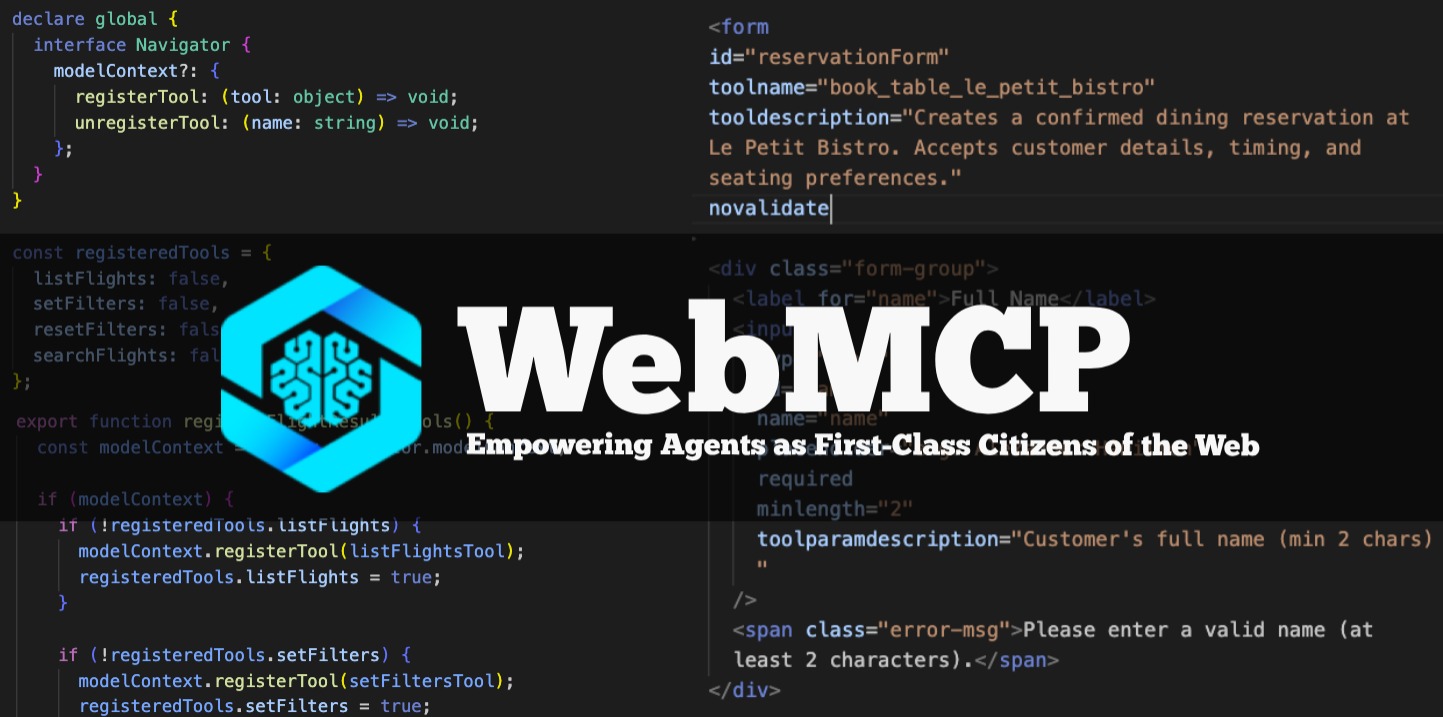
The W3C actively solidifies standard capabilities like WebNN and WebMCP to guarantee future execution stability.

#8 about 2 min

Using the web browser as a central agentic hub

Supplying direct domain tool access to models positions the browser as the focal environment for orchestrating automated cross-application processes.

#9 about 2 min

Optimizing token usage with opt-in API exposure

Exposing limited subsets of programmatic endpoints actively restricts model access scopes while significantly reducing processing token expenditure.

#10 about 2 min

Addressing storage limits and model caching solutions

Fragmenting parameter files dynamically addresses native multi-gigabyte storage boundaries encountered internally by standard memory cache mechanisms.

#11 about 2 min

Navigating privacy concerns with proprietary browser AI

Employing open-source Apache licensed alternatives directly mitigates overarching security telemetry concerns associated natively with proprietary built-in models.

#12 about 2 min

Accelerating local inference using WebGPU and WebNN

Transitioning computational workloads from WebGL pipelines to WebGPU delivers significantly higher data throughput for dedicated mathematical calculation tasks.

#13 about 2 min

Choosing between built-in browser models and custom runtimes

Technical teams must reconcile the immediate speed of pre-installed web routines against the profound flexibility afforded by completely custom inference ports.

#14 about 1 min

Comparing ONNX runtime web and TensorFlow deployments

Integrating Python-based academia structures translates largely into adopting ONNX translation layers to bridge differences across historical JavaScript engines.

#15 about 2 min

Bringing JavaScript developers into web artificial intelligence

Utilizing locally verified toolchains allows frontend engineers to integrate sensitive enterprise systems without scaling traditional cloud backend infrastructure.

Matching moments

2:46 min

The case for native AI in web browsers

Maxim Salnikov Maxim Salnikov · WWC 2025

2:54 min

Leveraging Chrome AI and nano models for web applications

Raymond Camden · Perf + AI

2:17 min

Accelerating local machine learning models via WebNN

Christian Liebel Christian Liebel · WWC Europe 2026

4:41 min

Exploring agentic browsers and artificial intelligence generation

Chris Heilmann +2 · LIVE

2:33 min

Defining web AI and spurring ecosystem innovation

Thomas Steiner · Coffee With Developers

1:33 min

Real-world implementations of browser-based machine learning

Håkan Silfvernagel · LIVE

Upcoming sessions on this topic

Open session

World Congress 2026 North America

Small LLM in your Browser: Huge Opportunities for Web Applications

Daniel Ostrovsky

UI/UX Architect at Payoneer | AI Architect | Full Cycle Development Expert | Public Speaker | Open Source Contributor |

Daniel Ostrovsky
Open session

World Congress 2026 North America

Building Stuff with GenAI - The Open Minded Workshop beyond OpenAI

Andreas Erben

CTO for Applied AI and Metaverse at daenet

Andreas Erben
Open session

World Congress 2026 North America

From Software Agents to Physical Devices: Inside the Agentic Hardware Stack

Vivian Hu, Michael Yuan

Vivian Hu
Michael Yuan
Open session

World Congress 2026 North America

No Single Model to Rule Them All: Building Resilient AI Agents Across Open & Closed LLMs

Emmanuel Acheampong

Senior Manager Developer Relations at Crusoe AI

Emmanuel Acheampong
Open session

World Congress 2026 North America

Making Science Larger, not just Faster

Yuval Dvir

Commercial Executive, SandboxAQ

Yuval Dvir
Open session

World Congress 2026 North America

MicroAgents: The Microservices of the Agentic Era

Ashish Shubham

Runs the show bussiness at ThoughtSpot

Ashish Shubham