
World Congress 2026 Europe - Virtual Stage Jul 1, 2026 Session details

Building Trustworthy AI in Industry: Beyond Traditional Cybersecurity

Matteo Meucci

Secure code does not guarantee trustworthy AI. Discover why traditional cybersecurity fails against probabilistic models and how to build an evidence-based AI development lifecycle.

Pause
Mute Enter Fullscreen
#1 about 3 min

Moving from secure software behavior to trustworthy AI

Traditional security mechanisms cannot guarantee trusting generative AI behavior in the face of evolving prompts and external content.

#2 about 3 min

Emerging risks and attack vectors in AI systems

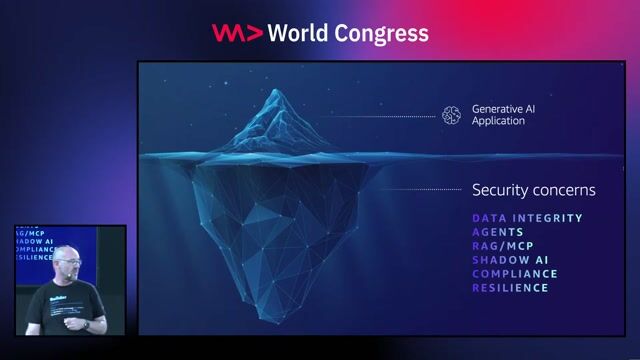
Probabilistic models introduce unpredictable behaviors and new attack surfaces like prompt injection that influence active internal workflows.

#3 about 2 min

Limitations of traditional static testing for AI models

Static analysis tools struggle with context-dependent AI behavior such as hallucinations or execution of malicious prompts.

#4 about 2 min

Assisting security analysis using AI code review tools

AI models accelerate vulnerability remediation but still require human security expertise to validate incomplete or invented fixes.

#5 about 3 min

Expanding security boundaries beyond code and application runtime

Securing AI requires validating data quality, model behavior, and inference contexts rather than just reviewing explicit source code.

#6 about 4 min

Transitioning toward a trustworthy AI development life cycle

Developing safe models demands continuous inference testing across data, robust model validation, and cross-functional team governance.

#7 about 2 min

Defining the core dimensions of generative AI security

Comprehensive system trustworthiness merges responsible AI, robust security controls, and strict privacy compliance to ensure safe user interaction.

#8 about 6 min

Operationalizing validation using OWASP AI testing guidelines

Structured testing methodologies validate architectural layers against complex threats like indirect prompt manipulation or excessive agent agency.

#9 about 5 min

Measuring organizational readiness with AI maturity assessments

Evaluating gap analysis scores across governance, policy, and engineering practices helps structure continuous organizational improvement for safe AI adoption.

Matching moments

1:20 min

Utilizing industry threat models for AI security

Balázs Kiss · WWC 2023

2:13 min

Identifying and hardening against generative AI risks

Rebekka Weiss Rebekka Weiss +1 · WWC 2025

1:46 min

Evaluating the security and trustworthiness of generative AI agents

Maish Saidel-Keesing Maish Saidel-Keesing · WWC 2025

2:58 min

Managing vulnerabilities in auto-generated software development processes

Chris Wysopal Chris Wysopal +2 · WWC 2024

4:15 min

Security integration and AI skepticism in developer tooling

Chris Heilmann +2 · LIVE

4:42 min

Practical guidance for developing trustworthy AI applications

Christoph Bräunlein Christoph Bräunlein +3 · WWC 2025

Upcoming sessions on this topic

Open session

World Congress 2026 North America

Who Tests the AI? Building Trustworthy AI Systems at Enterprise Scale

Him Raj Singh

PayPal, Manager, Software Engineer

Him Raj Singh
Open session

World Congress 2026 North America

Reinventing Testing Practices in the AI Era

Eric Deandrea

Java Champion & Senior Principal Software Engineer, IBM

Eric Deandrea
Open session

World Congress 2026 North America

Securing AI Agent Infrastructure: Identity, Attestation, and Trust at Scale

Abdel Fane

Founder of OpenA2A

Abdel Fane
Open session

World Congress 2026 North America

The Broken Rung: How AI is Rebuilding Software Development from the Ground Up

Tomislav Tipurić

Chief Technology Officer, Nephos

Tomislav Tipurić
Open session

World Congress 2026 North America

Responsible AI Architecture with Zero Trust Agents

Ashok Prakash

Staff ML Engineer at Apple

Ashok Prakash
Open session

World Congress 2026 North America

The Things Your AI Isn't Telling You

Desmond Lamptey

Lead Software Engineer @ Capital One

Desmond Lamptey