

WeAreDevelopers LIVE Sep 15, 2021

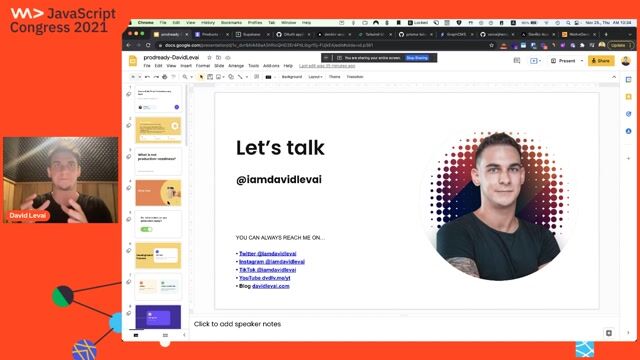
How to Build Truly Production-ready Apps - Modern JS-based SaaS Stack for Indie Devs and Small Teams

Dávid Lévai

A technically flawless app once drove a client bankrupt. Perfect code means nothing without automated onboarding. Discover the exact JS stack indie devs need for true production readiness.

Pause
Mute Enter Fullscreen
#1 about 2 min

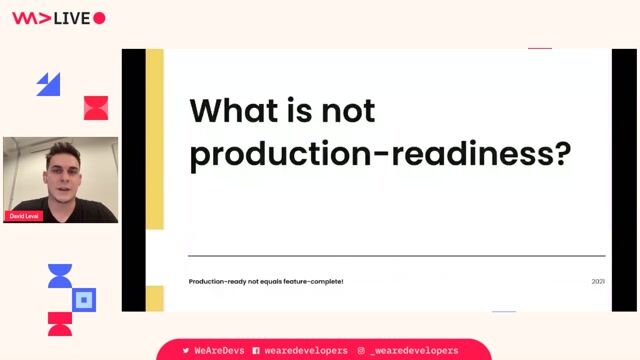
Feature completeness versus true production readiness

A feature-complete application is only production-ready when it meets business and user demands.

#2 about 5 min

Why a fully functional app failed to retain users

Overlooking customer support, onboarding, and business strategy leads to zero user retention.

#3 about 4 min

Starting app development with business and marketing strategies

Discovering client and market needs before writing code aligns development with business goals.

#4 about 3 min

Securing environments and protecting user data in production

Proper use of environment variables, automated backups, and database row-level security prevents critical breaches.

#5 about 2 min

Increasing user engagement through onboarding and empty states

Thoughtful onboarding workflows and empty state calls-to-action keep users engaged immediately after registration.

#6 about 3 min

Optimizing applications for search engines and user discovery

Search engine optimization and local web metadata matter even for mobile applications alongside paid marketing strategies.

#7 about 2 min

Combining development skills with marketing and copywriting principles

Independent developers can build audiences and market applications using social media, freebies, and user referral codes.

#8 about 1 min

Ensuring accessible user interfaces and clear support channels

Prioritizing inclusive design and integrating live chat support gives users frictionless troubleshooting experiences.

#9 about 1 min

Managing operational legal compliance and cloud budget alerts

Implementing terms of service, complying with data privacy frameworks, and setting execution alerts prevents sudden financial ruin.

#10 about 2 min

Choosing tooling architectures and customer relationship management platforms

Utilizing no-code ecosystem platforms and modern CRM integrations heavily reduces engineering time and overhead.

#11 about 2 min

Tracking application crash errors and detailed user product metrics

Capturing runtime bugs and logging granular user engagement events can be streamlined via dedicated telemetry SDKs.

#12 about 2 min

Offloading identity management to hosted authentication platform providers

External providers securely handle user sign-ins, session authorization roles, and social media login flows without backend overhead.

#13 about 2 min

Separating automated transactional emails from modern marketing campaign chats

Distinguishing between deterministic automated workflows and marketing campaigns is crucial for safely scaling application notifications.

#14 about 2 min

Implementing payment gateways and global merchant of record providers

Selecting a merchant of record handles international compliance taxes automatically compared to maintaining simple payment API transactions.

#15 about 3 min

Optimizing static asset delivery through global edge server routing

Serving media queries via content delivery networks drastically reduces latency and removes the need for manual image scaling logic.

#16 about 4 min

Key architectural takeaways and production readiness checklist tools

Prioritizing system reliability, retaining engaged users, and leveraging third-party APIs prevents redundant baseline feature development.

#17 about 3 min

Analyzing legacy content systems alongside modern decoupled architectures

While legacy monolithic templates run significant web traffic, learning raw components via frontend frameworks delivers cleaner skill progression.

#18 about 2 min

Evaluating technology stacks based on architecture adoption regrets

Integrating new infrastructure endpoints risks significant cloud pricing miscalculations while providing deep debugging insight for subsequent production scopes.

#19 about 7 min

Establishing design collaboration practices and preventing cloud provider restrictions

Iterating via synchronized design platforms and maintaining modular system components insulates an application from permanent vendor platform limitations.

Matching moments

2:47 min

Recapping serverless architectures and Swift cloud integrations

Sebastien Stormacq Sebastien Stormacq · LIVE

3:20 min

Architecting the platform with modern cloud and mobile technologies

Tom George · LIVE

1:43 min

Shifting focus from platform engineering to developer productivity

Robert Hoffmann Robert Hoffmann +1 · LIVE

1:20 min

Moving beyond basic platform services for productivity

Christian Denich Christian Denich +1 · World Congress 2024

2:45 min

Balancing developer productivity with modern demands

Markus Eisele Markus Eisele · World Congress 2025

3:40 min

Identifying core challenges in modern software development

Markus Eisele Markus Eisele · World Congress 2024

Upcoming sessions on this topic

Open session

World Congress 2026 North America

September 24, 2026 · 11:10–11:15

Outdoor Stage

Architecting the 100X SDLC: Building Production Trust into AI-Assisted Delivery

Ranjan Parthasarathy

Founder, CPTO/CEO at AXIOMSTUDIO.AI

Ranjan Parthasarathy
Open session

World Congress 2026 North America

September 24, 2026 · 14:50–15:20

Stage 9

How to generate business value through performance optimizations

Nikolai Sidiropulo

Software Engineer at Meta

Nikolai Sidiropulo
Open session

World Congress 2026 North America

September 25, 2026 · 11:00–11:30

Stage 2

Build Fast, Deploy Faster: Cross Platform AI development in 2026

Charlie Cheever

CEO & Co-Founder of Expo

Charlie Cheever
Open session

World Congress 2026 North America

September 23, 2026 · 10:00–17:00

Stage 14

From Idea to Production with AI: Agentic Development in Practice

Daniel Ostrovsky

UI/UX Architect at Payoneer | AI Architect | Full Cycle Development Expert | Public Speaker | Open Source Contributor |

Daniel Ostrovsky
Open session

World Congress 2026 North America

September 24, 2026 · 14:50–15:20

Mainstage

Running AI-Written Software in Production

Anurag Goel, Ivan Burazin, Milin Desai

Anurag Goel
Ivan Burazin
Milin Desai
Open session

World Congress 2026 North America

September 25, 2026 · 16:50–17:20

Stage 4

Engineering Moneyball: How We Benchmarked Google vs Meta

Jirka Bachel

Co-Founder & CEO

Jirka Bachel