WeAreDevelopers LIVE May 25, 2023

​Road to Web3

Soumaya Erradi

How do you replace your traditional backend with decentralized smart contracts? Discover the exact Web3 architecture needed to bridge your frontend to the blockchain using Ethers.js and wallet providers.

Pause
Mute Enter Fullscreen
#1 about 2 min

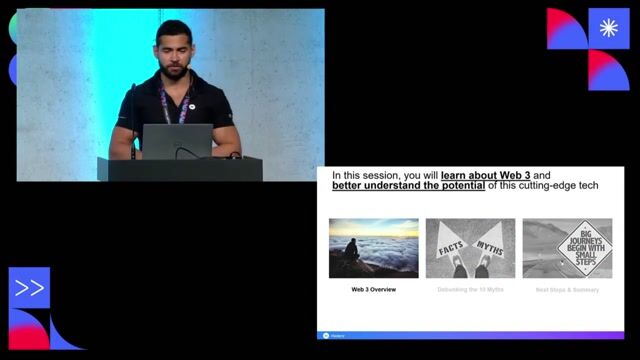
Defining web3 technology beyond popular trends

How the underlying technology of web3 offers more than speculative crypto assets and NFTs.

#2 about 5 min

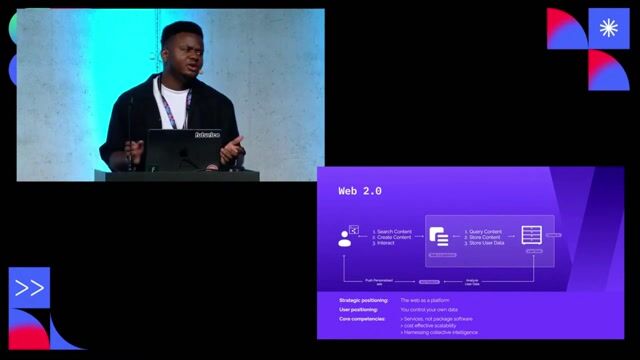
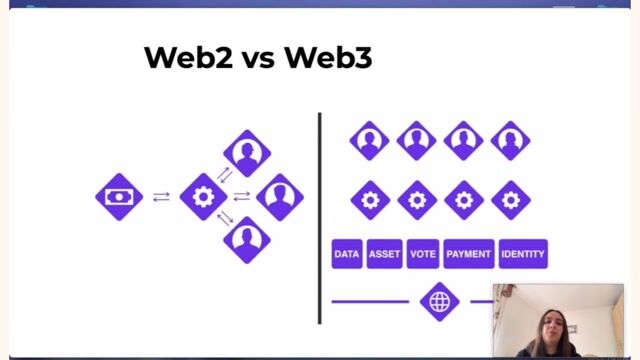
Comparing centralization and payments in web2 versus web3

The shift from central web2 authorities to collective consensus and native protocol payments.

#3 about 5 min

Evaluating the pros and cons of web3 adoption

The balance of data ownership against challenges in scalability, adoption, and environmental impact.

#4 about 4 min

Real world use cases for web3 applications

Examples of decentralized applications across gaming, marketplaces, decentralized finance, and social media.

#5 about 4 min

Understanding web3 application architecture and network communication

How frontend applications connect directly to the blockchain via smart contracts and providers without centralized backend servers.

#6 about 6 min

Essential developer tools for building web3 applications

The primary frontend stack for web3 development relies on javascript frameworks, browser wallets, and smart contract interfaces.

#7 about 6 min

Configuring network providers and the ethers library

Initializing javascript tools to read from public nodes or connect to a user wallet for transactional capabilities.

#8 about 5 min

Using contract managers for blockchain operations

Formulating smart contract interactions for reading blockchain data or writing state changes using transaction signatures.

#9 about 5 min

Reading token balances from a smart contract

A practical code implementation formatting and retrieving stablecoin balances via user connected wallet providers.

#10 about 5 min

Executing token transfers and confirming blockchain transactions

Triggering browser wallet prompts to sign state-changing operations and asynchronously awaiting block confirmations.

Matching moments

3:31 min

Comparing Web2 and Web3 application architectures

Soumaya Erradi · LIVE

3:26 min

Defining the transition natively toward web three decentralization

Peter Busch · LIVE

2:15 min

Integrating existing web technologies within modern web3 architectures

Ed Marquez Ed Marquez · WWC 2023

4:29 min

Defining the core problems solved by web3 concepts

Michael Ionita · WWC 2022

6:50 min

Audience Q&A on Web5 and decentralization protocols

Angie Jones Angie Jones · WWC 2023

2:39 min

Exploring decentralized web applications beyond basic cryptocurrency transactions

Ed Marquez Ed Marquez · WWC 2023

Upcoming sessions on this topic

Open session

World Congress 2026 North America

DeepAgents: Build Multi-Agent AI Systems That Actually Work

Anagha Rumade, Anjana Umapathy, Apoorva Jaiswal

Anagha Rumade
Anjana Umapathy
Apoorva Jaiswal
Open session

World Congress 2026 North America

public void saveMoney(AI): The Developer's Guide to Unit Economics

Hrushikesh Pokala

Senior Software Engineer Lead at Equifax

Hrushikesh Pokala
Open session

World Congress 2026 North America

When Humans Stop Writing Code: Rethinking Languages, Compilers, and Responsibility

Simon Auer

Organizer of flutter vienna meetup and CEO of marqably

Simon Auer
Open session

World Congress 2026 North America

Full Stack with Flutter - are we there yet?

Nemanja Stošić

Senior Flutter Developer

Nemanja Stošić
Open session

World Congress 2026 North America

From Cloud Native to Multi-Cloud Native: Write Once, Deploy Anywhere

Sandeep Pal

Principal Member of Technical Staff at Salesforce

Sandeep Pal
Open session

World Congress 2026 North America

Fast by Design: A Masterclass in High-Performance Web Engineering

Aaron Grogg

Senior web developer, committed to improving the user experience by improving web performance

Aaron Grogg