




WeAreDevelopers LIVE Jun 1, 2023

Explainable machine learning explained

Karol Przystalski

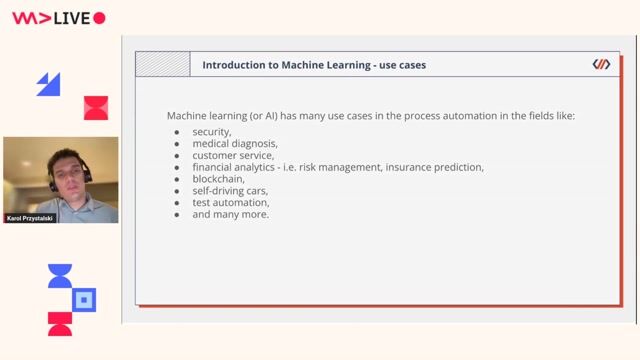
A famous AI classified wolves based purely on snowy backgrounds. Learn how explainable AI tools like SHAP and LIME expose dangerous data leakage and make black-box models transparent.

Pause
Mute Enter Fullscreen
#1 about 3 min

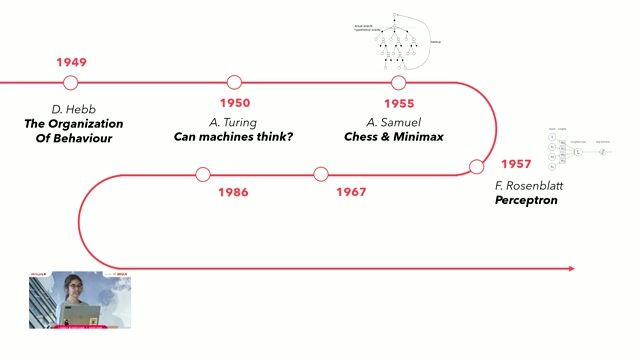
History and growth of explainable artificial intelligence

The evolution of machine learning models creates a pressing need to understand how predictions are made.

#2 about 4 min

Need for explainability in regulated healthcare and finance

Regulated industries like healthcare and finance require transparent predictions before releasing software or hardware products.

#3 about 4 min

Core terminology and audiences for interpretable artificial intelligence

Understanding different terms like responsible artificial intelligence clarifies the unique needs of domain experts and regulatory agencies.

#4 about 3 min

Choosing the right method to explain machine learning models

Visual explanations, simplified logic, and feature relevance provide more practical insights than complex mathematical equations.

#5 about 2 min

Classifying skin cancer using visual feature importance

Identifying specific visual patterns like asymmetry and dots helps explain tumor classification to medical professionals.

#6 about 5 min

Analyzing catastrophic model failures through husky and wolf classifications

Models relying on background noise instead of actual entity features lead to severe errors and adversarial vulnerabilities.

#7 about 6 min

Differentiating white box models like simple decision trees

White box algorithms like linear regression and decision trees offer direct interpretability through clear boundaries and logic rules.

#8 about 4 min

Debugging models through data-centric feature engineering approaches

Improving dataset quality and analyzing functional features directly mitigates overfitting and prevents unintended data leakage.

#9 about 3 min

Enhancing model accuracy using text features in the Titanic dataset

Generating new tokens from text columns marginally increases predictive accuracy without acquiring external datasets.

#10 about 5 min

Visualizing boundaries in support vector machines and clustering methods

Plotting higher-dimensional boundaries clarifies how complex mathematical clustering and support vector machines arrive at predictions.

#11 about 5 min

Applying formal explainability methods like lime and shap

Game theory-based evaluation methods pinpoint the specific impact individual variables or image pixels have on predictions.

#12 about 3 min

Generating heatmaps for deep learning layers using class activation maps

Extracting feature influence across millions of parameters highlights exactly which image sections trigger specific neural classifications.

#13 about 4 min

Defending machine learning against adversarial image and pixel attacks

Minor adversarial noise or single altered pixels can severely disrupt target classifications in otherwise stable neural networks.

#14 about 4 min

Predicting the impact of quantum computing on artificial intelligence

The advent of commercial quantum computers will drastically accelerate artificial intelligence development beyond current classical limits.

#15 about 4 min

Applying machine learning to complex medical imaging processes

Combining video analysis with continuous biometrics yields advanced insights into cardiac vessel performance and operational health.

#16 about 5 min

Establishing ethical foundations and text watermarking strategies

Creating responsible generation systems requires strict governance and verifiable text watermarking to mitigate long-term industry risks.

Matching moments

2:32 min

Building user trust and finding insights via explainable AI

Bernhard Bernhard +1 · World Congress 2025

3:40 min

Ensuring robustness and explainability in machine learning

Jan Zawadzki · LIVE

1:59 min

Explainability requirements for AI in regulated industries

Murli Mohan Srinivas Murli Mohan Srinivas · Europe 2026 Virtual

1:34 min

Justifying AI decisions to employees and end customers

Kilian Kluge +1 · World Congress 2022

3:04 min

Building trust and transparency into AI interactions

Ekaterina Streltsova Ekaterina Streltsova · Europe 2026 Virtual

2:42 min

Mitigating data bias and explaining AI decisions

Werner Vogels Werner Vogels +1 · World Congress 2026 Europe

Upcoming sessions on this topic

Open session

World Congress 2026 North America

September 24, 2026 · 10:20–10:50

Stage 4

AI Decision Observability: Enabling Transparency and Trust in Intelligent Systems

Amjad Shaikh, Soumil Mandal

Amjad Shaikh
Soumil Mandal
Open session

World Congress 2026 North America

September 25, 2026 · 11:40–12:10

Stage 9

You Can’t Re-Run Sunlight: Designing ML Data Architectures for Physical AI

An Phan

Senior Data Infrastructure Engineer @ Hippo Harvest

An Phan
Open session

World Congress 2026 North America

September 25, 2026 · 15:45–15:55

Outdoor Stage

Closing the Visibility Gap: Lessons from Safety Critical Agentic Systems

Vivek Pandit

Frontier AI Lead at Turing

Vivek Pandit
Open session

World Congress 2026 North America

September 25, 2026 · 10:20–10:50

Tech Leaders Stage

Democratizing AI: Why Open Models Are Essential for the Next Era

Mitesh Patel

NVIDIA Corporation, Developer Advocate -- Manager

Mitesh Patel
Open session

World Congress 2026 North America

September 25, 2026 · 15:30–16:00

Stage 4

Evals Are Infra: Building AI Systems Developers Can Actually Trust

Phoebe Wang

Member of Technical Staff at OpenAI

Phoebe Wang
Open session

World Congress 2026 North America

September 25, 2026 · 16:50–17:20

Stage 5

The Things Your AI Isn't Telling You

Desmond Lamptey

Lead Software Engineer @ Capital One

Desmond Lamptey