
World Congress 2023 Aug 11, 2023

In-Memory Computing - The Big Picture

Markus Kett

What if you could completely bypass traditional databases? Discover how in-memory computing eliminates object-relational mapping bottlenecks, achieving microsecond query latency and slashing cloud costs by 99%.

Pause
Mute Enter Fullscreen
#1 about 6 min

Critical factors driving modern application performance requirements

Modern applications demand high performance, low data storage costs, and simple technical implementations.

#2 about 4 min

Analyzing speed differences between memory and database queries

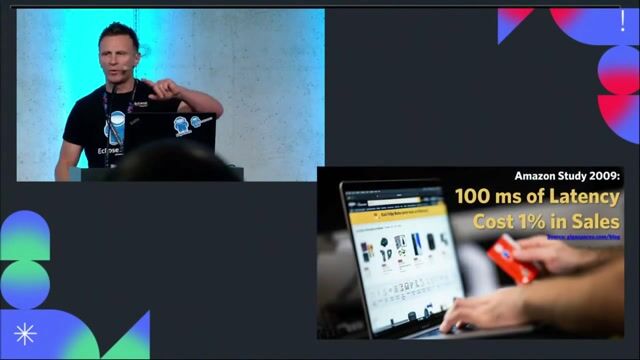
Executing code in memory provides extreme speed advantages compared to the high latency of database access.

#3 about 4 min

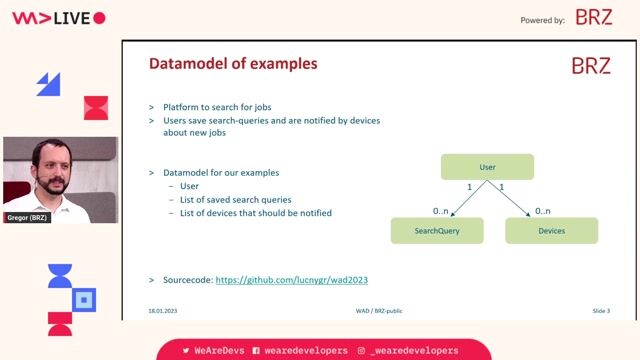
Understanding the object-relational impedance mismatch in traditional databases

Storing complex object graphs within relational database tables creates deep architectural incompatibilities.

#4 about 4 min

Evaluating NoSQL databases and data conversion bottlenecks

Despite specialized data structures, non-relational databases still impose heavy performance penalties through object generation overhead.

#5 about 3 min

Implementing distributed caches to reduce relational database load

Extracting data into local or clustered cache environments avoids severe disk IO penalties but adds system complexity.

#6 about 3 min

Comparing distributed caches with in-memory data grids

In-memory data grids build upon distributed cache architecture by allowing organizations to distribute computational algorithms entirely in memory.

#7 about 4 min

Identifying mapping overheads within in-memory database clusters

Because in-memory database nodes run on separate architectures, their overall speed is still constrained by data conversion mappings.

#8 about 5 min

Eliminating database mapping via system prevalence and blob storage

Storing application object structures directly into scalable cloud blob services prevents classical storage latency entirely.

#9 about 3 min

Simplifying enterprise architecture with database-less data processing

Leveraging memory replication directly against binary stores removes both clustering and mapping overheads for significant cloud savings.

Matching moments

3:16 min

Q&A on database vendor lock-in and alternative architectural choices

George Asafev · World Congress 2023

3:25 min

Slashing IT infrastructure costs by adopting memory persistence

Markus Kett Markus Kett · World Congress 2022

2:36 min

Modern application stacks and real-time data requirements

Tim Faulkes · LIVE

4:14 min

Recognizing architectural drivers pushing event streaming system adoption

Mary Grygleski Mary Grygleski · LIVE

5:13 min

The object-relational impedance mismatch in standard database programming

Markus Kett Markus Kett · World Congress 2022

2:31 min

Accelerating data processing via resilient in-memory computing strategies

Markus Kett Markus Kett · World Congress 2022

Upcoming sessions on this topic

Open session

World Congress 2026 North America

September 25, 2026 · 15:30–15:40

Outdoor Stage

Offloading IoT State: Solving the Memory Crisis on Legacy Hardware

Pravin Nagare

Senior Software Engineer, Roku

Pravin Nagare
Open session

World Congress 2026 North America

September 24, 2026 · 15:30–16:00

Stage 2

KV Cache Is Not About Speed: It's About Surviving Inference Costs

David vonThenen

AI/ML Leader | Keynote Speaker | OSS Engineer & Developer Advocate | Agentic AI, Deep Learning, Production AI | Python, Go, C++

David vonThenen
Open session

World Congress 2026 North America

September 24, 2026 · 14:50–15:20

Stage 2

Databases in the Agent Era

Monica Sarbu

Founder and CEO of xata.io

Monica Sarbu
Open session

World Congress 2026 North America

September 25, 2026 · 14:50–15:20

Stage 6

Look What Java Can Do Now: Live-Coding a GenAI MCP Server with the JAQ Stack

Suren Konathala

Senior Engineering Leader, Marketing & AdTech, AI GTM & Digital Experience Platforms, Java x AI

Suren Konathala
Open session

World Congress 2026 North America

September 25, 2026 · 16:00–16:10

Outdoor Stage

public void saveMoney(AI): The Developer's Guide to Unit Economics

Hrushikesh Pokala

Senior Software Engineer Lead at Equifax

Hrushikesh Pokala
Open session

World Congress 2026 North America

September 24, 2026 · 14:10–14:40

Stage 1

Anatomy of an AI Request: Where Latency and Cost Are Really Born

Dan Fu

VP of Kernels at Together AI

Dan Fu