


World Congress 2023 Sep 21, 2023

The Name of the Rose

Reka Horvath

Repurposing a single-letter flag once triggered a massive financial catastrophe. Discover how context-aware naming and domain-driven design prevent costly bugs and reduce developer cognitive load.

Pause
Mute Enter Fullscreen
#1 about 3 min

Introducing complex domains through descriptive code naming

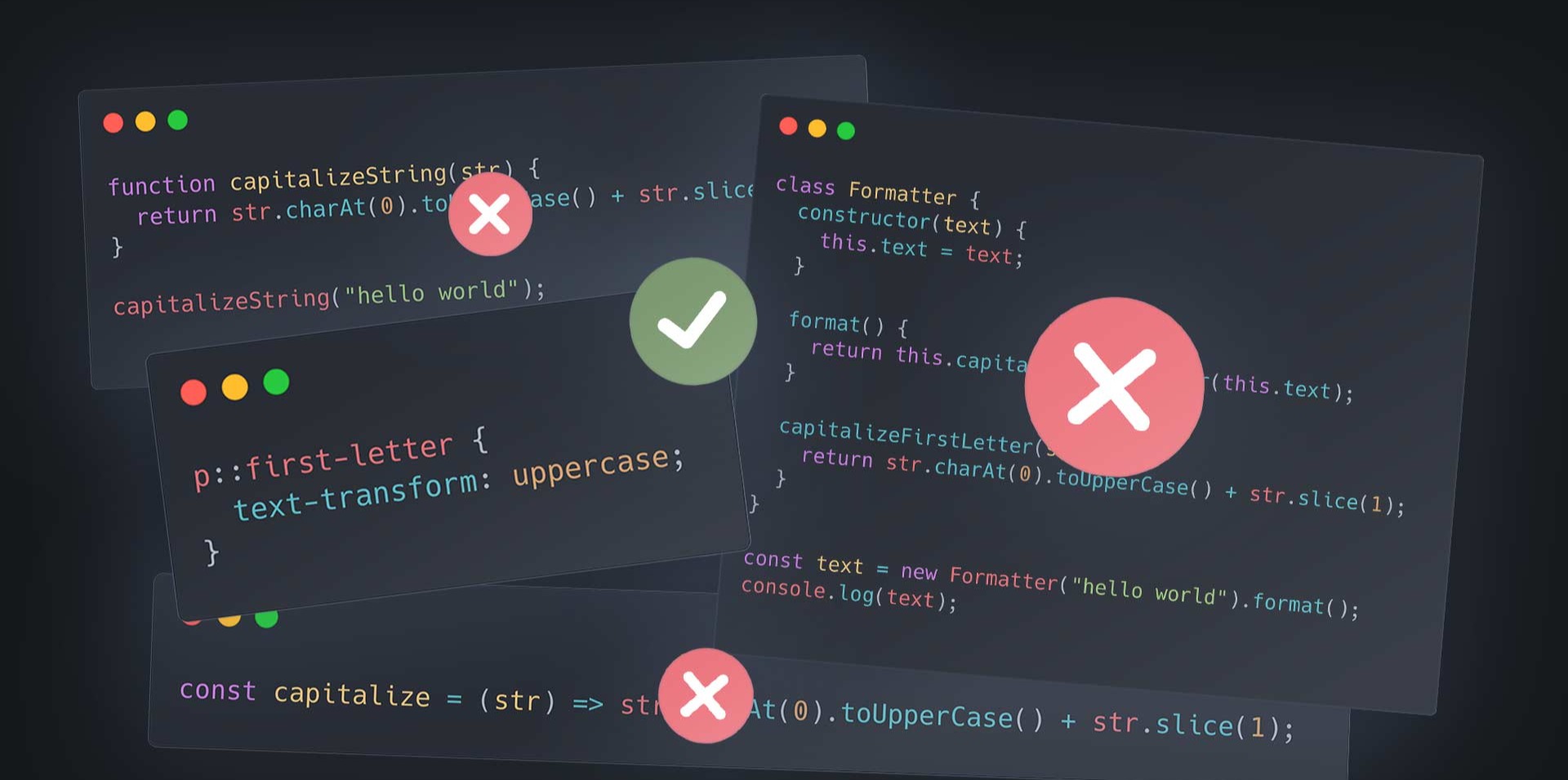
Comparing opaque code against descriptive classes demonstrates how naming documents business rules directly.

#2 about 2 min

Automating code quality with large language models

Integrating large language models into pair programming tools helps developers pick better variable names automatically.

#3 about 2 min

Applying human language processing to reading code

Recognizing that developers read code like text helps teams direct attention using strategic naming patterns.

#4 about 4 min

Avoiding misleading names and unexpected side effects

Hiding unintended side effects behind standard verbs prevents developers from noticing critical state changes.

#5 about 2 min

Replacing generic verbs with descriptive compound names

Replacing overly generic verbs with specific compound terminology clarifies what complex background functions execute.

#6 about 4 min

Mapping specific names to single real world concepts

Enforcing a one-to-one mapping between system entities and business terminology eliminates the risk of synonym confusion.

#7 about 4 min

Analyzing how outdated feature flags cause system failures

Leaving legacy single-letter feature flags in production systems can accidentally trigger catastrophic deployment errors.

#8 about 5 min

Designing consistent interfaces using domain specific nomenclature

Adopting familiar standardized nomenclature from existing protocols and libraries dramatically improves new API discoverability.

#9 about 4 min

Reevaluating variable names when business requirements change

Failing to update obsolete terminology when business requirements change fractures the integrity of domain-driven design.

#10 about 3 min

Managing codebase conceptual changes during ongoing implementation

Overcoming the friction to update variable names later requires enforcing ongoing adjustments as implementation details evolve.

Matching moments

2:53 min

Applying patterns and principles to maintain code analyzability

David Tielke David Tielke · WWC 2025

2:23 min

Improving communication while defending foundational code quality

Hendrik Lösch Hendrik Lösch · WWC 2025

1:44 min

Writing precise titles and active decisions for architectural searchability

Johannes Dienst · LIVE

49 sec

Debunking the myth of self-documenting code

Hila Fish · WWC 2023

3:04 min

Cultivating code comprehension over cargo cult programming

Mustafa Toroman · WWC 2021

2:03 min

Establishing core principles for data focus and naming

Alen Pokos · LIVE

Upcoming sessions on this topic

Open session

World Congress 2026 North America

When Humans Stop Writing Code: Rethinking Languages, Compilers, and Responsibility

Simon Auer

Organizer of flutter vienna meetup and CEO of marqably

Simon Auer
Open session

World Congress 2026 North America

Beyond Vibe Coding: Using CLI Tools as Your AI Counterpart in Pair Programming

Ron Veen

Java enthusiast and Special agent for Team Rockstars IT

Ron Veen
Open session

World Congress 2026 North America

The spectrum of agentic coding: From vibe coding to high-quality software engineering

YK Sugi

Developer Experience Manager at Eventual

YK Sugi
Open session

World Congress 2026 North America

The Broken Rung: How AI is Rebuilding Software Development from the Ground Up

Tomislav Tipurić

Chief Technology Officer, Nephos

Tomislav Tipurić
Open session

World Congress 2026 North America

Designing APIs That Survive AI Agents at Scale

Phani Pendurthi

Mastercard, Principal Software Engineer

Phani Pendurthi
Open session

World Congress 2026 North America

Honey, look! I vibe-coded an OS!

Ian Smith

CTO, LYOS

Ian Smith