






BB
Benedikt Bischof
World Congress 2023
•
Oct 6, 2023
How We Built a Machine Learning-Based Recommendation System (And Survived to Tell the Tale)
Dora Petrella
- Discuss this with your agent
- Open in Claude
- Open in ChatGPT
A data science team replaced their underperforming SQL recommender with a Meta-Prod2Vec neural network. Learn how injecting article metadata solved long-tail recommendations and boosted product coverage by 45 percent.
Matching moments
1:50 min
Real life recommendation systems and final project conclusions
 Lutske van der Meer · World Congress 2024
2:40 min
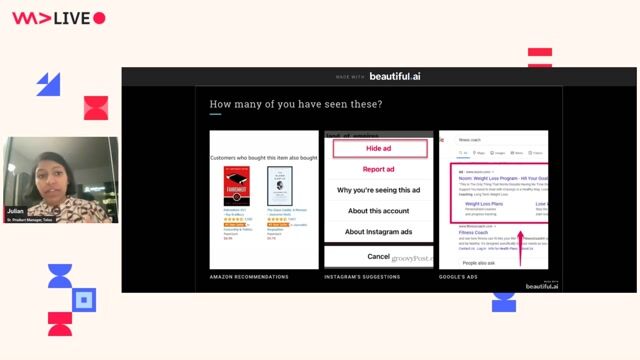
Understanding real-world recommendation systems in common platforms
Julian Joseph · LIVE
2:14 min
Assessing the future of AI in web performance optimization
Perf + AI
4:42 min
Predicting future retail experiences and avoiding technology hype
 Alejandro Saucedo +2 · World Congress 2025
57 sec
Implementing predictive prefetch with machine learning
Jessica Janiuk · JS Congress
2:50 min
Driving subtle product enhancements with historical platform data
Alejandro Saucedo +2 · World Congress 2025
More from World Congress 2023
Related videos
Related articles
.gif)
BB
Benedikt Bischof
.gif)
MH
Michael Hunger
N
Neo4j

BB
Benedikt Bischof
.gif)
From learning to earning
Jobs that call for the skills explored in this talk.
3 months ago
Principal Machine Learning Engineer

Almedia
Berlin, Germany
SQL Databases
Machine Learning
Machine Learning Operations
about 1 month ago
Machine Learning Engineer

Twilio
Port Angeles, WA, United States
Expert
$155k–194k
Remote
Docker
Twilio
Airflow
24 days ago
Founding Data Scientist
Almedia
Berlin, Germany
€90k–170k
SQL Databases
Data Pipelines
Language Modeling
24 days ago
Data Scientist
Almedia
Berlin, Germany
Airflow
Terraform
Kubernetes
29 days ago
•
Verified
Staff ML Engineer

Docker, Inc.
Seattle, United States
Expert
Remote
Go
about 1 month ago
•
Verified
Sr Data Analyst

Dynatrace
United States
Expert
Remote
Tableau
PostgreSQL
Data analysis