Head of Data Center
Role details
Job location
Tech stack
Job description
The Head of the Data Center will lead the planning, design, implementation, and ongoing development of the Data Center, a newly established central unit at the Max Planck Institute of Geoanthropology. This facility will support researchers in the collection, integration, and analysis of diverse datasets across disciplines such as geography, anthropology, history, archaeology, ecology, sociology, climatology, and biology. The Head of the Data Center will play a pivotal role in conceptualizing, developing, and executing management workflows. Additionally, the position involves designing, implementing, maintaining, and integrating databases while managing a team of five dedicated staff members.
The Head of the Data Center will liaise with the Department Directors, independent research group leaders, and other Core Unit heads while developing and implementing efficient data acquisition and compilation from diverse field, lab, archival and published sources. They will also develop management strategies to support in-depth exploration of anthropogenic factors in the evolution of Earth systems including diverse modelling approaches. They will collaborate with researchers across the Institute to support data availability and storage through models, web databases, and scientific publications. Additionally, they will work closely with IT service units to ensure that curated datasets are accessible and meet scientific standards for security, compliance, and usability.
The successful candidate will represent the MPI-GEA Data Center within the Max Planck Society and at international forums, fostering partnerships for data-sharing, responding to emerging technologies, and guiding interdisciplinary initiatives for geoanthropological research and Anthropocene studies.
Requirements
-
Experience in managing multidisciplinary teams in an international and intercultural environment, including technical and scientific staff
-
PhD in Computer Science or a related field, with several years of experience in distributed databases, large-scale data management, and data archiving
-
Proven expertise in handling large datasets, particularly in geospatial and diachronic applications
-
Strong knowledge of data management processes, leadership, and implementation of large-scale system.
-
Experience in planning, designing, and deploying scalable infrastructure for large datasets and databases, including containerization and orchestration technologies such as Docker, Kubernetes, MariaDB, PostgreSQL, Apache Cassandra, Neo4J, etc.
-
Proficiency in semantic data modelling, utilizing technologies such as RDF, XML, JSON-LD, and Linked Open Data (LOD), etc.
-
Experience with data integration and API technologies such as RESTful API, GraphQL, Apache Camel, etc.
-
Experience with data processing & ETL tools such as Apache Hadoop, Apache Spark, Apache Nifi, etc.
-
Background in scientific research with a track record of high-quality publications
Desirable skills:
-
Ability to communicate complex technical concepts effectively to both scientific and public audiences
-
Knowledge of data protection, security protocols, and compliance standards
-
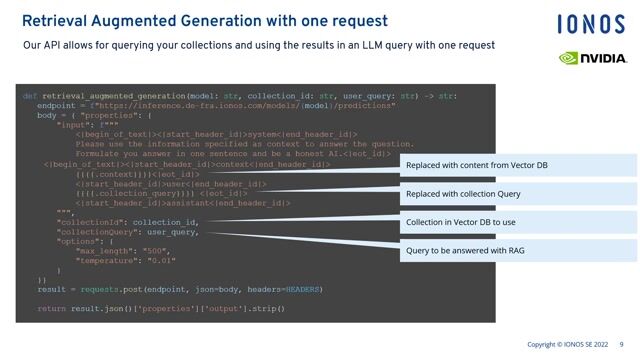
Experience with AI/LLM integration for research applications, including RAG systems and vector databases
-
Familiarity with multiple database platforms
-
Experience in data archiving and long-term preservation concepts
-
Experience in data processing and data visualization
Benefits & conditions
This fulltime (39 hours/week) or part-time (at least 30 hours/week) position will start as soon as possible. Renumeration will follow the public service pay scale (TVöD) up to paygroup 14, according to the candidate's qualifications and experience. You are entitled to an annual bonus, 30 days' holiday, and time off on 24th and 31st December. We also offer attractive and family-friendly flexitime and arrangements for remote working. A company pension scheme (VBL), an employer subsidy for a job ticket, the opportunity for further training, as well as language and health courses complete our offer.
The Max Planck Society is committed to employing more individuals with disabilities and especially encourages them to apply. We are also committed to encouraging diversity and actively challenging biases based on gender, nationality, ethnicity, sexual orientation, religion, and other components of identity. We were honored with the TOTAL E-QUALITY award for the first time in 2023 for our commitment.
The Max Planck Society supports the compatibility of family and career and is certified according to the "berufundfamilie" ("job and family") audit.
About the company
Understanding climate and its change is one of mankind’s most important challenges. The advent of exascale computing in the near future gives new exciting insights from storm-resolving climate modeling on the global scale. The pace at which data are generated by such scientific experiments and large simulations poses new challenges in terms of the capability of efficiently and effectively analyzing the massive datasets generated. Improving the knowledge retrieval process from such analysis reveals many demanding tasks for all its components.
The Max Planck Institute for Meteorology (MPI-M) is a multidisciplinary center for climate and Earth system research located in Hamburg, Germany. It is one of the premier climate science research institutes in the world. Located in the heart of one of Europe’s most livable and vibrant cities, it provides a highly international and interdisciplinary environment to conduct scientific research as well as access to state-of-the-art scientific facilities. You can also have a virtual tour to our campus.