Aug 22, 2024

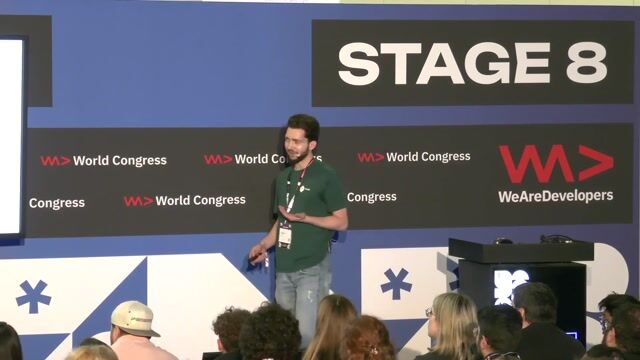
Developing the Rich Text Editor for DeepL.com

Markus Over

Why did DeepL spend three years engineering a custom rich text editor? Marcus reveals the brutal realities of wrestling contenteditable APIs, handling chaotic clipboards, and resolving browser inconsistencies.

Pause
Mute Enter Fullscreen
#1 about 2 min

Limitations of standard HTML text areas for contextual translations

Why simple text elements fail to support responsive dropdowns mapped directly to specific words.

#2 about 2 min

Managing rich text and complex formatting in editing tools

How rendering live assistant differences and nested styles necessitates advanced custom rendering pipelines.

#3 about 2 min

Designing a custom web component natively extending content editing

Creating an backward-compatible replacement that wraps the browser API while enabling custom text attachments.

#4 about 3 min

Deciding against open source off-the-shelf rich text editor libraries

Why strict architectural requirements for separating pure content from visual metadata prevented utilizing existing dependencies.

#5 about 2 min

Building a custom virtual tree representation for text editing

Utilizing a lightweight hierarchical data model to isolate functional structures from volatile visual states.

#6 about 6 min

Reconciling plain text line breaks with complex HTML structures

Synchronizing algorithmic representations with undocumented parsing behaviors for paragraph closures and isolated break tags.

#7 about 7 min

Preserving accurate cursor coordinates across volatile DOM tree updates

Translating target element positions into stable absolute indexes to prevent selection losses during background cleanups.

#8 about 3 min

Fixing input method editor conflicts during character composition modes

Freezing programmatic updates to ensure native operating system tools successfully process multi-keystroke language inputs.

#9 about 4 min

Mitigating diverse browser quirks and unsupported clipboard metadata formats

Handling unpredictable sequencing, rogue styling extensions, and bloated syntax payloads generated by external word processors.

#10 about 3 min

Evaluating estimations and the limits of the Pareto principle

Analyzing how optimizing for simple edge cases deceptively obscures the complexity of complete feature parity.

#11 about 3 min

Implementing property-based testing strategies for unpredictable rich text inputs

Leveraging automated randomized payload combinations to confidently discover breaking scenarios within unstable component states.

Matching moments

2:42 min

Leveraging web-based architecture for custom text editor features

Harald Kirschner · Coffee With Developers

2:11 min

Defining rich text editors and their value proposition

2:28 min

History and evolution of a rich text editor

Elise Bentley · World Congress 2023

4:37 min

Integrating local build testing and markdown text editors

Chris Heilmann +2 · LIVE

3:02 min

Developer questions on offline editors and application scaling

Eli Holderness · World Congress 2022

2:57 min

Customizing code editor themes and visual focus environments

Chris Heilmann +2 · LIVE

Upcoming sessions on this topic

Open session

World Congress 2026 North America

September 24, 2026 · 16:00–18:00

Stage 10

Reprompting the Wheel? Why AI Won’t Save Your Content Platform

Benni Mack

TYPO3 CMS Project Lead at TYPO3

Benni Mack
Open session

World Congress 2026 North America

September 25, 2026 · 12:55–13:25

Stage 5

Content Platforms: The Bottleneck Is Responsibility, Not Tech

Daniel Fau, Tom Warwick

Daniel Fau
Tom Warwick
Open session

World Congress 2026 North America

September 23, 2026 · 13:15–15:15

Stage 9

DeepAgents: Build Multi-Agent AI Systems That Actually Work

Anagha Rumade, Anjana Umapathy, Apoorva Jaiswal

Anagha Rumade
Anjana Umapathy
Apoorva Jaiswal
Open session

World Congress 2026 North America

September 24, 2026 · 14:50–15:20

Stage 3

Why AI-Written Books Fail – and How We Made Quality Measurable

Hannes Steiner, Thomas Neumayer

Hannes Steiner
TN
Open session

World Congress 2026 North America

September 25, 2026 · 15:30–16:00

Stage 6

Small LLM in your Browser: Huge Opportunities for Web Applications

Daniel Ostrovsky

UI/UX Architect at Payoneer | AI Architect | Full Cycle Development Expert | Public Speaker | Open Source Contributor |

Daniel Ostrovsky
Open session

World Congress 2026 North America

September 24, 2026 · 16:10–16:40

Outdoor Stage

When Humans Stop Writing Code: Rethinking Languages, Compilers, and Responsibility

Simon Auer

Organizer of flutter vienna meetup and CEO of marqably

Simon Auer