







GS
Gerry Schneider
- Discuss this with your agent
- Open in Claude
- Open in ChatGPT
Tech conferences are heavily biased toward extroverts. You can conquer social burnout by embracing temporary extroversion and strategic solitude. Master networking on your own terms without the guilt.
Matching moments
15:36 min
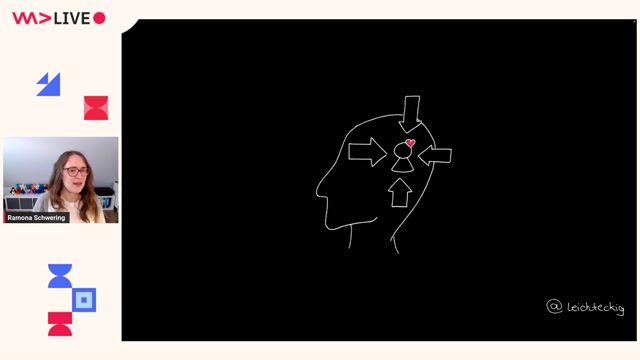
Overcoming introversion through public speaking in developer relations
 Chris Heilmann +2 · LIVE
57 sec
Connecting with industry peers at technology conferences
 Francesco Ciulla · World Congress 2025
4:09 min
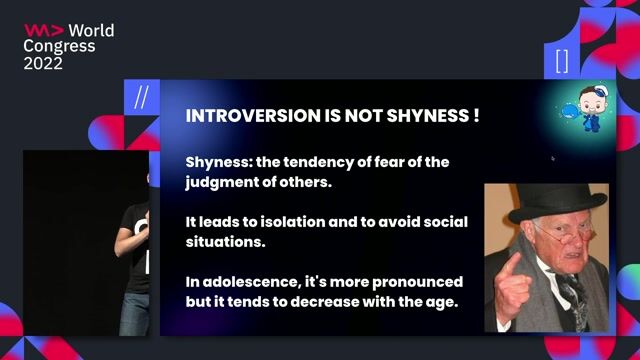
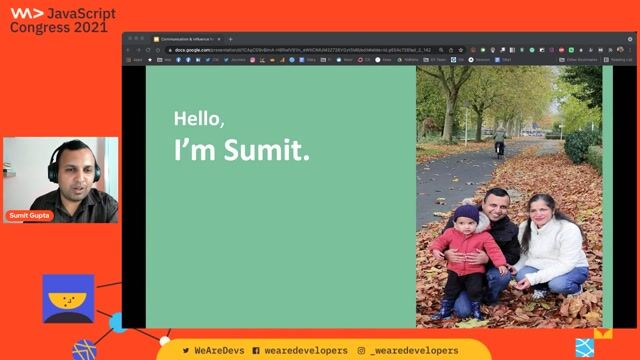
Overcoming introversion and conflict avoidance in tech leadership
Sumit Gupta · JS Congress
2:10 min
Establishing professional connections at global software developer conferences
 Harald Nezbeda · Coffee With Developers
2:53 min
Managing stage fright during technical conference moderations
Chris Heilmann +3 · LIVE
2:11 min
Integrating wellbeing practices into professional tech conferences
 Rudi Bauer +1 · Cappuccino with HR
More from WeAreDevelopers LIVE
Related videos
Related articles

RM
Rebeka Meszaros
.webp)
LM
Luis Minvielle
.webp)
KD
Krissy Davis

From learning to earning
Jobs that call for the skills explored in this talk.
about 1 month ago
•
Verified
Founding Developer Advocate

Plumber
San Francisco, United States
Experienced
$150k–190k
Remote
GIT
Bash
Linux
2 months ago
Staff Developer Advocate, GitHub Security Lab

GitHub
United States
Experienced
$121k–323k
Remote
Git
Github
Databases
2 months ago
Senior Forward Deployed Engineer

Intercom
San Francisco, CA, United States
Expert
Remote
Ruby
Restful APIs
Virtual Agents
about 1 month ago
Integration Engagement Manager

Expedia
Madrid, Spain
€36k–50k
Slack
Kibana
Splunk
25 days ago
Senior Forward Deployed Engineer
Intercom, Inc.
Greater London, UK
Expert
Remote
Restful APIs
Virtual Agents
Software as a…
29 days ago
Staff Engineer - Web Platform
Intercom, Inc.
London, UK
Expert
Remote
Next.js
ReactJS
Amazon S3